


Nest Notes
First-Floor Primary Suites: Why They're the #1 Requested Layout in New Construction

June 24, 2026
First-floor primary suites went from a retirement-only feature to one of the most requested layouts in new construction. That shift is real, and we see it across South Central Pennsylvania.
Buyers want homes that work longer, feel quieter, and adapt better to real life. A first floor primary suite checks all three boxes. It gives homeowners easier daily living, better separation from busy household spaces upstairs, and more flexibility for whatever comes next, whether that is young kids, older teens, visiting parents, remote work, or simply not wanting to deal with stairs forever.
In this article, we’ll break down why demand for the master suite on main floor layout has grown, who it fits best, what it can mean for resale, and what to pay attention to if you’re comparing floor plans. If you’re trying to decide between a first-floor and second-floor primary, this should make the choice clearer.
Key Takeaways
- A first-floor primary suite is no longer just for 55+ buyers, it appeals to families, professionals, multigenerational households, and buyers planning ahead.
- The biggest draw is flexibility: easier access now, better long-term livability later.
- Main-floor primary suites create more privacy by separating the owner’s space from kids’, guests’, or work zones upstairs.
- Homes with a first floor primary suite can attract a wider range of resale buyers, including accessibility-minded shoppers and move-down buyers.
- The layout only works well if the bathroom, closet, and sound separation are thoughtfully designed.
- A second-floor primary still makes sense on smaller lots, in homes where buyers want more upstairs living space, or when a taller, more compact footprint is the priority.
- Garman designs homes around how people actually live, which is why this kind of layout matters more than ever.
Why first-floor primary suites are in such high demand
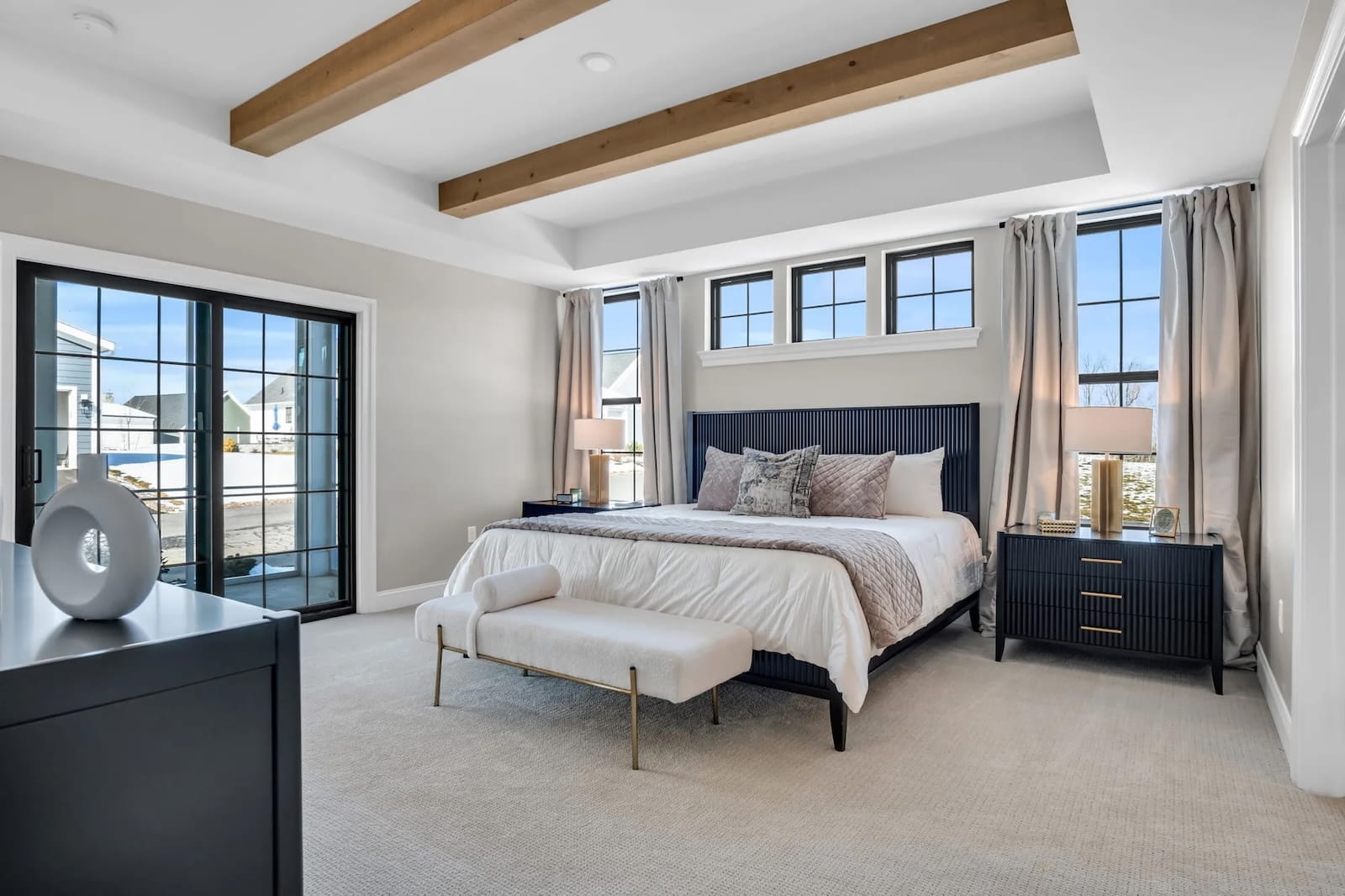 A first floor primary suite is a primary bedroom located on the main level of the home, typically paired with a private bath and walk-in closet. The reason demand has jumped is simple: buyers want homes that can handle more than one stage of life.
That matters in today’s market. Across South Central PA, buyers are thinking harder about long-term value, comfort, and day-to-day function. They are not just shopping for the next two years. They are asking whether the home will still work if kids get older, parents stay over more often, schedules change, or stairs become a hassle.
The old assumption was that a downstairs primary belonged only in a retirement community or a ranch home. That’s outdated. Today, buyers want smarter layouts, not one-size-fits-all layouts. A first-floor suite fits that shift.
Who’s buying first-floor primary suites now?
The short answer is: far more people than before.
The strongest demand comes from buyers who want privacy, flexibility, and fewer limitations later on. That includes active adults, but it also includes households that do not see themselves as downsizing at all.
Aging parents and buyers planning ahead
Some buyers want the home to work for the next twenty years, not just today. They may be perfectly healthy and fully mobile now. They still know that daily stair use gets old, and that planning ahead beats scrambling later.
A one level primary suite gives them the option to stay in the home longer with less disruption. They can sleep, bathe, and handle daily routines on the main floor without needing to rework the house later.
That does not make the home feel clinical or compromised. If the plan is done right, it simply feels convenient.
Growing families who want more privacy
Parents with young kids often like having bedrooms nearby when children are little. But that changes. As families grow, separation starts to matter more.
A first floor master bedroom creates breathing room. Parents get a quieter retreat, while children and teens have their own zone upstairs. That split tends to work especially well in homes with open main living areas, flex rooms, and upstairs secondary bedrooms.
Work-from-home professionals and executives
Remote and hybrid work changed what buyers expect from home design. A lot of homeowners now spend full workdays in the house. They want spaces that feel separate, quiet, and usable.
For this buyer, a downstairs master suite can help in two ways. First, it creates a private retreat away from upstairs bedrooms, gaming, homework, and noise. Second, it can free up upstairs square footage for an office, loft, study area, or guest room without making the whole home feel crowded.
Accessibility-minded buyers
Not every buyer shopping for accessibility sees themselves in an age-restricted community. Some simply want fewer physical barriers. Some are recovering from an injury. Some are caring for a family member. Some just know that a home with fewer daily obstacles is easier to live in.
That’s where the primary suite first floor benefits become obvious. Less stair dependence. Easier movement. Simpler routines. Better long-term usability.
The aging-in-place case is stronger than ever

Aging in place sounds like a phrase people use in brochures. But the real issue is more practical than that.
Stairs are fine until they aren’t. Knees change. Balance changes. Energy changes. Even carrying laundry, luggage, or a sick child up and down steps gets old fast. A first-floor primary suite removes one of the biggest daily friction points in a home.
For buyers thinking long term, the advantages are straightforward:
- Sleeping and bathing happen on the main level
- Nighttime stair use is reduced
- Mobility limitations are easier to manage
- The home can remain comfortable through more life stages
- Renovation pressure later may be reduced
That does not mean every buyer needs a single-story home. It means buyers are placing more value on layouts that leave options open.
In Central PA, that matters because buyers are often looking for a home they can stay in for a while. They want comfort now and confidence later. A first-floor primary supports both.
The multigenerational case is not niche anymore
Multigenerational living used to be treated like a special-case housing need. It isn’t now. More families are thinking about parent visits, adult children returning home, long-term guest space, or simply needing more separation under one roof.
A first floor primary suite helps because it naturally creates zones.
When the owner’s suite is on the main floor and secondary bedrooms are upstairs, everyone gets more privacy. Parents are not right on top of teens. Guests do not feel like they are sleeping in the middle of the household. Adult children have their own area. Even everyday noise is easier to manage when bedrooms are split across levels.
This is one of the biggest reasons younger families choose the layout. It does not just solve for aging. It solves for household complexity.
And that complexity is normal now.
The resale case: a wider buyer pool matters
A home with a first-floor primary suite often appeals to more than one type of buyer, and that matters at resale.
A second-floor primary can work beautifully for certain households, but it automatically narrows the field a bit. Buyers with mobility concerns may rule it out. Some move-down buyers will skip it. Some multigenerational households will too.
A master suite on main floor tends to open the door to more buyer groups, including:
- Active adult buyers
- Buyers planning for aging in place
- Families who want privacy from kids’ bedrooms
- Multigenerational households
- Buyers who want guest flexibility
- Relocating buyers comparing new homes to older resale inventory
That broader appeal does not guarantee a premium by itself. Resale value still depends on location, condition, lot, school district, and overall design.
That is especially relevant in South Central Pennsylvania, where buyers range from first-time homeowners to move-up families to 55+ households looking for a better fit. Flexible layouts tend to age better in the market.
Pricing implications: what you give up, and what you don’t
This is where buyers often assume more than they should.
A first-floor primary suite can affect footprint and cost because putting the owner’s suite on the main level usually requires more first-floor square footage. On some lots, that means a wider house, a different exterior shape, or a larger foundation than a comparable plan with all bedrooms upstairs.
What can change with a first-floor primary
- The footprint may be larger
- The lot may need to accommodate a wider plan
- Some upstairs square footage may shift to the main level
- Ceiling lines or exterior massing may differ from a taller two-story plan
What you do not automatically give up
- You do not have to sacrifice style
- You do not have to move into a purely one-story home
- You do not have to lose secondary bedrooms upstairs
- You do not have to settle for less privacy or less design character
A lot depends on the floor plan. Some homes handle a single story primary suite beautifully within a two-story design. Others force it in and create awkward circulation, poor furniture placement, or too much noise near main living areas.
When a two-story primary still wins
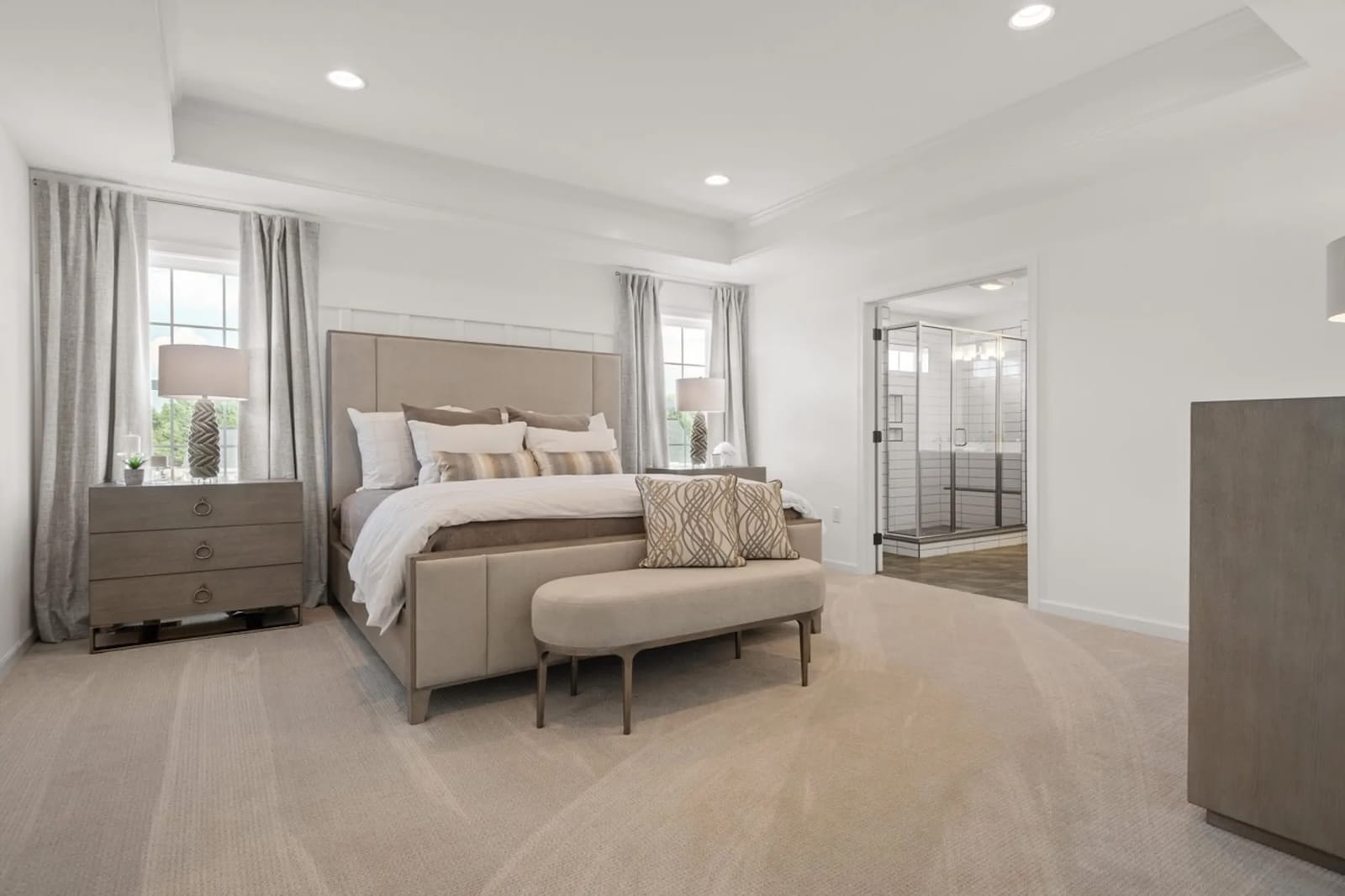
A first-floor primary is popular, but it is not automatically the better choice for every buyer.
A second-floor primary can still win when:
The lot is smaller
On narrower lots, pushing the primary upstairs can help keep the footprint tighter. That can preserve outdoor space and make the plan fit more cleanly.
You want a stronger upstairs family zone
Some families, especially with very young children, prefer having all bedrooms on the same level. That setup can feel more connected in the early years.
You prefer taller main living spaces or a more compact footprint
Some two-story layouts allow for dramatic foyers, vaulted spaces, or a more vertical design that buyers love. If architectural height is a priority, an upstairs primary can support that more easily.
You want clear separation between sleeping and entertaining
For some buyers, the ideal layout keeps all bedrooms upstairs and all entertaining below. That arrangement can feel neater and more traditional.
There is no universal winner here. The right answer depends on your life stage, lot, priorities, and how long you expect the home to serve you.
Floor plan details that make or break a first-floor primary suite
A first-floor primary suite only works well when the design is thoughtful. Otherwise, buyers end up with the right idea and the wrong execution.
Here are the floor plan details we pay attention to most.
Sound separation from the family room
This is a big one. If the primary suite shares a wall with the family room, kitchen, TV area, or high-traffic hallway, privacy drops fast.
Good plans create a buffer. That might be a hallway, closet wall, bathroom, laundry area, or vestibule between the suite and louder spaces. Without that separation, a downstairs suite can feel exposed instead of restful.
Bathroom layout
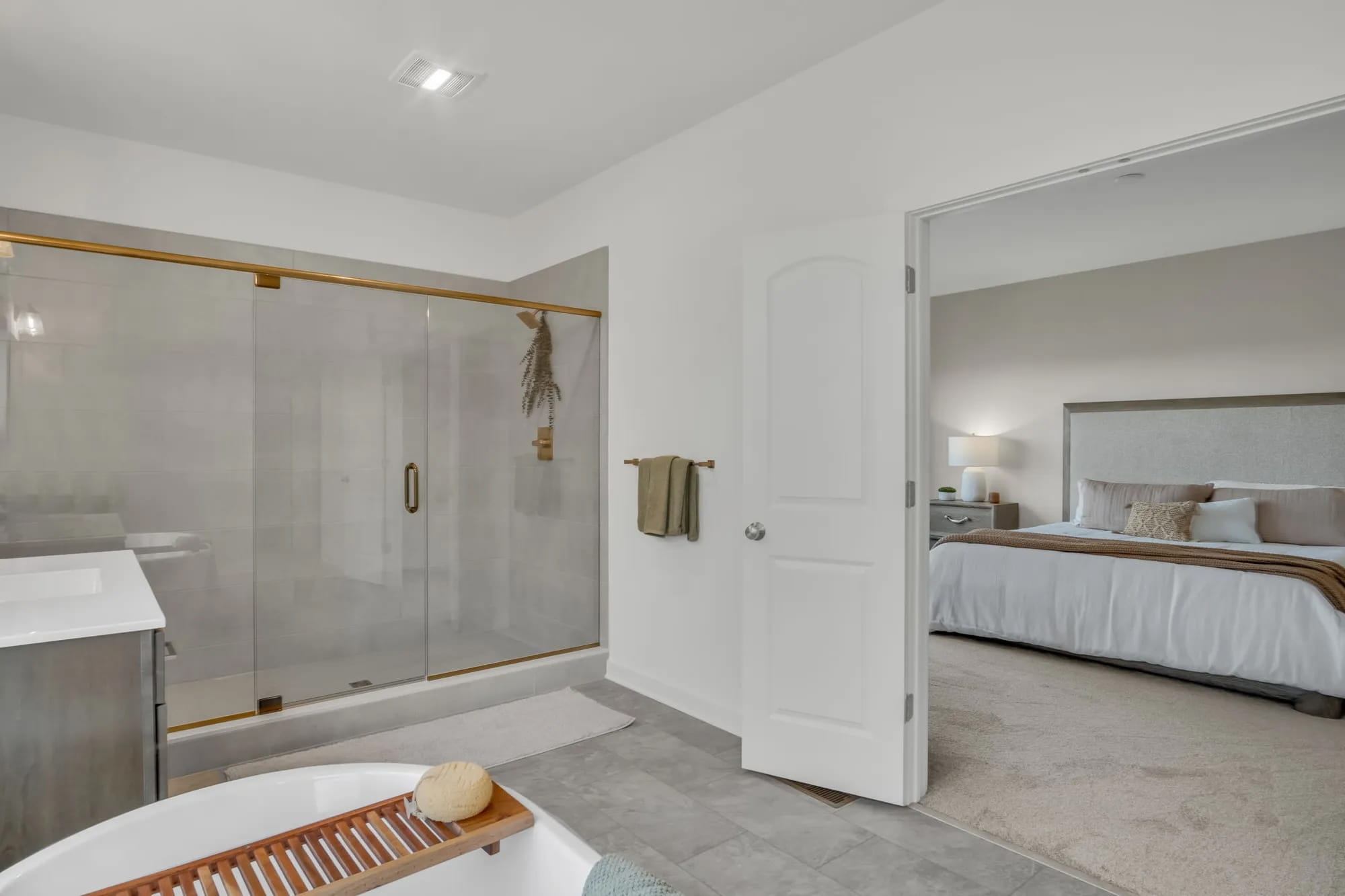
The primary bath needs to function without creating bottlenecks. Buyers should look at:
- How far the bath is from the bedroom
- Whether the toilet area has privacy
- Whether the shower location makes sense
- How natural light enters the space
- Whether two people can use it comfortably at the same time
A beautiful bathroom that feels cramped or awkward in daily use misses the point.
Closet access
The best closet location is convenient without taking over the suite. If the closet is too far from the bath, routines feel clunky. If traffic cuts through the bath in an awkward way, that gets old quickly.
The layout should feel natural from bed to bath to closet and back again.
Bedroom placement on the main level
A first floor master bedroom works best when it feels tucked away, not dropped into the middle of the plan. Look for visual privacy from the foyer and limited direct exposure to kitchen noise or main entry traffic.
Windows and wall space
Sometimes the push to fit a main-floor suite creates a bedroom with odd wall breaks or limited furniture placement. Buyers should check whether the room actually fits the bed, nightstands, dresser, and circulation they expect.
That sounds basic. It matters a lot.
What this means for Central PA buyers
In South Central Pennsylvania, buyers are balancing a few things at once: value, flexibility, location, and long-term comfort. That is exactly why this layout trend has gained so much momentum.
A first-floor primary suite lines up with how people actually live now. Families want privacy. Move-up buyers want a home that feels like a better fit, not just a bigger one. Active adults want low-maintenance comfort without giving up style. Buyers comparing new construction to resale want layouts that feel current and useful.
This is also where new construction has an edge. Older resale homes often reflect an earlier way of planning space. New homes can be designed around today’s needs, with more intentional room placement, better flow, and more flexibility built in from the start.
That is a big part of what we mean when we say homes should be Built for the Way You Live.
Garman plans with first-floor primary suite options
We offer home designs that reflect the way buyers in Central PA actually want to live, and first-floor primary suite demand is a clear example of that.
Because plan availability, community fit, and included features can change, buyers should always confirm current options with our sales team before relying on a specific plan list. The best way to narrow it down is by community, home type, lot conditions, and the features that matter most to you, whether that is single-level living, multigenerational flexibility, guest space, or privacy from upstairs bedrooms.
If a first floor primary suite is high on your list, we can help you identify which floor plans and communities offer the right fit. We can also help you compare that option against a traditional two-story layout, so you are choosing based on how you actually live, not just what sounds good on paper.
Built for the way life changes
The demand for a master suite on main floor is not a passing fad. It reflects a bigger shift in what buyers value: comfort, privacy, flexibility, and a home that can keep working as life changes.
For some buyers, that means aging in place. For others, it means separation from teen bedrooms, easier guest living, or a floor plan that simply feels calmer and more functional. And for resale, it can make the home more appealing to a wider range of future buyers.
If you’re exploring new homes in South Central Pennsylvania and want a layout that gives you more options, we’re here to help. Explore our floor plans, browse available homes, or learn more about our process to find a home that’s built for the way you live.
FAQ
What is a first floor primary suite?
A first floor primary suite is a home layout where the main bedroom, primary bathroom, and often the walk-in closet are located on the main level of the home. It gives homeowners easier access, more privacy from upstairs bedrooms, and better long-term flexibility.
Is a master suite on main floor good for resale?
Yes, a master suite on main floor often improves resale appeal because it opens the home to more buyer types. That can include active adults, multigenerational households, accessibility-minded buyers, and families who want separation from secondary bedrooms.
Are first floor primary suites only for retirees?
No. Retirees and active adult buyers still want them, but so do growing families, remote workers, and buyers planning ahead. The layout appeals to anyone who wants privacy, convenience, and a home that can adapt over time.
What are the main benefits of a first floor master bedroom?
The main benefits include easier daily living, reduced stair use, more privacy from other bedrooms, and better long-term livability. It can also make the home more flexible for guests, caregiving needs, or multigenerational living.
Does a downstairs master suite cost more?
It can, depending on the floor plan and lot. A downstairs master suite often requires more main-level square footage, which can affect footprint and design. But the cost impact varies by plan, elevation, lot size, and overall home layout.
When is a second-floor primary suite the better option?
A second-floor primary can be the better option on smaller lots, in homes where families want all bedrooms together, or when buyers prefer a more compact two-story footprint. It can also support taller main living spaces in some plans.
What should buyers look for in a first-floor primary suite layout?
Buyers should look closely at sound separation, bathroom flow, closet access, bedroom placement, and furniture space. A good first-floor primary should feel private, quiet, and easy to use every day.


 0
0