


Nest Notes
What Is an Energy-Efficient Home? A Clear Guide to HERS Index, ENERGY STAR, and Net-Zero Standards

June 24, 2026
Every builder claims energy efficient. Few are actually certified. That is the part buyers usually do not hear until they start asking better questions.
If you are comparing new homes in South Central Pennsylvania, the phrase itself is not enough. An energy-efficient home should be measured, tested and verified by a third party, not just described in marketing copy. That is what separates a real performance standard from a sales claim.
In this guide, we break down what an energy-efficient home actually is, what the HERS Index measures, what ENERGY STAR certification means, how net-zero homes work and which other certifications are worth knowing. We will also cover what these standards mean for Pennsylvania buyers, especially when winter cold and summer humidity put a home to work every single day.
Key Takeaways
- An energy-efficient home uses less energy than a typical new home and is verified through third-party testing.
- The HERS Index is one of the clearest ways to measure home energy performance. Lower scores are better.
- A score of 100 represents a standard new home and 0 represents a net-zero energy home, according to RESNET.
- ENERGY STAR certified homes must meet requirements beyond minimum code and go through third-party inspection and testing.
- In Pennsylvania, energy certifications matter because homes face both cold winters and hot, humid summers.
- Better insulation, tighter construction and tested HVAC performance can improve comfort, reduce wasted energy and help lower monthly utility bills.
- Certified high-performance homes can also support stronger resale value and buyer confidence.
- At Garman, we build HERS-tested homes that are 37% more efficient than the average new home built today, with continuous insulation and better-built wall systems designed for comfort and long-term value.
What an energy-efficient home actually is
An energy-efficient home is a home that uses less energy than the average new home while still delivering the comfort, ventilation and everyday function a family expects. The key part is verification.
A home is not truly energy efficient just because it has new windows or a decent furnace. It needs to perform as a system. That includes the insulation, air sealing, heating and cooling equipment, ducts, windows and the way the home handles airflow and temperature from room to room.
The strongest definition is this: an energy-efficient home is one that has been designed and built to reduce energy waste, then tested by an independent third party to confirm that performance.
That matters because two homes can look nearly identical on the surface and perform very differently once you move in. One might hold temperature well, feel consistent from floor to floor and keep utility bills manageable. The other might have drafts, hot upstairs bedrooms and a furnace or AC that runs harder than it should.
So when buyers ask what is an energy efficient home, the honest answer is simple. It is a home built to a measurable standard, not a home described with a vague promise.
What is the HERS Index?
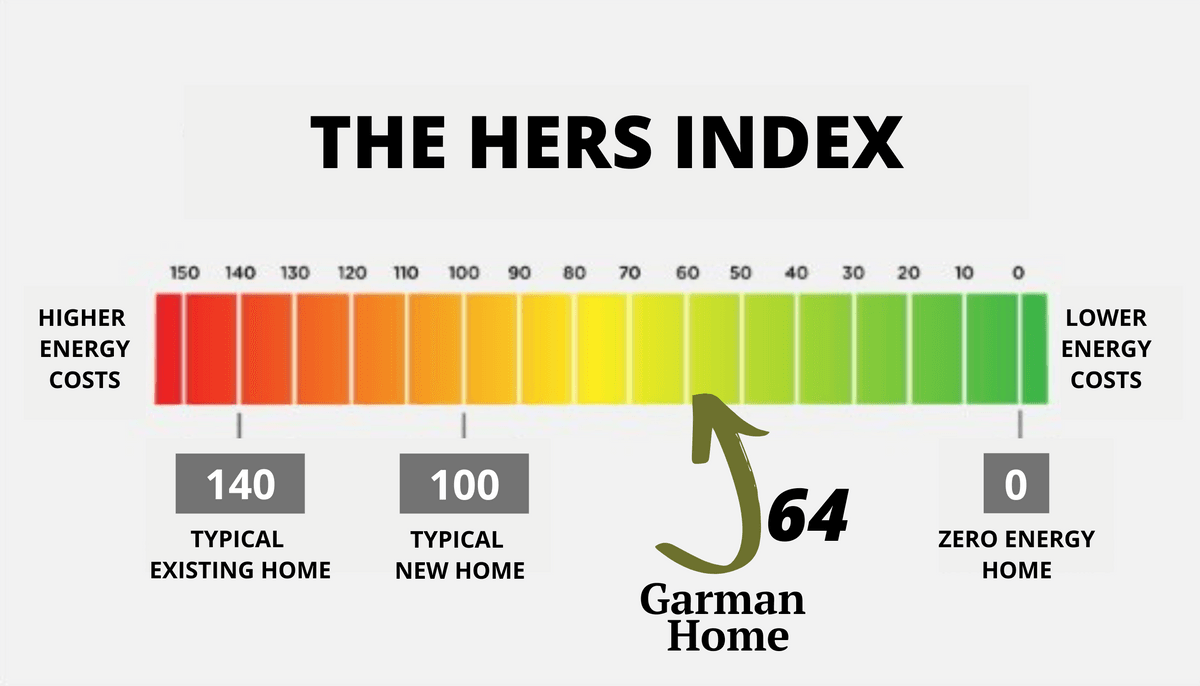
The HERS Index, short for Home Energy Rating System Index, is a nationally recognized scoring system used to measure a home's energy efficiency. It is administered through RESNET, the Residential Energy Services Network.
The scale typically runs from 0 to 150, and lower is better.
Here is the quick version:
- 100 = the reference point for a typical new home
- 0 = a net-zero energy home
- Lower scores mean better energy performance
- Scores above 100 indicate a home that is less efficient than the reference home
How the HERS score works
A HERS rating compares a specific home to a standard reference home of the same size and shape. The lower the score, the less energy the home is expected to use.
If a home scores 60, it is projected to be about 40% more energy efficient than the reference new home. If it scores 50, it is projected to be about 50% more efficient.
That is why the HERS Index gives buyers something useful: a number they can compare.
What gets tested in a HERS rating
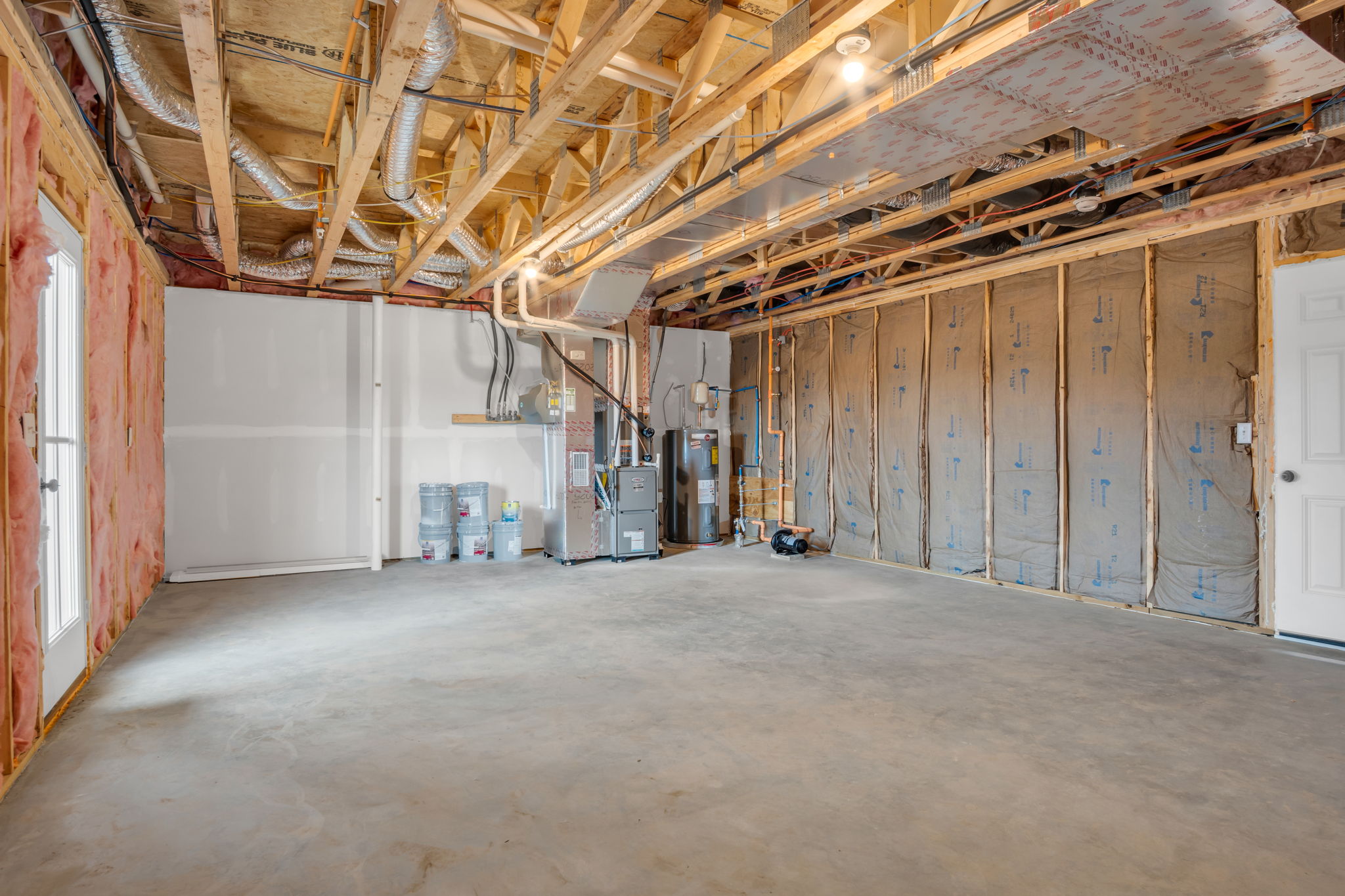
A certified HERS rater evaluates the home’s energy-related components and performance. That typically includes:
- Insulation levels
- Air leakage
- Window performance
- Heating and cooling systems
- Duct leakage
- Water heating efficiency
- Overall building envelope performance
The process usually includes diagnostic testing such as a blower door test to measure air leakage and, when applicable, duct testing to see how much conditioned air escapes before it reaches the rooms where it is needed.
Who certifies a HERS rating?
HERS ratings are performed by independent, certified RESNET raters. That third-party role matters. The builder does not simply grade their own work.
For buyers, that means the score is tied to a recognized national standard rather than internal marketing language.
What does a typical Pennsylvania new home score?
HERS scores vary by builder, home design, insulation package, HVAC system and whether the home was built to code minimums or to a higher standard. In practice, many code-built new homes land well above the strongest high-performance range, while better-built homes with verified energy packages score significantly lower.
At Garman, our homes are HERS tested and proven to be 37% more efficient than the average new home built today. That is a meaningful distinction because it gives buyers proof, not guesswork.
What does ENERGY STAR mean for homes?
An ENERGY STAR certified home is a home that has been independently verified to meet energy performance requirements established by the U.S. Environmental Protection Agency.
That is the short answer to what does ENERGY STAR mean for homes: it is a tested certification, not a general description.
ENERGY STAR certification goes beyond minimum building code. A code-compliant home can still leak air, lose heat, run inefficiently and leave the buyer with uneven comfort and higher utility costs than expected. ENERGY STAR aims to close that gap by requiring a more complete performance standard.
According to the EPA, ENERGY STAR certified homes are typically at least 10% more energy efficient than homes built to code and achieve an average of 20% improvement on heating, cooling and water heating while delivering better comfort and durability. Standards and percentages can vary by version and climate zone, so this is one of the areas worth reviewing annually.
The core systems that get checked
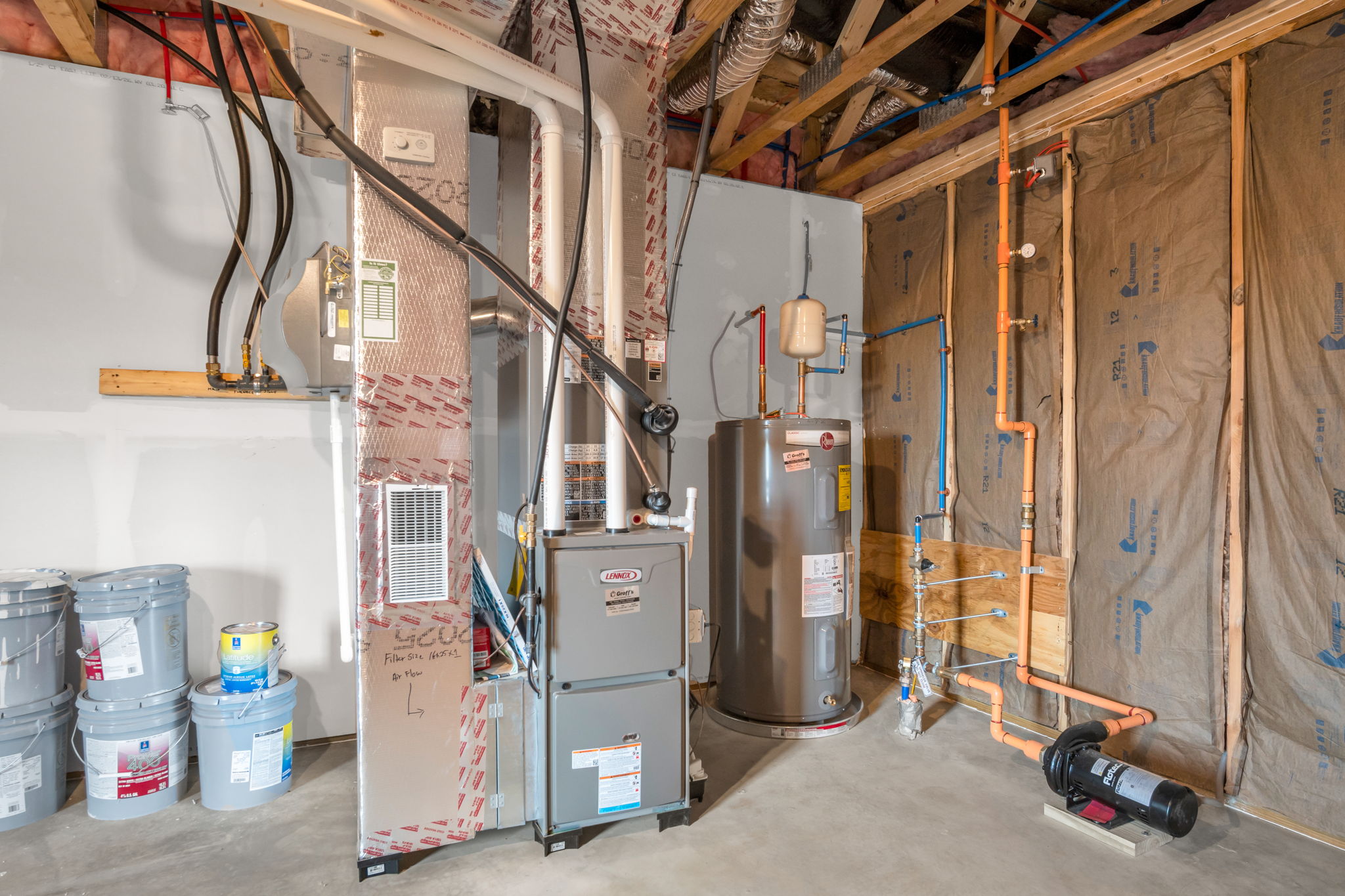
ENERGY STAR certification focuses on major systems that affect how a home performs day to day. Buyers will usually hear these discussed as the core components of the home’s energy package:
Insulation
Insulation has to be properly installed and aligned so it actually works the way it is supposed to.
HVAC system
Heating and cooling equipment must be properly sized and installed for the home.
Ductwork
Ducts are checked for leakage because lost conditioned air means wasted money and uneven comfort.
Windows and doors
These help control heat loss, heat gain and draft-related discomfort.
Air sealing and blower door performance
A blower door test measures how much outside air leaks into the home through cracks and gaps in the building envelope.
Why third-party testing matters
This is the whole point. Without testing, buyers are left trusting whatever a brochure says.
Third-party verification confirms that the insulation was installed correctly, the ductwork is tight, the HVAC system is doing its job and the house performs more like a system than a collection of parts. That translates into lower energy waste, more stable indoor temperatures and a better chance that the home will feel as good in February and August as it does on tour day.
What are net-zero homes?
A net-zero home is a home that produces as much energy over the course of a year as it uses. In most cases, that is accomplished by building a highly efficient home first, then adding enough renewable energy generation, usually solar, to offset the remaining energy demand.
That first part matters. A home does not become net-zero by putting panels on a weak shell.
What makes a home net-zero
A net-zero home usually includes:
- A tight, high-performing building envelope
- Strong insulation and air sealing
- High-efficiency HVAC and water heating
- Efficient windows and doors
- Controlled ventilation
- Low overall energy demand
- Solar power sized to cover annual usage
The cheaper path is always to reduce the load first. Then offset what remains.
Are net zero homes realistic for PA buyers?
Yes, but with context.
For many Pennsylvania buyers, a full net-zero home is still a specialized choice tied to budget, lot conditions, roof orientation and the buyer’s long-term goals. It is realistic, but it is not yet the standard path for every production homebuyer.
What is more realistic right now is buying a well-built, HERS-tested home that already performs better than average, then exploring solar integration if the property and budget make sense. That gives buyers a smarter way forward. The home starts with a strong shell, lower energy demand and a better baseline for future upgrades.
How solar fits in
Solar works best when the home itself is already efficient. Otherwise, the system has to work harder, costs more to size correctly and offsets a house that is still wasting energy.
For buyers considering net zero homes in PA, the right question is not just, “Can I add solar?” It is, “How efficient is the home before the panels go on?”
Other home energy certifications worth knowing
HERS and ENERGY STAR are the certifications most buyers run into first, but they are not the only ones in the market.
LEED for Homes
LEED stands for Leadership in Energy and Environmental Design. It is a broader green building certification that can cover energy performance, materials, indoor environmental quality, water efficiency and site considerations.
A LEED-certified home can signal a strong sustainability focus, but it is a wider standard than simple energy efficiency alone.
National Green Building Standard, NGBS
The National Green Building Standard, or NGBS, is another recognized certification system for residential construction. It looks at lot design, resource efficiency, energy efficiency, water use and indoor environmental quality.
For buyers, NGBS can be a useful sign that the builder followed an established green building framework.
DOE Zero Energy Ready Home
The U.S. Department of Energy’s Zero Energy Ready Home program is one of the more rigorous high-performance standards. These homes are built to a level where they are ready to offset most or all annual energy use with renewable energy, if solar is added.
This is not the same as code minimum. It signals a home built with a very strong envelope, efficient systems and attention to ventilation and moisture management.
Why these certifications matter more in Pennsylvania
Energy efficiency matters everywhere. In Pennsylvania, it matters more because the climate asks more from the house.
We get cold winters that expose weak insulation, air leakage and underperforming windows. We also get hot, humid summers that push cooling systems hard and reveal whether the home can actually control comfort, not just temperature.
Winter performance matters here
When temperatures drop, the quality of the building envelope becomes obvious fast. A leaky home loses heat, creates drafts and forces the heating system to run more often. Rooms can feel uneven. Floors can feel cold. Utility bills climb.
A better-built shell, proper insulation and verified air sealing help the home hold heat where it belongs.
Summer performance matters too
Pennsylvania summers are not just hot. They are humid. That puts pressure on the air conditioning system and on the home’s ability to manage moisture and airflow.
If the house is poorly sealed or the HVAC system is not well matched to the home, buyers often feel it as sticky indoor air, inconsistent temperatures and upstairs rooms that never seem comfortable. A certified, tested home is better equipped to handle those swings.
Certifications bring confidence in climate extremes
This is where a HERS rating or ENERGY STAR certification earns its value. These standards do not just speak to theory. They help prove that the home has been tested to perform under real seasonal stress.
For South Central PA buyers, that means the label is not just about efficiency. It is about comfort in January, comfort in July and more confidence year-round.
Real cost savings for Central PA buyers
Monthly utility savings are one of the most practical reasons buyers care about certified efficiency.
According to the U.S. Environmental Protection Agency, ENERGY STAR certified homes are typically at least 10% more energy efficient than homes built to code and deliver an average of about 20% savings on heating, cooling and water heating. Actual savings vary based on home size, utility rates, occupancy habits and local climate, but the direction is clear: better-built homes waste less energy.
A simple way to think about the savings
If two similarly sized new homes are in the same market, and one is built only to minimum code while the other is independently tested and built to a stronger efficiency standard, the certified home should use less energy to stay comfortable.
That can show up as:
- Lower heating bills in winter
- Lower cooling costs in summer
- Less wasted conditioned air
- A home that reaches and holds temperature faster
- More predictable monthly costs
Even moderate monthly savings matter because they repeat every month, every season and every year you own the home.
Comfort is part of the return
Buyers sometimes focus only on utility costs, but the better payoff is often comfort. Lower bills are good. A home that feels stable, quieter and more consistent is better.
That is why energy efficient new home benefits go beyond math. They show up in everyday life.
Do certified energy-efficient homes help resale value?
Yes. Certified and high-performing homes can support stronger resale appeal because buyers increasingly understand the value of lower operating costs, better comfort and third-party verification.
Research cited by groups including the National Association of Realtors and national laboratories has shown that efficient and green-certified homes can sell at a premium compared with similar non-certified homes. Market results vary by region and by how clearly the certification is documented, but the overall trend is consistent.
Why resale value improves
There are a few reasons this happens:
- Buyers trust third-party certification
- Lower operating costs are easier to market
- Newer efficient systems reduce maintenance anxiety
- Comfort and performance are real quality signals
- Documentation gives agents something concrete to explain
A home with a known HERS score, recognized certification or documented performance package gives future buyers more to work with than a vague claim that the house is “energy conscious.”
What is an Energy-Efficient Mortgage?
An Energy-Efficient Mortgage, usually called an EEM, is a loan structure that can help buyers finance energy improvements or recognize the lower operating costs of an efficient home during underwriting.
The details depend on the loan product and lender, but the general purpose is straightforward: if a home is cheaper to operate, the buyer may be in a stronger position to handle monthly housing costs overall.
Who offers EEMs?
Energy-Efficient Mortgages are typically associated with certain FHA, VA or conventional lending options, though availability varies by lender and market. Not every lender actively promotes them, and program details can change.
That means buyers interested in an EEM should ask lenders direct questions:
- Do you offer Energy-Efficient Mortgages?
- Can energy improvements be financed into the loan?
- Do you require a HERS rating or other documentation?
- How do you calculate projected energy savings?
This is one of those areas where a knowledgeable lender matters.
How we approach energy efficiency at Garman
At Garman, efficiency is not treated like a side feature. It is part of The Garman EDGE.
We build homes that are HERS tested and proven to be 37% more efficient than the average new home built today. We also use continuous insulation and higher-performing wall systems that help improve comfort, durability and long-term value.
That matters because buyers do not live inside specifications. They live inside outcomes.
What that means for daily life
Our approach is designed to help deliver:
- More consistent indoor comfort
- Lower energy waste
- Better performance through every season
- A home that feels solid and well built
- Long-term confidence in what you are buying
We believe efficiency should be something you can feel, not just something you read about in a brochure. That is why we connect building science to buyer benefits in plain terms. Lower wasted energy. Better comfort. More confidence from the day you move in.
If you are comparing builders in South Central Pennsylvania, ask who tests their homes, what standard they build to and how they prove performance. That is where the real difference shows up.
What to ask a builder about home energy efficiency
If you want a clear read on whether a builder’s energy claims are real, ask these questions:
- Do your homes receive a HERS rating?
- What is the typical HERS score for your homes?
- Are your homes ENERGY STAR certified?
- Who performs the testing?
- What blower door results do you target?
- Do you use continuous insulation or other enhanced wall systems?
- How is the HVAC system sized and verified?
- Can you show me documentation, not just marketing language?
A builder with a real process should be able to answer those clearly.
A better way to compare “energy-efficient” homes
The phrase energy efficient gets thrown around too easily. The labels that matter are the ones tied to testing, certification and measurable performance.
For buyers in Pennsylvania, that difference is worth paying attention to. We live in a climate that puts homes through real seasonal extremes. A home that is independently tested for efficiency is better positioned to deliver lower energy waste, steadier comfort and stronger long-term value.
If you are shopping for a new home in South Central PA, we would be glad to help you understand what goes into a better-built, more efficient home and what those details mean for your life after closing. Explore our energy efficiency approach, view our available homes or contact our team to learn more about The Garman EDGE.
FAQs
What is an energy efficient home?
An energy-efficient home uses less energy than a typical new home while maintaining comfort, ventilation and function. The strongest examples are verified through third-party testing, not just builder claims, and often include better insulation, tighter construction and more efficient heating and cooling systems.
What is a good HERS score for new construction?
A good HERS score is one that is meaningfully below 100, because lower scores indicate better energy performance. High-performing new homes often score well below a standard reference home. The exact number depends on the builder, home design and energy package.
What does the HERS Index measure?
The HERS Index measures a home’s projected energy use compared with a standard reference home of the same size and shape. It takes into account insulation, air leakage, windows, HVAC systems, duct performance and other energy-related components.
What does ENERGY STAR mean for homes?
ENERGY STAR means the home has been independently verified to meet energy performance requirements established by the U.S. Environmental Protection Agency. It goes beyond minimum code and includes third-party inspection and testing of major systems that affect efficiency and comfort.
Are ENERGY STAR homes worth it?
Yes. ENERGY STAR homes can reduce energy waste, improve comfort and help lower utility costs. They also give buyers more confidence because the performance is verified by third-party testing rather than left to marketing language.
Are net-zero homes available in Pennsylvania?
Yes, net-zero homes are possible in Pennsylvania, though they are still a more specialized option. Most require a high-performance building envelope, efficient systems and a solar setup sized to offset annual energy use. For many buyers, a HERS-tested high-efficiency home is the more practical first step.
Do energy-efficient homes really save money?
Yes, though the amount varies by home size, utility rates, climate and buyer habits. According to the EPA, ENERGY STAR certified homes are typically at least 10% more energy efficient than homes built to code and average about 20% savings on heating, cooling and water heating.
Can an energy-efficient home have better resale value?
Yes. Efficient and certified homes can be more attractive to future buyers because they offer lower operating costs, better comfort and third-party documentation that supports the home’s value.


 0
0