


Nest Notes
How Much Down Payment for a New Home in Pennsylvania?

August 5, 2026
Down payment minimums for new construction in Pennsylvania typically range from 0 percent for qualifying VA loans to 20 percent for a conventional loan without mortgage insurance. Most buyers land between 3 and 10 percent.
That is the short answer. The harder part is figuring out what applies to you, how that choice affects your monthly payment and when that money is actually due during the new construction process.
If you are trying to plan for a new home in South Central Pennsylvania, this guide breaks it down in plain terms. We will cover minimums by loan type, how down payment size changes the math, what makes new construction timing different from resale and where buyers often find funds they did not realize they could use. We will also show simple examples at common price points so you can see the numbers clearly.
Key Takeaways
- The minimum down payment for a new home in Pennsylvania can be as low as 0 percent for qualifying VA and USDA loans.
- Conventional loans can go as low as 3 percent for qualified buyers, though 5 percent is a more common minimum and 20 percent usually removes PMI.
- FHA loans typically require 3.5 percent with a qualifying credit score.
- Most buyers do not need 20 percent down to buy a new construction home.
- A smaller down payment usually means a higher monthly payment and may add private mortgage insurance, or PMI, on a conventional loan.
- In new construction, part of your upfront cash may be due earlier as a deposit when you sign the contract.
- Buyers often use gift funds, assistance programs, proceeds from a current home sale and other approved sources to help with down payment.
- Garman Pathways™ can reduce upfront cash pressure with a smaller initial deposit and a No Commitment Contract structure.
What Is the Typical Down Payment for New Construction in Pennsylvania?
For most buyers, the answer falls between 3 percent and 10 percent of the purchase price.
The actual minimum depends on the loan program, your credit profile, whether you are a first-time buyer and whether the property qualifies for certain financing options. If you have heard that you need 20 percent down to buy a new home, that is outdated in most cases. Twenty percent is still a useful benchmark because it can eliminate PMI on a conventional loan, but it is not the starting line for most buyers.
That matters because the down payment is often the first number that makes buying a new home feel possible, or impossible. Usually it is neither. It is just a number that needs context.
If you are still trying to define your budget, our guide on How to Calculate How Much House You Can Afford is the right next step.
Down Payment Minimums by Loan Type
Here is the direct breakdown most buyers are looking for when they search for down payment new construction PA or how much down payment for a new home.
Conventional Loans
Conventional loans typically require:
- 3 percent down for qualified first-time buyers
- 5 percent down as a standard minimum in many cases
- 20 percent down to avoid PMI on most conventional financing
Conventional loans are common for new construction because they offer flexibility and a wide range of terms. The tradeoff is that if you put down less than 20 percent, you will usually pay PMI as part of your monthly housing cost.
PMI is not permanent forever in every case, but it does affect the short-term monthly payment. So if you are comparing 5 percent down to 10 percent down, the difference is not just the upfront cash. It is also the monthly payment that follows.
FHA Loans
FHA loans typically require 3.5 percent down with a qualifying credit score.
For buyers who need a lower entry point, FHA can be a practical path. It is often used by first-time buyers, though you do not have to be a first-time buyer to use it. FHA loans also include mortgage insurance requirements, which affect the monthly payment and overall cost structure.
If you are specifically researching fha down payment PA, the 3.5 percent minimum is the number most buyers should know first. What matters next is whether FHA fits your credit profile, debt-to-income ratio and monthly payment goals.
VA Loans
VA loans offer 0 percent down for eligible veterans, active-duty service members and certain qualifying military borrowers.
That makes va loan down payment one of the simplest answers on this list. If you are eligible, the minimum down payment may be zero. That can be a major advantage, especially if you want to preserve cash for moving, furnishing, emergency reserves or future refinancing.
VA financing has its own eligibility and approval requirements, but from a down payment standpoint, it is one of the strongest affordability tools available.
USDA Loans
USDA loans also offer 0 percent down in eligible rural and suburban areas.
This is the loan program buyers overlook all the time. USDA is not limited to farmland or isolated locations. Depending on current eligibility maps, parts of South Central Pennsylvania, including portions of Garman’s six-county footprint, may qualify.
If you are searching minimum down payment Pennsylvania and your target area fits USDA guidelines, this option can shift the entire conversation. The key is verifying both property eligibility and household qualification requirements.
PHFA Programs
Pennsylvania Housing Finance Agency, or PHFA, programs can reduce the effective down payment further through down payment and closing cost assistance for qualified buyers.
These are state-specific programs, and they matter. A buyer who thinks they are short on cash may not be short at all once assistance is factored in. Program details, income limits and funding structures change over time, so they should always be checked against current published guidelines before making a decision.
For a deeper look, read PHFA and First-Time Home Buyer Programs in Pennsylvania.
How Down Payment Size Affects Your Monthly Payment

Your down payment has a direct effect on your monthly payment. The larger the down payment, the less you borrow. The less you borrow, the lower your principal and interest payment.
That part is straightforward. The second layer is PMI.
The Basic Relationship
When you put more money down:
- Your loan amount is lower
- Your monthly principal and interest payment is lower
- You may reduce or avoid PMI
- You may have more equity from day one
When you put less money down:
- Your loan amount is higher
- Your monthly principal and interest payment is higher
- You may pay PMI on a conventional loan
- You keep more cash in your account upfront
Neither option is automatically better. The right choice depends on your full financial picture.
A buyer who empties their savings to reach 20 percent down can create a bigger problem than the one they solved. A buyer who puts less down but keeps healthy reserves may have more flexibility and less stress after closing. This is one reason we tell buyers to look at the whole cost structure, not just one target percentage.
What PMI Means in Practice
PMI stands for private mortgage insurance. It usually applies to conventional loans when the down payment is less than 20 percent.
PMI increases the monthly payment. It does not build equity. It is simply part of the cost of borrowing with a lower down payment.
That does not mean a lower down payment is a bad move. It means buyers need to compare the upfront savings against the monthly cost. Sometimes it makes sense to put 5 percent down and keep more cash available. Sometimes it makes sense to put 10 percent down to lower the monthly payment. The answer depends on your goals, not internet folklore.
If you want to compare the monthly impact at different price points, our upcoming guide on How to Calculate How Much House You Can Afford can help frame that decision.
When Is the Down Payment Due on a New Construction Home?
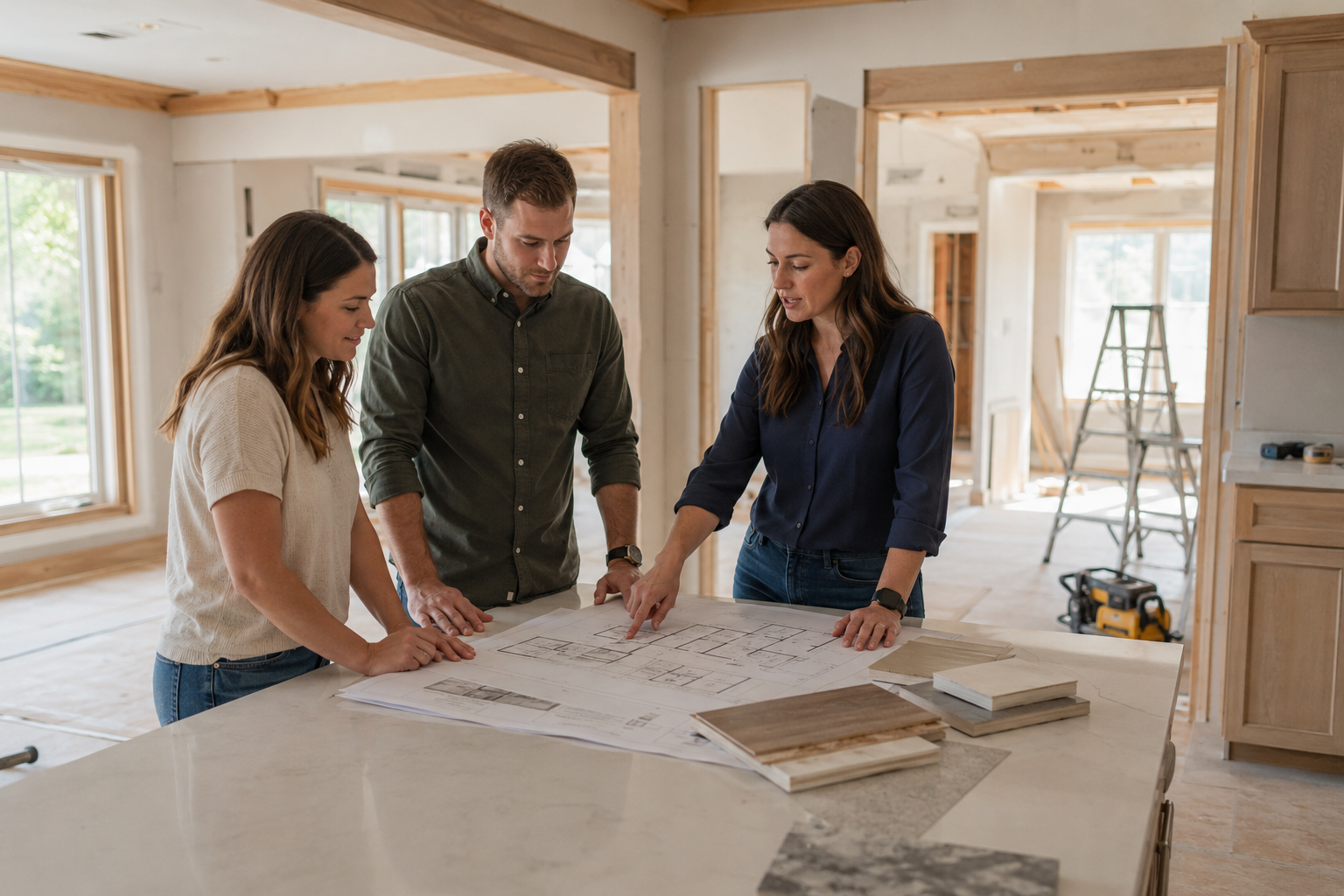
This is where new construction gets different from resale.
With a resale home, buyers usually make an earnest money deposit when the contract is signed, then bring the rest of their required funds, including the down payment and closing costs, at closing.
With new construction, there is still a contract deposit, but the timing and structure can look different depending on the builder, the home type and the financing path.
The Contract Deposit Comes First
In many new construction purchases, a deposit is due when you sign the agreement. That deposit shows intent and secures the home or homesite.
For buyers, this matters because the first cash due is not always the full down payment. It is often a smaller amount upfront, followed later by the remaining funds needed at settlement.
The Rest Is Typically Due at Closing
The full required down payment is generally finalized at closing, after financing approval and lender calculations are complete. That is also when closing costs are due, unless they are covered in part by seller contributions, incentives or assistance programs.
This is the part buyers miss. They plan for the down payment and forget that closing costs are a separate line item.
Why Timing Matters in a Build
With a build, there is usually more time between contract signing and settlement than there is in a resale purchase. That can help buyers prepare, especially if they are also selling a current home, waiting on funds to free up or building their cash reserves during the construction timeline.
It can also create confusion if buyers assume the entire amount is due on day one. Usually it is not.
Down Payment Sources Buyers Do Not Always Consider
A lot of buyers assume the down payment must come straight from checking or savings. Sometimes it does. Often it does not.
Here are several funding sources buyers use, subject to lender approval and documentation requirements.
Gift Funds From Family
Many loan programs allow gift funds from family members or other approved sources. These funds usually need to be documented correctly, and lenders often require a gift letter.
For first-time buyers especially, this can bridge the gap between renting longer and buying now.
Down Payment Assistance Programs
State and local assistance programs can help with down payment and sometimes closing costs. In Pennsylvania, PHFA programs are one of the main places buyers start.
If you are exploring down payment assistance Pennsylvania, do not wait until the last minute. Program rules, funds and qualification requirements can change, and the paperwork is easier when started early.
Retirement Account Loans
Some buyers consider borrowing from a retirement account, such as a 401(k), to cover part of the down payment.
This can work in certain cases, but it needs caution. Borrowing from retirement funds can affect long-term savings, create repayment pressure and carry penalties or tax consequences depending on the account and structure. This is one of those options that should involve both your lender and a qualified financial advisor before you move.
Proceeds From a Current Home Sale
For move-up buyers, the down payment often comes from equity in the current home.
This is common, practical and sometimes the cleanest route. But timing matters. If your current home needs to sell first, or if you are counting on proceeds to fund the next purchase, your financing strategy should reflect that from the beginning.
How Garman Pathways™ Can Reduce Upfront Cash Pressure
For buyers who feel stuck on the upfront cash question, this is where Garman Pathways™ changes the conversation.
A traditional new home purchase can feel heavy right out of the gate. Deposit due. Loan questions. Rate anxiety. Too many moving parts at once. Garman Pathways™ was designed to create a smarter way forward.
Smaller Initial Deposit
One of the biggest affordability barriers is not always the full down payment. Sometimes it is just getting started. Garman Pathways™ reduces that first hurdle with a smaller initial deposit, which helps buyers move forward without tying up as much cash at the start.
No Commitment Contract Structure
The No Commitment Contract structure gives buyers more control and less upfront pressure during the early stages of the process. That matters if you are trying to coordinate a current home sale, watching rate movement or simply trying to make a careful financial decision.
This is not fine print first. It is a structure built to give buyers more value, more control and more confidence.
For more detail, read No Commitment Contracts: How Garman Pathways™ Removes the Pressure.
Down Payment Examples at Common Pennsylvania New Home Price Points
Here is a simple breakdown of how much down payment you would need at different percentages.
On a $350,000 Home
- 3 percent down: $10,500
- 5 percent down: $17,500
- 10 percent down: $35,000
- 20 percent down: $70,000
On a $500,000 Home
- 3 percent down: $15,000
- 5 percent down: $25,000
- 10 percent down: $50,000
- 20 percent down: $100,000
On a $650,000 Home
- 3 percent down: $19,500
- 5 percent down: $32,500
- 10 percent down: $65,000
- 20 percent down: $130,000
These examples are useful because they show how quickly the target changes with price. They also show why so many buyers aim for the lowest sensible down payment that still keeps the monthly payment comfortable.
The right number is not always the biggest number you can manage. Sometimes it is the number that leaves enough room for closing costs, moving expenses, furnishings and a real emergency cushion.
Common Down Payment Mistakes Buyers Make
Most down payment mistakes come from focusing too narrowly on one number.
Assuming 20 Percent Is Required
It is not required in many cases. It is one option, not the universal rule.
If you have been delaying the process because you thought you had to save 20 percent first, it is worth revisiting the math.
Using Every Dollar for the Down Payment
This is a common mistake, especially for careful buyers who want to lower the monthly payment as much as possible.
But a house has a way of needing things. Moving costs happen. Furniture happens. Life happens. Draining every reserve to hit a round number is not a strong move if it leaves you exposed right after closing.
Forgetting Closing Costs
Your down payment is not the only cash requirement in the transaction.
Buyers who save exactly enough for the down payment and then discover they also need funds for closing costs end up scrambling. Build both into your plan from the start.
Not Getting Pre-Qualified Early
The down payment conversation gets clearer once a lender reviews your actual situation.
Without pre-qualification, buyers tend to estimate based on random averages or worst-case assumptions. That usually leads to unnecessary stress. Start with real numbers instead.
What This Means for Buyers in South Central Pennsylvania
In South Central Pennsylvania, the down payment conversation is tied closely to affordability, product type and financing flexibility.
A townhome buyer in a more attainable price range may be looking at a 3 percent or 5 percent entry point. A move-up buyer using equity from a current home may choose 10 percent or more to manage the monthly payment. An eligible veteran may be able to buy with 0 percent down. A buyer in a qualifying USDA area may be in the same position.
That is why there is no single correct answer to how much down payment for a new home. There is only the right answer for your loan type, your budget and your timing.
At Garman, we build homes designed around real life, and that includes the way people buy them. Through Garman Pathways™, practical guidance and a process built around clarity, we help buyers understand what is possible before they talk themselves out of it.
A Better Way to Plan Your Next Step
The good news is that most buyers need less cash down than they think.
The useful next step is not guessing. It is getting specific about your budget, financing options and timeline. Once you know whether your path is 3 percent, 5 percent, 10 percent or something else, the rest of the plan starts to settle into place.
Frequently Asked Questions
How much down payment do I need for a new construction home in Pennsylvania?
Most buyers need between 3 percent and 10 percent, depending on the loan type and qualification. Conventional loans can start as low as 3 percent, FHA typically requires 3.5 percent and qualifying VA or USDA loans can require 0 percent down.
Do I need 20 percent down to buy a new home?
No. Twenty percent is not required for most buyers. It is mainly the benchmark for avoiding PMI on a conventional loan. Many buyers purchase new homes with less down and choose the option that best balances upfront cost and monthly payment.
What is the minimum down payment for a conventional loan in Pennsylvania?
The minimum can be as low as 3 percent for qualified first-time buyers. In many cases, 5 percent is a more standard minimum. A 20 percent down payment typically removes PMI on a conventional loan.
What is the FHA down payment in Pennsylvania?
FHA loans typically require 3.5 percent down for buyers with a qualifying credit score. FHA also includes mortgage insurance requirements, which affect the monthly payment.
Is there a VA loan down payment requirement?
For eligible veterans, active-duty service members and other qualifying borrowers, VA loans can offer 0 percent down. Eligibility and lender approval still apply.
Can I use down payment assistance in Pennsylvania for a new construction home?
Yes, in many cases. Programs such as PHFA assistance may help qualified buyers with down payment and closing costs. Program rules change periodically, so current guidelines should always be verified before moving forward.
When do I pay the down payment on a new construction home?
Part of your upfront funds may be due as a deposit when you sign the contract. The remaining down payment is typically due at closing, along with closing costs. The exact timing depends on the purchase agreement and loan structure.
Can gift funds count toward a down payment?
Yes, many loan programs allow gift funds from approved sources, usually with documentation such as a gift letter. Buyers should confirm the rules with their lender early in the process.
Latest Posts
September 16, 2026
Buying a Home From Out of State? Here's How a Quick Move-In Home Solves the Distance Problem
September 16, 2026
How to Buy a House Without Touring First: Shopping for a New Home Remotely
September 16, 2026
Meet Wynfield's New Event Coordinator
September 16, 2026
What Makes Wynfield at Annville the Best 55+ Community in Lebanon County
September 16, 2026
Wynfield at Millersville Basement Homes: Three Homesites With a $48K Basement Package Included
September 16, 2026
Why Annville, PA Deserves a Spot on Your 55+ Community List, Even If You Haven't Found It Yet
September 14, 2026
Finish Your Basement After Closing: A New Construction Buyer's Guide to Rough-In vs. Finished Basements
September 14, 2026
Things to Do in Millersville, PA: A Local's Guide Beyond the Restaurant Scene
September 14, 2026
Do New Homes Come With Blinds? What to Know About Window Treatments After Closing
Previous Article


 0
0