


Nest Notes
Crossings at Penn Ridge FAQ

June 16, 2026
As the project moves through the planning and review process, residents have raised important questions about housing types, traffic, environmental impacts, community character, and the overall vision for the site. The following Frequently Asked Questions provide additional information about the proposed development and the steps that remain before any construction can occur.
A Traditional Neighborhood Development (TND) is being proposed at the southeast and southwest corners of Routes 741 and 999. The plan would create a walkable mixed-use neighborhood that includes a variety of housing options, neighborhood-serving commercial spaces, open space, and pedestrian-friendly amenities.
The proposed community has been designed to align with existing TND zoning regulations while intentionally reducing the overall development intensity compared to what is currently permitted. The goal is to create a thoughtfully planned neighborhood that complements the surrounding community, supports long-term growth, and provides housing opportunities for residents at different stages of life.
Crossing at Penn Ridge Master Plan
Q: Where is this project located?
A: The property is located at the southeast and southwest corners of Routes 741 and 999.
Q: What type of development is proposed?
A: The development is proposed as a Traditional Neighborhood Development (TND). TND design objectives focus on providing a compact, walkable neighborhood with a mix of housing types, shops, restaurants, parks, and open spaces within a single, cohesive plan.
Q: How many units are currently proposed on the sketch plan?
A: A total of 350 residential units is proposed, including 75 single-family homes, 136 apartments (40 of which will be above commercial space), and 139 townhomes.
Q: How does the proposed density compare to what is currently permitted?
A: While the proposed density is consistent with what is permitted under the existing TND zoning, the design team has intentionally pursued a less dense and less intense plan. The current zoning would allow for a greater concentration of commercial uses and apartments than what is being proposed. Garman’s approach reflects a deliberate effort to create a well-balanced, thoughtfully designed neighborhood that enhances the Borough and serves as a long-term value add for both current and future residents.
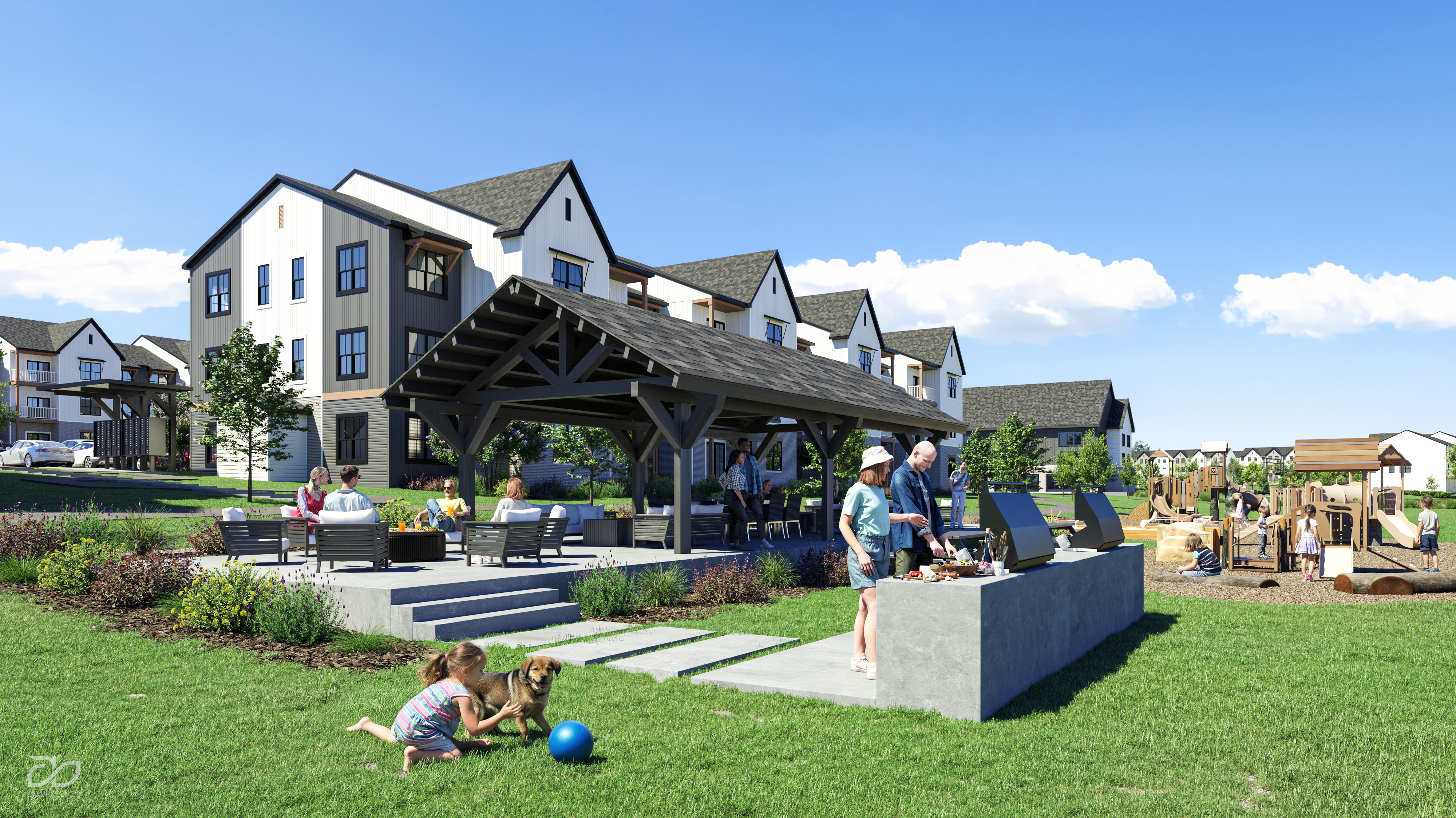
Q: Will the design of the community be that of a typical subdivision?
A: No. The entire community, including residential, commercial, and mixed-use buildings, will be subject to architectural design guidelines. These guidelines will ensure compatible architecture throughout the development and incorporate high-quality materials such as stone, brick, and wood, along with standard siding.
Q: How will this development impact surrounding property values and the existing community?
A: The development will be guided by architectural design standards and a cohesive planning approach intended to create a high-quality, attractive community. Comparable developments of this type have demonstrated that well-designed neighborhoods can integrate successfully with surrounding areas and support long-term stability and value.
Q: Why are standalone apartment buildings considered for this plan when they aren’t allowed by the zoning ordinance?
A: The current ordinance permits apartments when located above commercial uses. If a landowner meets the density requirement of 6.0 dwelling units per acre, there is no limit on the number of apartments allowed within the tract.
Building standalone apartment buildings allows for a less intense use of the property, with smaller structures and less commercial space. This results in substantially less traffic than what could be permitted under current zoning.
Q: Why are apartments important in a TND development?
A: Apartments provide housing options for a broader range of residents. Rental or condominium price points are typically lower than townhomes or single-family homes, creating more attainable housing opportunities. Apartments also help utilize land efficiently, maximize permitted density, and support commercial spaces by increasing patron activity. .
Q: How will the Developer protect privacy between the development and existing homes?
A: A combination of evergreen and deciduous plantings will be installed along the perimeter to help screen views and protect privacy. Existing healthy vegetation will be preserved where possible, and new plantings will fill in any gaps.
Q: Why is this tract being developed rather than somewhere else?
A: The property is within the Lancaster County Urban Growth Boundary and zoned for TND use. Infrastructure is readily available to support the development of the tract. These factors make this tract appropriate for development.
Q: How will the Developer address congestion on Route 741 and 999?
A: Traffic improvements will be required, but designs have not yet been finalized. PennDOT will determine the scope of improvements based on forthcoming traffic studies. The Borough Comprehensive Plan includes potential improvements such as a northbound left-turn arrow on Route 741, and signal timing adjustments. These types of improvements are typical and are expected to be a partial list of the improvements considered by PennDOT as part of this project.
Q: Why is a roundabout shown as part of the plan?
A: Route 741 already has three traffic signals between Route 999 and Wabank Road. A roundabout is a common solution for new intersections where multiple signals are in proximity. Since roundabouts require more space, the concept plan reflects this higher-impact option to ensure adequate planning.
Q: How will stormwater and environmental impacts be managed?
A: The project must comply with current stormwater and environmental regulations. These regulations have become much more stringent in recent years. Stormwater systems will be designed and reviewed during land development to ensure proper drainage, water quality, and environmental protection.
Q: Is the school district aware of the plan?
A: Yes, the school district is aware of the plan. As the planning process progresses, the district will continue to review the plan and discuss any concerns with the developer.
Q: What is next after the Borough Council decides on the zoning text amendment?
A: The current zoning ordinance permits TND development. Following Council action, the next step is to revise or finalize the concept plan and submit a conditional use application. Once conditional use is approved, a land development plan must be submitted for review and approval before construction.
QUESTIONS OR COMMENTS? Click here to email us


 0
0