


Nest Notes
Outdoor Living Spaces in Central PA: Why Some Get Used Constantly, and Others Sit Empty

July 29, 2026
Most decks in Central PA get used about 12 weekends a year. The homeowners who get more than that made a few specific decisions at the design stage.
That sounds blunt, but it’s true. A lot of outdoor spaces look good on paper and barely work in real life. They’re too hot in July, too exposed in April, too buggy at dusk and too cold by October. The result is a space that costs money, takes maintenance and ends up holding a grill and a few chairs that rarely get used.
The better approach is to plan an outdoor living space around how people actually live in Pennsylvania. That means thinking about weather, bugs, sun exposure, maintenance and how long you want the space to stay comfortable each year. If you’re building a new home, those choices matter even more because some decisions are easier and far less expensive to make during the build.
In this guide, we’ll walk through the main types of outdoor living spaces, how they perform in a four-season climate and what to decide now versus later. If you’re trying to compare a screened porch vs deck, or wondering what the best outdoor space for four seasons really is in Central PA, this is where to start.
Key Takeaways
- In Central PA, the most-used outdoor living spaces are planned around shade, bugs, rain and shoulder-season comfort
- A basic open deck or patio has the lowest upfront cost, but it also has the shortest comfortable season
- A covered patio or porch extends usability in spring, summer and fall by protecting against rain and afternoon sun
- A screened porch is often the biggest quality-of-life upgrade for outdoor living Pennsylvania homeowners can make
- A three season room or four-season room costs more, but it gives you the longest usable stretch of the year
- Orientation matters more than size, because west-facing spaces can become uncomfortable fast in summer
- During the build, it makes sense to plan for footings, roof tie-ins, gas, electric and water even if you finish the space later
- Outdoor living enhancements such as decks and patios are upgrade options and are not included in the base price of a to-be-built home unless a specific incentive applies
Why Pennsylvania Is a Tougher Outdoor-Living Climate Than It Looks
At first glance, Central Pennsylvania seems easy to plan for. We get all four seasons, plenty of green space and a lot of homeowners want room to sit outside, entertain or enjoy the backyard. But this climate is trickier than it looks.
Summer brings humidity, strong afternoon sun and mosquitoes. A beautiful west-facing deck can feel almost unusable at 5:30 p.m. in July. Spring and fall are great when the weather cooperates, but they’re inconsistent. One weekend feels perfect, the next is cold, windy or wet. Then there’s winter, which limits open-air use more than buyers sometimes expect.
That’s why the best outdoor living spaces aren’t just bigger. They’re better protected, better oriented and better thought through.
If you’re still choosing a home layout, your footprint matters too. A wider plan can change how much backyard you keep and where an outdoor space fits best. Our blog on Single-Story vs. Two-Story Homes: Which Layout Is Right for Your Stage of Life? is a helpful place to think through that tradeoff.
The Four Main Outdoor Space Types, and What Each Really Gives You
1. Open Deck or Patio
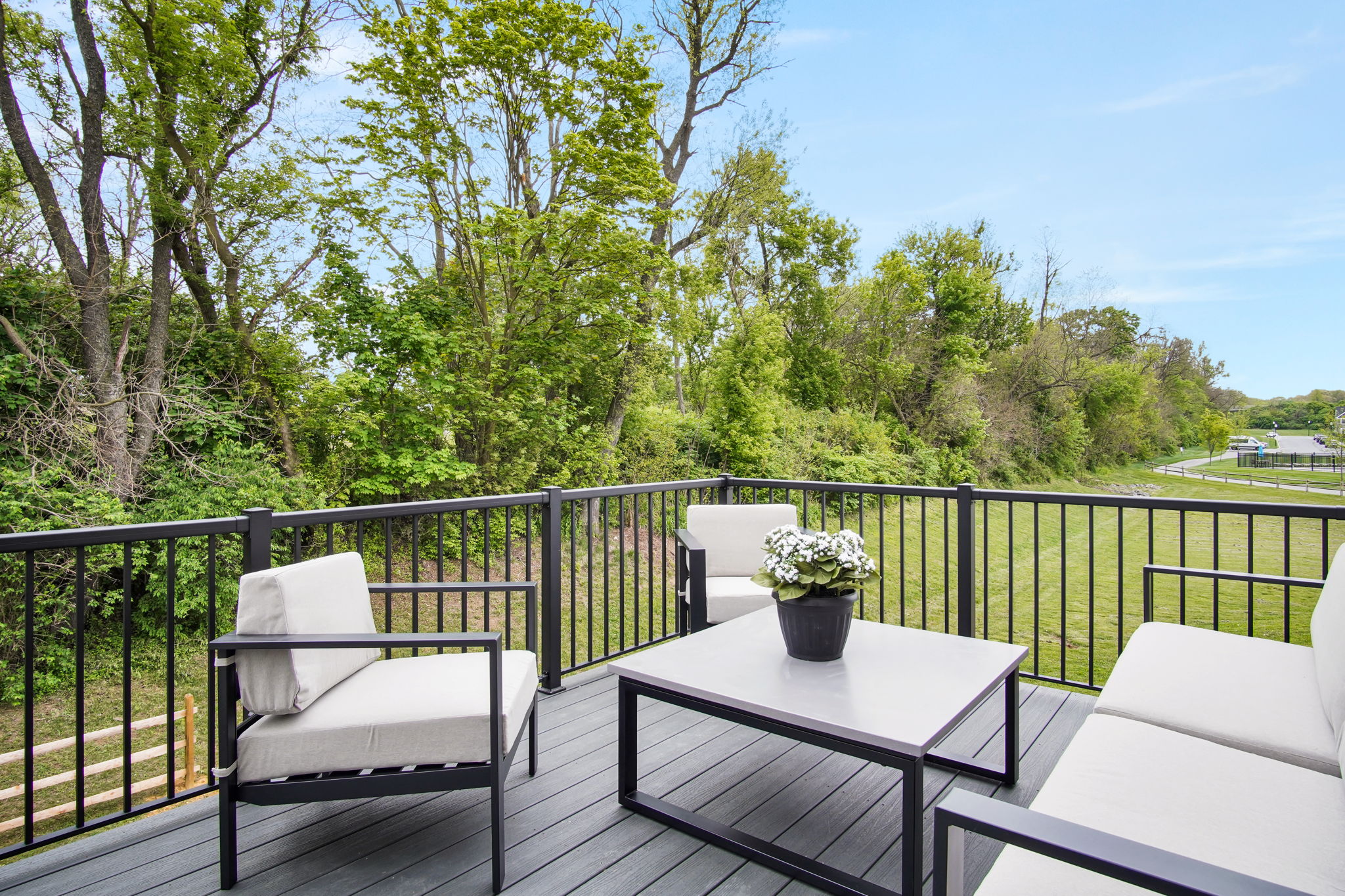
An open deck or patio is usually the most affordable entry point. It gives you clear access to the yard, a simple place to grill and room for furniture or dining.
It’s also the most exposed option.
With no overhead cover, you’re dealing with full sun, surprise rain, pollen, leaves and snow. In a Pennsylvania climate, that means the usable season is shorter than people picture when they first start planning. Open spaces work best for homeowners who primarily want occasional fair-weather use and don’t mind packing things up when the forecast changes.
Best for:
- Grilling
- Casual seating
- Lower upfront cost
- Buyers who want a simple extension of the backyard
Limitations:
- Full exposure to heat and rain
- More furniture wear
- Shorter comfortable season
- Less bug protection
2. Covered Patio or Porch
A covered patio new home buyers choose often becomes a much more reliable part of daily life. Shade changes everything. So does rain protection.
A covered space gives you more usable days because you’re not canceling dinner outside every time a storm passes through. It also makes mornings, late afternoons and shoulder-season days more comfortable. That matters in Central PA, where a little protection often turns a rarely used patio into a real living space.
Covered doesn’t mean enclosed, though. You still have humidity, bugs and blowing rain depending on the setup.
Best for:
- Outdoor dining
- Reading, relaxing and entertaining
- Buyers who want a longer season without fully enclosing the space
- Homes where a porch or covered patio fits the architecture naturally
Limitations:
- Still open to mosquitoes
- Can be chilly in spring and fall without added heat
- Not fully protected in severe weather
For buyers considering lifestyle-focused communities, this is where neighborhood design can matter too. Our blog on Why The Porches of Allenberry Is More Than a Neighborhood, It’s a Lifestyle explores how outdoor connection can shape daily life in a community built around that idea.
3. Screened Porch
In our climate, a screened porch is often the biggest jump in real-world usability.
If you’re comparing a screened porch vs deck, the biggest difference isn’t style. It’s how often you’ll actually use it. Screens don’t solve every weather issue, but they do handle one of the most annoying parts of outdoor living in Pennsylvania: bugs. They also soften wind, cut down on debris and make evening use much more pleasant from spring through fall.
That matters more than people think. A lot of outdoor spaces go empty because dusk is the best time to sit outside, and dusk is also when mosquitoes show up.
Best for:
- Frequent outdoor dining
- Summer evenings
- Morning coffee in spring and fall
- Buyers who want open-air living without fighting insects
Limitations:
- Higher cost than open or simply covered space
- Not climate-controlled
- Furniture and finishes still need seasonal care
4. Three-Season or Four-Season Room
A three season room or four-season room gives you the longest use window. It also asks for the biggest investment.
A three-season room is typically designed to bridge the gap between indoors and out with more protection from weather, not necessarily full year-round conditioning. A four-season room is built for year-round comfort with full insulation and heating and cooling.
For buyers who know they want the space to function almost like another living area, these rooms can make a lot of sense. They’re especially useful when the goal is flexibility, entertaining or everyday use that isn’t held hostage by weather.
Best for:
- Longest use through the year
- Flexible gathering space
- Buyers who want comfort closer to indoor living
- Homes where the added square footage supports the budget and lifestyle
Limitations:
- Highest cost
- More structural planning
- Less of an “open-air” feel than a porch or patio
The Usable-Days Math in Central PA
Here’s the honest version: there is no exact formula. Microclimate, orientation, tree cover, elevation and personal preference all matter. But as a general estimate in Central Pennsylvania, some outdoor space types simply give you more comfortable days per year than others.
General comfort estimate by outdoor space type
- Open deck or patio: roughly 90 to 130 comfortable days per year
- Covered patio or porch: roughly 120 to 170 comfortable days per year
- Screened porch: roughly 150 to 210 comfortable days per year
- Three-season room: roughly 180 to 240 comfortable days per year
- Four-season room: year-round use, depending on design and conditioning
Those are broad planning estimates, not performance guarantees. But they reflect a real pattern. Every layer of protection, from shade to screening to conditioning, adds usable time.
That’s the real conversation to have. Not just “Do I want a deck?” but “How many months do I want this space to work?”
Features That Extend the Season
The right extras can make a bigger difference than another 50 square feet.
Ceiling fans
Ceiling fans help with air movement during humid months. They don’t lower the temperature, but they make covered and screened spaces feel more comfortable in summer.
Infrared or gas heaters
For spring and fall, heat changes the equation fast. If you want to enjoy cool mornings or later evenings, built-in heat is one of the most practical upgrades.
Fire pit or outdoor fireplace
These add warmth, but they also create a reason to use the space in cooler weather. A fire feature can pull an outdoor area into the shoulder seasons in a way loose furniture never will.
Retractable screens
If the structure allows for it, retractable screens can give you flexibility. Open when you want air, closed when the bugs are bad.
Windbreak from landscaping or structure
Walls, privacy panels, evergreens and thoughtful placement all help reduce wind exposure. In spring and fall, that can be the difference between comfortable and not worth it.
Orientation Matters More Than Size
Bigger is not always better. Direction matters more.
In Central PA, a west-facing outdoor space often gets punished by late-day summer sun. That can make the very time people want to sit outside, after work and around dinner, the least comfortable time to use the space. East-facing spaces tend to be better for morning use. South-facing spaces can be pleasant in cooler months, but they need thoughtful shade in summer. North-facing spaces are often more evenly shaded, though they can feel cooler in spring and fall.
If you only remember one planning point from this article, remember this: a smaller shaded porch in the right orientation usually gets used more than a larger exposed deck in the wrong one.
When we help buyers think through floor plans, outdoor placement is part of the conversation. The home itself shapes the rear yard, shade pattern and connection to indoor spaces. Our Floor Plan Spotlight: A Fresh Way to Live, Work, and Gather at Home is a good example of how layout decisions affect daily living inside and out.
Outdoor Kitchens in a Pennsylvania Climate: What’s Worth It
Outdoor kitchens look great in photos. Some are worth the investment. Some aren’t.
In a four-season climate, the most useful outdoor kitchen setups tend to stay practical:
- A quality grill
- Good prep space
- Durable countertops
- Dedicated gas or electric where needed
- Storage built with weather in mind
That’s enough for most households.
What deserves more caution:
- Appliances that sit exposed through freeze-thaw cycles
- Refrigeration that won’t be used enough to justify the cost
- Overbuilt setups that require winterization and constant upkeep
- Finishes that look great at installation and age poorly outdoors
If you enjoy entertaining often, an outdoor kitchen can make sense. But in Central PA, it usually makes more sense to spend first on comfort, shade and season extension. A modest cooking setup inside a well-designed porch or patio area often delivers more value than a large outdoor kitchen attached to a space that’s too hot or buggy to enjoy.
What to Decide During the Build, and What to Add Later
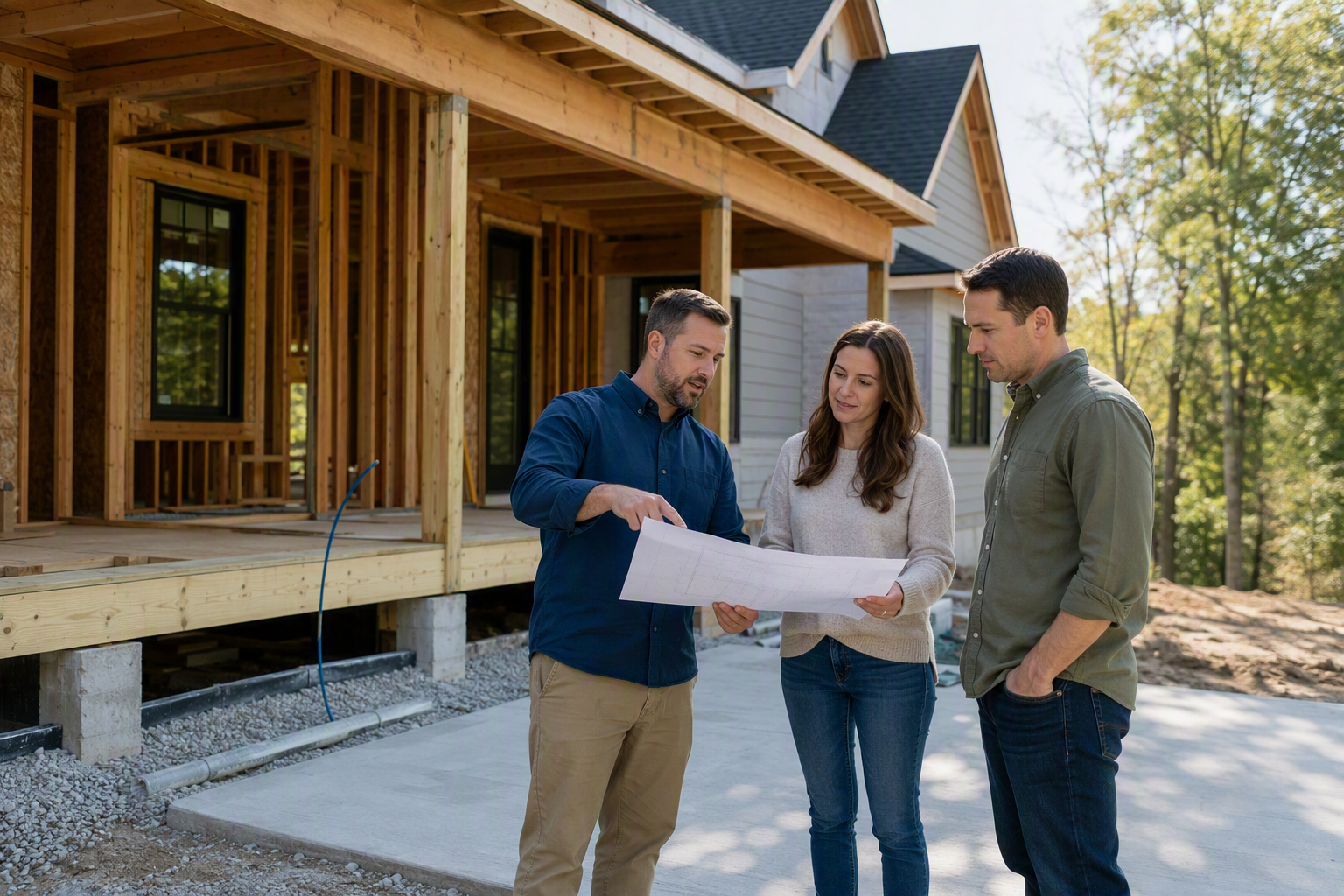
This is where planning pays off.
Even if you’re not ready to complete the full outdoor living area now, there are structural and utility items worth deciding during the build. They’re cleaner to install, easier to coordinate and often far less expensive before the home is finished.
Decide during the build
- Structure footings
- Roof tie-in for a covered patio or porch
- Gas line stub for grill, heater or fire feature
- Dedicated electrical
- Ceiling fan box
- Water line
- Drainage considerations
- Door placement and rear elevation design
These choices set you up for flexibility later. They also help avoid the look and cost of trying to force an afterthought addition onto a finished home.
Add later
- Furniture
- Grill
- Planters
- String lighting
- Portable heaters
- Decorative elements
- Screens on an already-covered structure, where design allows
If you’re building with us, this is exactly the kind of conversation to have before final selections are locked in. Our What to Expect at Your Design Studio Appointment guide helps explain where option decisions, exterior details and utility planning fit into the process.
A quick note on pricing: outdoor living enhancements such as decks and patios are upgrades and are not included in the base price of a to-be-built home. At times, we may offer an incentive that includes a free deck or patio. Buyers should check with our sales agents for the current incentive and the specific options available in that community.
Low-Maintenance Material Choices, and the Honest Trade-Offs
Material choice affects both appearance and upkeep. There’s no perfect answer, just better fits for different priorities.
Composite decking
Composite decking is popular for a reason. It reduces routine maintenance and holds up well over time.
Trade-offs:
- Higher upfront cost than some wood options
- Can get hot in direct sun
- Not maintenance-free, just lower maintenance
Sealed concrete
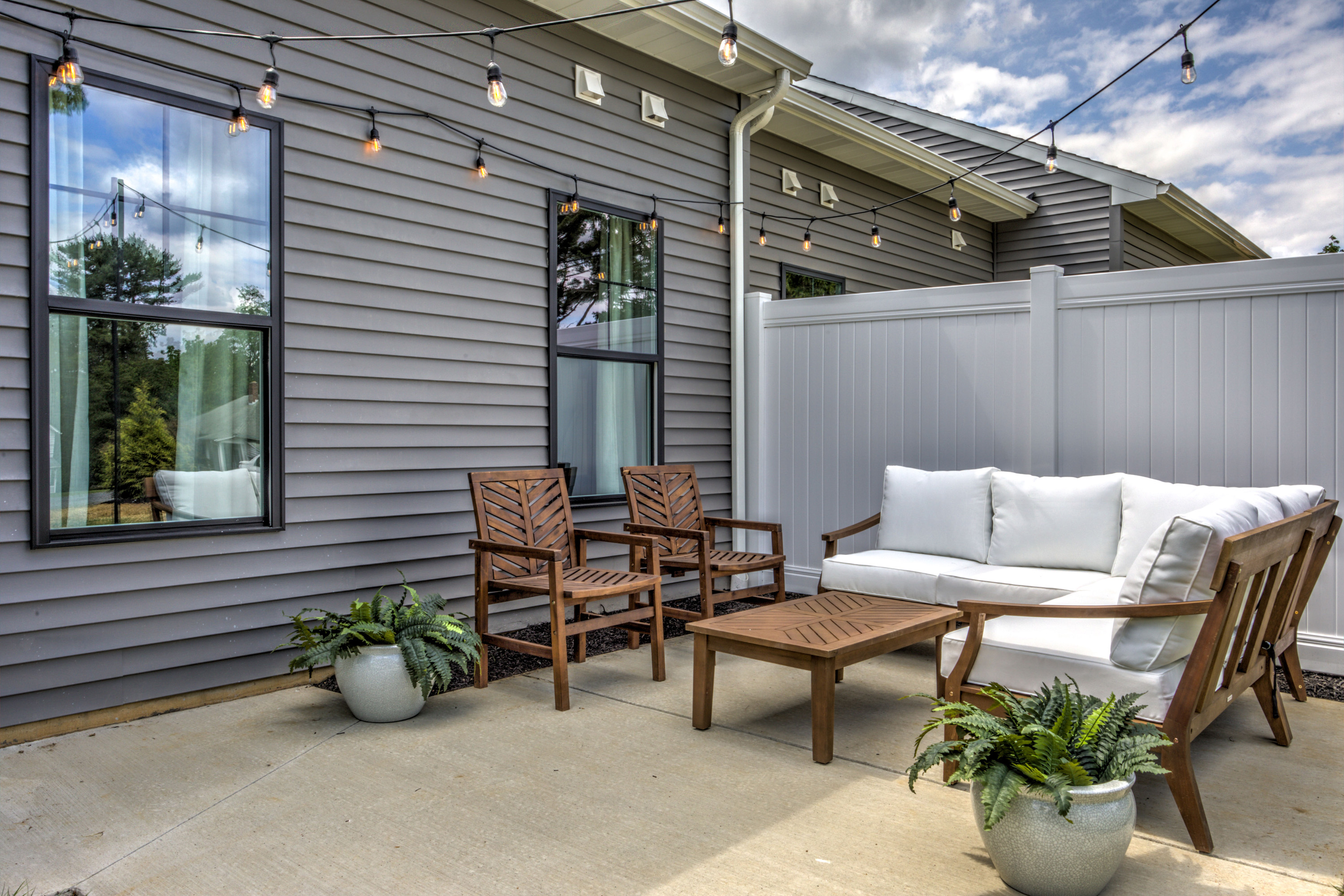
Sealed concrete works well for patios and can be clean and straightforward.
Trade-offs:
- Can crack over time
- Looks more basic unless upgraded
- Needs resealing to keep its best appearance
Stamped concrete
Stamped concrete offers more visual character and can mimic higher-end materials at a lower price than some alternatives.
Trade-offs:
- Still susceptible to cracking
- Finish can wear unevenly over time
- Repairs are harder to blend
Pavers
Pavers have strong visual appeal and good repair flexibility because individual units can be replaced.
Trade-offs:
- Higher installation cost
- Weed and joint maintenance can become an issue if not managed well
- Surface can shift over time if the base prep isn’t done right
If low upkeep matters to you, it’s also worth reading Is Low-Maintenance Living Right for You?. Outdoor spaces can absolutely support a lower-maintenance lifestyle, but only if the materials and design match that goal.
How Outdoor Living Affects Resale in Central PA
Outdoor living rarely adds value just because it exists. It adds value when it’s usable.
A plain, exposed platform in the backyard doesn’t carry the same weight as a space that feels connected to the home and comfortable for a meaningful part of the year. Buyers notice shade, privacy, bug protection, quality materials and whether the space feels like part of the home rather than an add-on.
In Central PA, the most resale-friendly outdoor spaces usually have three things:
- A strong connection to the interior layout
- Some form of weather or sun protection
- Materials that look durable and manageable
That doesn’t mean every buyer needs a screened porch or four-season room. It means a smartly planned outdoor space tends to photograph better, show better and make more sense to the next buyer.
For community-specific options, buyers should review the relevant Garman community pages and available floor plans, or speak with a sales agent about which structural outdoor living options are offered in a specific neighborhood.
A Better Way to Think About Outdoor Living
The question isn’t whether an outdoor living space sounds nice. It does. The better question is what kind of space you’ll keep using after the first summer.
In Pennsylvania, the outdoor spaces that earn their keep are the ones designed for real conditions. Shade matters. Screening matters. Orientation matters. Planning utility stubs and structural support during the build matters. So does being honest about maintenance.
If you want help thinking through outdoor living spaces in a new Garman home, we’re here to walk through the options, the trade-offs and what makes sense for the way you live. Explore our floor plans, browse our communities, or contact our team to talk through available outdoor living options, upgrades and any current incentives.
FAQ
Is a screened porch better than a deck in Pennsylvania?
For many homeowners, yes. In Pennsylvania’s humid climate, a screened porch often gets used more than an open deck because it adds bug protection, filters debris and makes evenings from spring through fall much more comfortable.
What is the best outdoor space for four seasons?
A four-season room gives you the longest use because it is designed for year-round comfort. If you want a more open-air experience with strong spring-through-fall usability, a screened porch or covered patio is often the better fit.
Are decks and patios included in the base price of a new Garman home?
No. Outdoor living enhancements such as decks and patios are upgrades and are not included in the base price of a to-be-built home. At times, we may offer an incentive that includes a free deck or patio. Check with a Garman sales agent for current incentives and community-specific details.
What should I plan during the build if I want to add outdoor living later?
Plan the hard parts early: footings, roof tie-ins, gas line stubs, electrical, ceiling fan boxes and water lines. Those choices are easier and more cost-effective during the build than after the home is complete.
Does a covered patio add more usable days than an open patio?
Yes. A covered patio usually adds meaningful comfort because it provides shade and rain protection. In Central PA, that often extends the outdoor season far more than buyers expect.
Which direction should an outdoor living space face?
It depends on when you plan to use it, but west-facing spaces are often the hardest in summer because of strong afternoon sun. A smaller shaded space with better orientation usually performs better than a larger exposed one.
Are outdoor kitchens worth it in Central Pennsylvania?
They can be, but simpler is usually better. A good grill, prep space and the right gas or electrical setup often deliver more value than a large built-in kitchen that requires more upkeep and winter protection.


 0
0