


Nest Notes
Renovate or Build New? How to Decide When You Love Where You Live

September 22, 2026
Renovate or Build New? How to Decide When You Love Where You Live
You love where you live. You are just not sure the house itself still works anymore. The kitchen feels closed off, the bedrooms are in the wrong place for how your family actually moves through the day, or you have simply outgrown the layout you bought into years ago. And now you are stuck on a question that sounds simple but rarely is: should you renovate the home you already have, or is it time to build new?
We work with homeowners on both sides of this decision every year, through our renovation team and through our custom home process. There is no single right answer. There is only the right answer for your lot, your budget, your timeline, and how attached you actually are to the address on your mailbox. Here is how we walk buyers through it.
Key Takeaways
- Location attachment is often the real deciding factor, not the house itself. If you love your lot, your neighborhood, or your school district, that changes the math significantly.
- A handful of targeted updates points toward renovation. A near-total reimagining of your home's structure and layout often points toward building new.
- Renovation and custom home costs can land close together once you factor in the full scope of a major renovation, especially when structural work is involved.
- Timeline and disruption look different for each path. Renovating usually means living in or around construction. Building new usually means living elsewhere while your new home comes together.
- Some homes have structural or layout limitations that make a "simple" renovation far more expensive and complicated than it first appears.
- Whether you plan to stay in this home for the next 10 years or the rest of your life should shape which path makes more sense.
- Emotional attachment to a home full of memories is a legitimate factor in this decision, even when it is not the most financially efficient one.
- Both whole-home renovations and custom homes currently qualify under our Celebrate, Renovate, Save promotion, which is worth factoring into the financial side of your decision.
Do You Love Your Lot, or Do You Love Your House?
This is the first question we ask, and it is more important than most homeowners expect.
If what you love is your property itself, your lot size, the trees you planted, the walk to your kids' school, the way your street feels in October, that attachment matters. It is not sentimental fluff. It is a real input into a financial and lifestyle decision. Staying put and renovating keeps all of that intact.
But if what you actually love is the neighborhood or the general area, and the house itself is what is holding you back, building new does not necessarily mean leaving what you love. Many of our custom homeowners build within a few miles of where they already live, sometimes on the same street, because it was the house that needed to change, not the zip code.
Answer honestly: are you attached to this specific piece of land, or are you attached to a version of your life that the house no longer supports?
What Does Your Family Actually Need?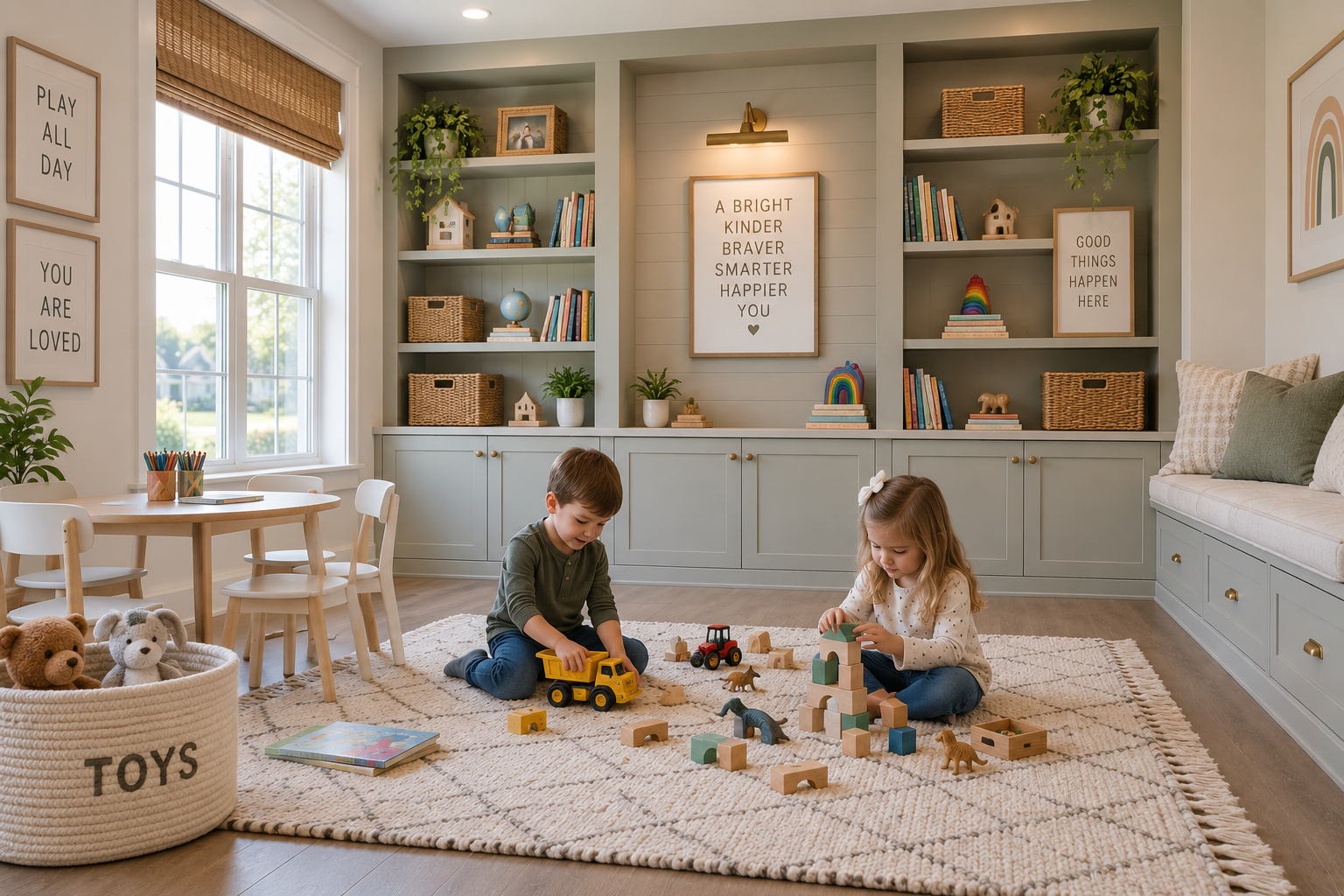
Once you have sorted out the location question, the next one is scope.
Some families need a kitchen that opens up, a primary suite added over the garage, or a mudroom that actually does its job. These are targeted changes. They solve real problems without touching the bones of the house, and they are exactly the kind of project our renovation team handles well. Renovation Projects That Can Change the Way Your Family Lives at Home walks through the specific updates that tend to have the biggest impact on daily life.
Other families are looking at a much longer list. New layout, new square footage, new systems throughout, structural changes on nearly every floor. At that point, you are not really renovating anymore. You are rebuilding a home while living next to a shell of the old one, and the math and the disruption start to look a lot like building new.
Be honest about which list you are actually working from. A short list of real fixes is a renovation. A long list of foundational changes is closer to starting over.
Renovation Costs vs Custom Home Costs: What the Numbers Actually Show
This is where most homeowners assume renovating is automatically cheaper. It often is, but not always, and the gap closes fast once the scope grows.
A targeted renovation, a kitchen remodel, a primary suite addition, a basement finish, tends to cost meaningfully less than building new. You are working with an existing foundation, existing systems in many cases, and a smaller footprint of change.
A major renovation touching multiple rooms, moving walls, updating electrical and plumbing throughout, and reworking the layout is a different story. Once you add up structural work, the cost of temporarily undoing parts of a functioning home, and the uncertainty that comes with opening up an older structure, the total can land surprisingly close to what a custom home costs for comparable square footage. The difference is that a custom home gives you a known cost and a known result from day one. A major renovation on an older home often carries more unknowns until the walls come open.
If you want a full breakdown of what building new actually costs in this market, our piece on The True Cost of Building a New Home in Pennsylvania: 2026 Breakdown lays out real numbers by category. It is worth reading alongside any renovation estimate you get, so you are comparing apples to apples instead of comparing a renovation quote to an outdated idea of what new construction costs.
Timeline: Living Through a Renovation vs Waiting for a New Build
Cost is only half the equation. The other half is how the process actually feels while you are living through it.
A major renovation usually means staying in or near your home while work happens around you, sometimes for months, depending on scope. Dust, noise, shifted schedules, and living out of fewer rooms than usual become part of daily life for a while. Some families handle that fine. Others find it genuinely hard on kids, pets, or work-from-home routines. If you are not sure whether your household needs to relocate during construction, Do You Have to Move Out During a Home Renovation? breaks down when moving out is necessary and when it is not.
Building new looks different. The disruption happens somewhere else, on your future lot, while you continue living in your current home until closing. The tradeoff is a longer overall timeline before you are living in the finished result, but the day-to-day disruption to your current life is much lower.
Neither pattern is better in the abstract. One fits some households better than the other, and that is worth thinking through before you commit.
When Your Existing Home Says No
Some homes are simply not built to accommodate what a family wants next, and recognizing this early saves a lot of money and frustration.
Signs your existing structure may be working against you: load-bearing walls sitting exactly where you want open space, a foundation or footprint too small to add the square footage you actually need, outdated systems that would need full replacement regardless of what else you renovate, or a layout so fixed that opening it up would cost more than building the same square footage new. Older homes in particular can hide structural surprises once walls come open, which is part of why "simple" renovations sometimes turn into much bigger projects than planned.
If you are hearing "we would need to move that wall, but it's load-bearing" or "we'd have to redo the whole electrical panel anyway" more than once during a renovation consultation, that is a signal worth taking seriously.
Is This a Forever-Home Decision or a Next-Decade Decision?
How long you plan to stay changes which path makes more sense.
If this is a forever home, one you expect to be in for decades, it is worth solving the problem completely rather than patching around it. A custom build lets you design specifically for how you live now and how you expect to live later, without working around someone else's decisions from thirty years ago.
If you are thinking in a ten-year window rather than a lifetime, a renovation that solves your most pressing problems, without rebuilding everything, may be the more efficient path. Not every problem needs a permanent solution if your own plans have a horizon.
The Emotional Factor, Stated Honestly
Here is the part most cost comparisons leave out: some homeowners are not ready to leave a home full of memories, even when a renovation costs more than building new would.
That is a legitimate factor in this decision, not a mistake to talk yourself out of. If staying in this specific house matters to you for reasons that have nothing to do with square footage or cost per square foot, it is fair to weigh that alongside the financial picture rather than instead of it. We would rather help you make a decision you feel good about than one that only makes sense on paper.
A Simple Decision Framework
Before you commit to either path, answer these honestly:
- Am I attached to this specific property, or to the general area?
- Is my list of needed changes short and targeted, or long and structural?
- Have I compared real renovation costs to real custom home costs for my actual scope, not a rough guess?
- Can my household tolerate living through months of construction, or do we need to be elsewhere while work happens?
- Has anyone flagged structural or layout limitations in my current home that would make renovating more complicated?
- Is this a forever-home decision or a next-decade decision?
- Is there an emotional attachment here that matters to me, regardless of what the numbers say?
If you are still unsure whether the timing is right at all, Is Now the Right Time to Renovate Your Home? is a good next read before you move forward with either path.
How This Connects to Celebrate, Renovate, Save
Right now, both custom homes and whole-home renovations qualify under our Celebrate, Renovate, Save promotion. That matters here because it means the financial comparison between renovating and building new is not happening in a vacuum. Whichever path fits your lot, your scope, and your long-term plans, it is worth factoring the current promotion into your numbers before you decide. Reach out to our team to confirm current terms and see how they apply to your specific project.
There Is No Universal Answer, Only Your Answer
Renovating and building new solve different problems, and neither one is automatically the smarter move. The right answer depends on how attached you are to your lot, how big the gap is between what your home offers and what your family needs, what your budget actually shows once you compare real numbers, and how long you plan to call this place home.
If you already know you want to build and are trying to decide what kind of builder fits your project, our piece on New Construction vs. Custom Home: Which Path Is Right for You? compares production, semi-custom, and full custom builders. That is a different decision than the one we have walked through here, but it is the natural next step once renovating is off the table.
If you are somewhere in the middle, reach out. We build custom homes and we renovate existing ones, and we would rather help you land on the path that actually fits your life than push you toward whichever one we happen to sell.
FAQ
Is it cheaper to renovate or build a new custom home?
It depends on scope. Small, targeted renovations are usually cheaper than building new. Major renovations involving structural changes, multiple rooms, and system replacements can cost close to what a comparable custom home costs, with more uncertainty along the way.
How do I know if my home's problems are structural?
Signs include load-bearing walls in the way of what you want to change, an undersized foundation or footprint, and outdated systems that need full replacement regardless of the renovation scope. A builder or contractor can confirm this during an initial walkthrough.
Do I have to move out during a major renovation?
Sometimes, depending on the scope and which systems are being replaced. Smaller renovations often allow you to stay. Larger ones affecting plumbing, electrical, or structural work across multiple rooms usually require temporary relocation. Our piece on Do You Have to Move Out During a Home Renovation? covers this in more detail.
How long does a major renovation take compared to building a custom home?
Major renovations often take several months and happen while you are living in or near the home. Custom home builds typically take longer overall but happen at a separate site, so day-to-day disruption to your current living situation is lower.
Can I use the Celebrate, Renovate, Save promotion for either option?
Yes. Both whole-home renovations and custom homes currently qualify under this promotion. Contact our team to confirm current terms and how they apply to your specific project.

 0
0