


Nest Notes
New Construction vs. Custom Home: Which Path Is Right for You?

July 15, 2026
You’ve decided on new construction. That already narrows the search in a good way. You want a home with new systems, modern layouts, better efficiency, warranty confidence, and fewer maintenance surprises than an older resale home. If you’re still weighing that decision, our new build vs. resale guide is a helpful place to compare those two paths.
But now there’s another choice: new construction vs. custom home. More specifically, do you want a production home, a semi-custom home, or a full custom build?
That decision affects your budget, timeline, design flexibility, lot options, and how many decisions you’ll make along the way. The right answer is not always “more custom.” For many buyers, the smartest path is the one that gives them enough personalization without turning the process into a second job.
Key Takeaways
- Production homes offer the most predictable path, with established plans, communities, pricing and timelines.
- Semi-custom homes give buyers more design control while still keeping the process guided, efficient and easier to price.
- Full custom homes make sense when the lot, layout or lifestyle needs cannot be served by an existing plan.
- Custom homes usually require more time, more decisions and more budget flexibility than production or semi-custom new construction.
- In Central PA, Garman’s community pricing ranges from attached homes in the high $290Ks to estate homes over $800K, with many single-family homes in the $400K to $550K range.
- Price per square foot is only part of the story. Site work, selections, land, engineering, permits and plan complexity can change the real cost quickly.
- Garman fits best for buyers who want a better-built new home, thoughtful design choices and a guided process, not a one-size-fits-all experience.
New Construction vs. Custom Home: The Basic Difference
A new construction home is any home that has not been lived in before. That can include a townhome in an established community, a single-family home built from a proven floor plan or a one-of-a-kind home designed from the ground up.
A custom home is a type of new construction. The difference is control. With a full custom home, the buyer typically has far more say over the lot, floor plan, architecture, layout, finishes and special features. That flexibility is valuable, but it comes with added cost, time and decision-making.
New construction is the broad category. Custom homes are one path within it. Production and semi-custom homes are the other main paths.
For most buyers, the real comparison is production vs. semi-custom vs. custom home. Each option serves a different kind of buyer.
What Is a Production Builder?
A production builder builds from a set collection of floor plans, usually in planned communities. These homes are designed to be efficient to build, easier to price and more predictable from contract to closing.
Production homes often include:
- Established communities
- Pre-designed floor plans
- Set structural options
- Curated finish packages or design selections
- Faster timelines than full custom homes
- More predictable pricing
This path works well for buyers who want a new home without starting every decision from scratch. It is especially helpful for first-time buyers, townhome buyers, active adults, growing families and anyone who wants a clear process.
The tradeoff is flexibility. You may be able to choose finishes, colors, flooring, cabinetry and some layout options, but you are not redesigning the home from the foundation up.
What Is a Semi-Custom Builder?
A semi-custom builder sits in the middle. Buyers start with an existing floor plan, then personalize parts of the home based on available options and builder guidance.
A semi-custom home may allow changes such as:
- Finish selections
- Cabinetry, countertops and flooring
- Exterior style or color packages
- Fireplace options
- Finished basement options
- Room-use adjustments when available
- Certain layout or structural options depending on the plan
A semi-custom builder in PA is a strong fit for buyers who want a home that feels personal without the open-ended cost and timeline of a full custom build.
This middle ground is where many buyers find the best balance: more value, more control and more confidence.
What Is a Custom Home?
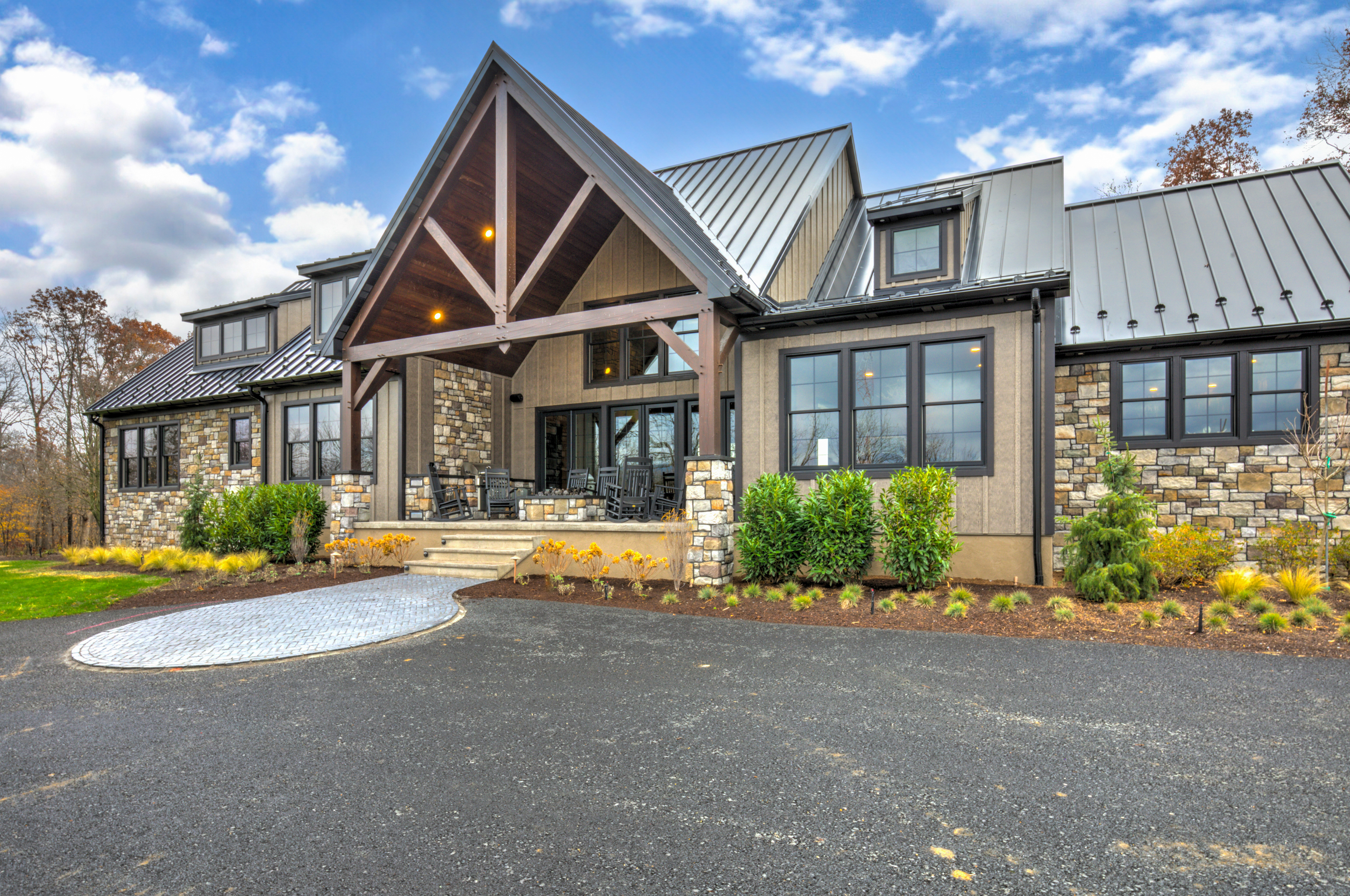
A custom home is designed specifically for one buyer, often for one specific lot. Instead of selecting from an existing plan, the buyer works with a builder, architect or design team to create a home around their land, lifestyle and requirements.
A full custom home can make room for:
- A unique lot or build-on-your-own-lot situation
- A fully original floor plan
- Specialty rooms or uncommon layouts
- Multi-generational living needs
- Highly specific architectural preferences
- A more complex or higher-end finish level
- Long-term lifestyle planning
Custom homes give the most freedom. They also require the most time, budget flexibility and decision-making discipline.
Production vs. Semi-Custom vs. Custom Home Comparison
| Category | Production Home | Semi-Custom Home | Full Custom Home |
|---|---|---|---|
| Typical price per square foot | Usually the most efficient because plans, materials and processes are repeated | Moderate to higher depending on options, finishes and structural changes | Usually the highest because design, engineering, site conditions and selections are more individualized |
| Timeline | Often the fastest, especially with move-in-ready homes or homes already under construction | Moderate, with more time for selections and approved changes | Longest, especially when land, design, engineering and permitting are part of the process |
| Design flexibility | Limited to available plans, options and finishes | More flexible, but still guided by existing plans and builder parameters | Highest flexibility, with the most room for original design |
| Lot options | Usually within established communities | Usually within communities or approved homesites, depending on builder offerings | Often on private land or a specific buyer-owned lot |
| Decision load | Lowest | Moderate | Highest |
| Cost predictability | Strongest | Strong, but selections affect final cost | Most variable |
| Best fit | Buyers who want speed, simplicity and predictable cost | Buyers who want personalization without a fully custom process | Buyers with unique land, highly specific needs or fewer constraints on time and budget |
Price per square foot is useful, but it is not the full answer. A simple home on an easy lot can cost less per square foot than a smaller home with complex engineering, extensive site work or high-end finishes.
The Semi-Custom Middle Ground
Semi-custom new construction works because most buyers do not need a completely original home. They need the right plan, the right community and the right level of personalization.
A good semi-custom experience starts with a proven floor plan. The bones of the home already work: the kitchen connects to the gathering space, the bedrooms are placed with privacy in mind, the storage has been thought through and the square footage is being used well. From there, buyers can make choices that shape how the home looks, feels and functions.
At Garman, that includes support through our in-house Design Studio and Online Design Studio powered by Envision. Buyers can explore finishes, fixtures and design direction with guidance instead of guessing their way through dozens of decisions.
What You Can Usually Change in a Semi-Custom Home
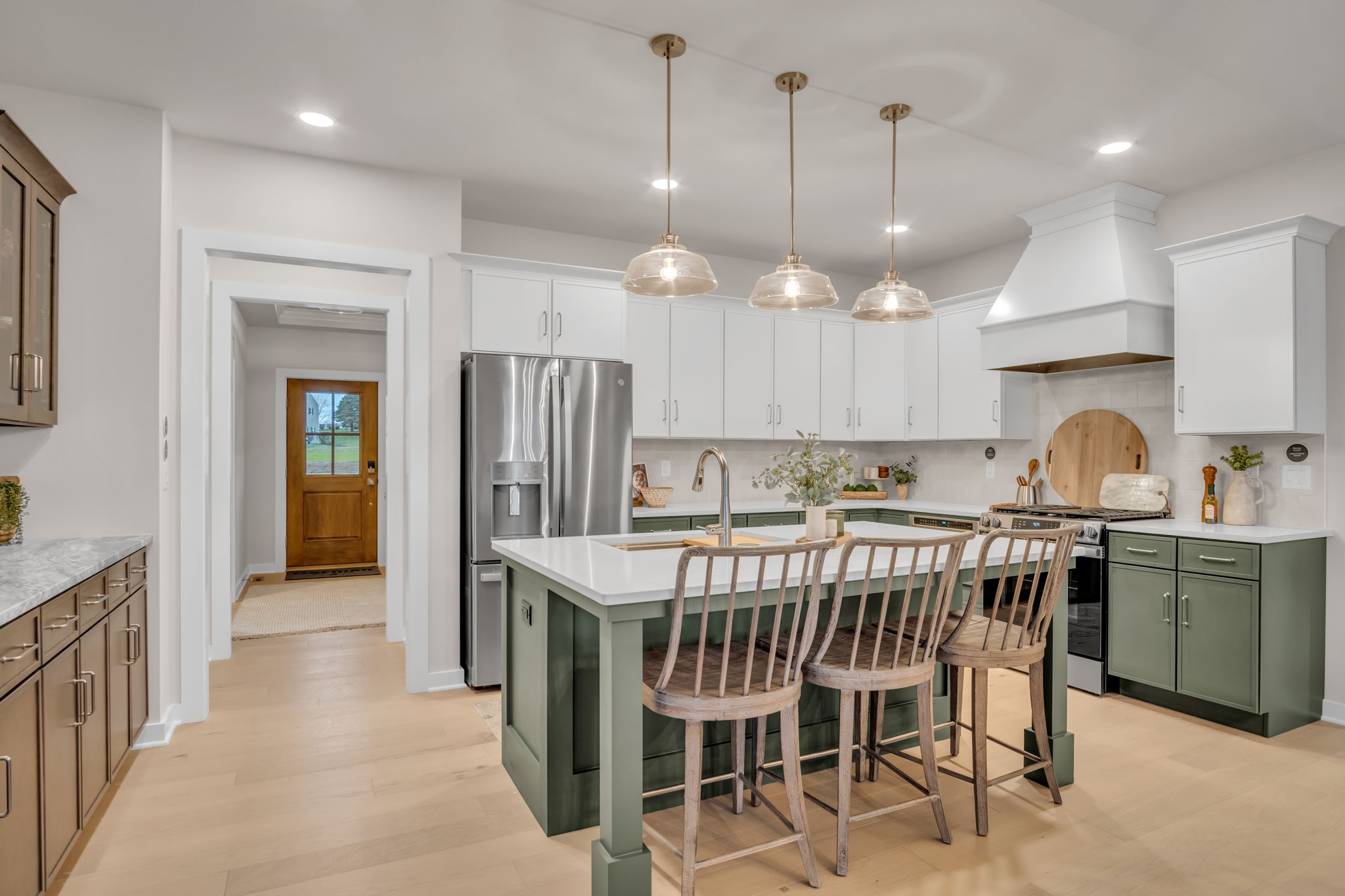
Semi-custom options vary by builder, community and plan. In general, buyers can expect more control over visible design choices, including:
- Flooring
- Cabinetry
- Countertops
- Tile
- Fixtures
- Lighting
- Paint colors
- Exterior colors or materials where available
- Fireplace selections
- Basement finishing options where offered
Some plans may also include structural options, but those are not unlimited. That is part of what keeps the process predictable.
What You Usually Cannot Change
Semi-custom does not mean every wall can move. Builders need to protect the integrity of the plan, the construction schedule, the budget and the community requirements.
In most semi-custom settings, buyers should not expect to:
- Redesign the entire floor plan
- Change major roof lines freely
- Move structural systems without review
- Create an entirely new elevation from scratch
- Ignore community architectural standards
- Add features that conflict with code, engineering or the homesite
That can sound limiting, but it helps. Guardrails prevent the process from becoming expensive and messy.
Why Semi-Custom Works for Most Buyers
Most buyers want a home that fits their life, not a design project that takes over their life.
Semi-custom gives buyers the parts that matter most: layout choice, finish personality, modern function, energy-efficient construction and a guided process. It also reduces the number of unknowns that often come with full custom building.
For move-up buyers, this path offers better design, more space and upgraded finishes without starting from scratch. For growing families, it keeps the focus on flow, storage, durability and comfort. For active adults, it can support right-sized living, low-maintenance communities and thoughtful layouts that make the next chapter easier.
When a Full Custom Home Makes Sense
A full custom home makes sense when an existing plan cannot serve the way you need to live.
That can happen for good reasons. Maybe you own land with a view you want to frame from the kitchen. Maybe the slope, driveway access or orientation requires a home designed specifically for that site. Maybe you need a first-floor suite for long-term multi-generational living, a detached workspace, a large hobby garage or a layout that does not exist in standard plans.
Full custom can be the right path when you have:
- A specific lot or buyer-owned land
- Unique site conditions
- Unusual room needs
- A highly specific architectural vision
- No need for a fast move-in
- Budget flexibility
- The time and patience to make more decisions
Custom building can be rewarding. It can also be slower and more involved than buyers expect. Every special choice has a ripple effect: design time, engineering review, estimating, permitting, trade coordination and schedule impact.
When a Full Custom Home Does Not Make Sense
Full custom is not the best path when speed, budget certainty or simplicity matters most.
If you are trying to move before the school year, control monthly payment tightly or avoid a long design process, full custom can create frustration. The freedom is real, but so is the responsibility that comes with it.
Full custom is usually not the right fit if:
- You need the most predictable price
- You want to move quickly
- You do not want to make hundreds of decisions
- You are comfortable with an existing plan
- Your main priorities are location, efficiency and finish personalization
- You want a guided process with fewer unknowns
There is nothing wrong with deciding you do not want full custom. In fact, that clarity often helps buyers find a better fit sooner.
When Production Builds Make Sense
Production homes make sense when the buyer values predictability. That includes predictable plans, pricing, communities and timelines.
This path is especially useful when buyers want:
- A faster move-in
- A home in an established or planned community
- A clear price range
- A proven floor plan
- Less decision fatigue
- A simpler financing path
- A new home with modern systems and lower maintenance needs
Production homes also help buyers compare options more clearly. You can look at available homes, communities and floor plans side by side. That matters when interest rates, monthly payment and timing are all part of the decision.
In South Central PA, this path is especially relevant because new construction has become more competitive with resale. Our region continues to offer relative affordability compared with larger Mid-Atlantic metros, and buyers are paying close attention to long-term value, efficiency and certainty.
When Production Builds Do Not Make Sense
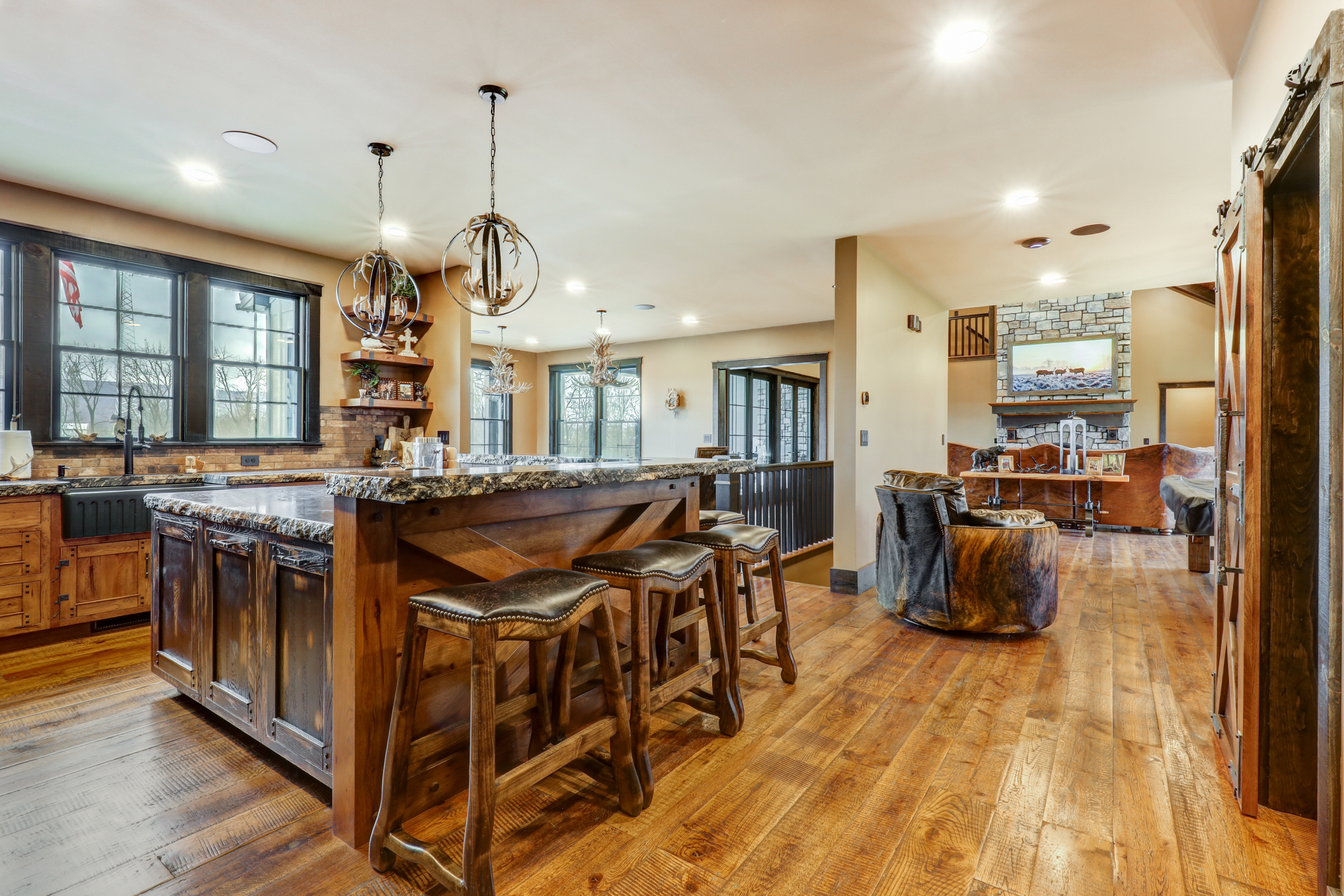
Production building is not the right fit for every buyer.
If you want a one-of-a-kind home on private land, a fully original layout or major architectural freedom, production building will feel too constrained. The same is true if you want to control every detail from window placement to stair design.
Production may not fit if:
- You already own a unique lot
- You need a highly specialized layout
- You want full architectural control
- You do not want community standards or HOA requirements
- You are unwilling to work within an existing plan collection
- You expect unlimited customization
The key is being honest about what you actually need. If the must-have list is short and practical, production or semi-custom may serve you well. If the list is long, specific and non-negotiable, custom deserves a closer look.
Cost Expectations for Each Path in Central PA in 2026
Cost is where buyers need straight answers, not vague ranges that hide the real variables.
In Central PA, new construction pricing depends on home type, community, lot, plan size, finishes and timing. Garman’s current community context gives a useful real-world view: our communities start in the high $290Ks for townhomes in Carlisle, attached product often falls in the $325K to $390K range, many single-family homes land in the $400K to $550K range and estate homes can exceed $800K in premium locations such as the Cumberland Valley School District.
That range is wide because the homes are different. A townhome, a carriage home, a single-family home and an estate home should not be evaluated with the same pricing expectations.
Production Home Cost Expectations
Production homes usually deliver the most cost efficiency because the builder can repeat plans, streamline construction and work within established communities.
Buyers should expect:
- Clear base pricing
- Defined option pricing
- More predictable final cost
- Less pricing variability than custom
- Strong value for the square footage
This is often the most practical path for buyers who want new construction with a firm budget and a clear timeline.
Semi-Custom Home Cost Expectations
Semi-custom homes sit in the middle. The base plan provides cost structure, but selections and options shape the final price.
Buyers should expect:
- A clear starting price
- Added cost for structural options
- Added cost for finish upgrades
- More control over where money is spent
- Better predictability than full custom
This path works well when buyers want to invest in the details they care about, such as a finished basement, upgraded kitchen, better flooring or a more personalized exterior package.
Full Custom Home Cost Expectations
Full custom homes are the hardest to price early because the home, land and design are all part of the equation.
Buyers should expect cost to be shaped by:
- Land cost if the lot is not already owned
- Site work
- Driveway length
- Utilities
- Stormwater requirements
- Architectural design
- Engineering
- Permit needs
- Material selections
- Specialty rooms or features
This is why “custom home cost PA” searches can be misleading. A per-square-foot number without land, site conditions and specifications tells only a small part of the story.
Timeline Expectations for Each Path
Timeline matters because a home purchase is rarely just a construction decision. It affects when you sell your current home, where your children go to school, when movers arrive and how long you may carry temporary housing costs.
Production Home Timeline
Production homes are usually the fastest path, especially when the home is already under construction or move-in ready. The plan is set, the community is approved and the builder already knows how to build the home efficiently.
This path works best when timing is a major factor.
Semi-Custom Home Timeline
Semi-custom homes take more time than a straightforward production build because buyers need time for selections and any approved options. The timeline is still more controlled than full custom because the builder is working from a proven plan.
At Garman, our guaranteed settlement date gives buyers added confidence. We respect the importance of planning, and we stand behind the settlement date we provide.
Full Custom Home Timeline
Full custom homes take the longest. The process can include land review, design, estimating, engineering, permitting, site preparation, selections and construction.
This path requires patience. It also requires comfort with decisions happening earlier and more often than in a production or semi-custom process.
Where Garman Fits in the Spectrum
Garman Builders is not a distant national builder and not a one-size-fits-all operation. We are a family-owned homebuilder rooted in Lititz, building throughout South Central Pennsylvania for more than 50 years.
Our strongest fit is buyers who want a better-built new home with thoughtful personalization, energy-efficient construction, a guided design experience and confidence from contract to closing.
That often puts us in the production to semi-custom part of the spectrum, depending on the community, plan and buyer needs. We offer new homes, townhomes, 55+ communities, estate homes, custom homes, build-on-your-own-lot opportunities and renovations. The common thread is not the product type. It is the standard behind it.
We call that standard The Garman EDGE:
- Efficiency: HERS-tested homes proven to be 37% more efficient than the average new home built today
- Design & Building Science: Thoughtful plans, quality materials and construction practices that improve comfort and long-term value
- Guaranteed Settlement: A closing date buyers can plan around with confidence
- Excellence: Craftsmanship, communication and care from foundation to finish
For many buyers, the best choice is not full custom. It is a better-built, more efficient home with the right layout, the right community, the right design guidance and enough personalization to feel like home.
That is what we mean by Built for the Way You Live.
A 5-Question Decision Framework
Use these five questions to narrow the right path.
1. Do You Already Own Land?
If you own land, especially a unique or rural lot, custom or build-on-your-own-lot may be worth exploring. The land will drive major decisions around layout, orientation, utilities, storm water and site work.
If you do not own land and want a community setting, production or semi-custom new construction is usually the more direct path.
2. How Much Design Control Do You Actually Want?
Want to choose finishes, colors, flooring, cabinets and fixtures? Semi-custom may be enough.
Want to create the entire floor plan from scratch? Custom is the better fit.
Be honest here. Full control sounds appealing until you realize how many decisions full control requires.
3. How Firm Is Your Budget?
If your budget is firm, choose the path with the most pricing clarity. Production and semi-custom homes make it easier to understand base price, options and monthly payment.
If your budget has more flexibility and the home requires a unique design, full custom can make sense.
4. How Soon Do You Need to Move?
If you need a faster move-in, start with available homes or homes already under construction. Production homes usually have the clearest timing.
If you have more time and want more personalization, semi-custom gives you room to make meaningful choices. Full custom requires the longest runway.
5. Are Your Needs Common, Specialized or Truly Unique?
Most buyers need good flow, storage, gathering space, private bedrooms, flexible rooms and durable finishes. A well-designed production or semi-custom home can handle those needs.
Custom makes sense when your needs are outside the usual range, such as unusual land, multigenerational requirements, specialty spaces or highly specific architecture.
Choosing the Path That Gives You Confidence
The right path is the one that matches your life, your budget and your appetite for decisions.
Production homes give you speed and predictability. Semi-custom homes give you personalization with guardrails. Full custom homes give you the most control, but they also ask the most from your time, budget and attention.
If you want a better-built home in South Central Pennsylvania with thoughtful design, energy-efficient performance and a process you can trust, we can help you compare your options clearly. Explore our available homes, browse our floor plans or connect with our team to talk through the path that fits you best.
Built for the Way You Live starts with choosing the right way to build.
FAQs About New Construction vs. Custom Homes
What is a custom home?
A custom home is a new home designed specifically for one buyer, often for a specific lot. The buyer has more control over the floor plan, architecture, layout, finishes and special features than they would with a standard production home.
Is a custom home the same as new construction?
No. A custom home is one type of new construction. New construction also includes production homes, semi-custom homes, townhomes, quick move-in homes and homes built from existing floor plans in planned communities.
What is the difference between production and semi-custom homes?
A production home is built from a set collection of plans with limited options. A semi-custom home starts with an existing plan but gives buyers more ways to personalize finishes, features and available structural options.
Is a custom home more expensive than new construction?
A full custom home is usually more expensive than production or semi-custom new construction because it involves more design time, engineering, site-specific planning, selections and construction complexity. Land and site work can also add significant cost.
What is the best option for buyers on a firm budget?
Production or semi-custom new construction is usually the better fit for buyers on a firm budget. These paths offer clearer pricing, more predictable options and a more controlled process than a full custom build.
When should I choose a full custom home?
Choose a full custom home when you own a specific lot, need a highly specialized layout or want architectural control that an existing plan cannot provide. It also helps to have more flexibility in budget and timeline.
Where does Garman Builders fit in the production vs. semi-custom vs. custom home spectrum?
Garman Builders serves buyers across the production, semi-custom and custom spectrum, with a strong focus on guided new construction, thoughtful personalization, energy-efficient building and confidence from contract to closing. Our homes are built for the way people truly live.


 0
0