


Nest Notes
Do Heat Pumps Work in Pennsylvania Winters? Here's What to Know

November 4, 2026
Do Heat Pumps Work in Pennsylvania Winters? Here's What to Know
Yes. Modern heat pumps can heat a Pennsylvania home through winter, especially cold climate models built for low temperatures. If you're weighing heating options for a new build or wondering whether your current system is still the right fit, this is the question that matters most: can a heat pump actually keep up when it's 15 degrees outside and the wind is coming off the Susquehanna? Here's how the technology works, what "cold climate" actually means, and what we'd want you to ask before you commit to a system.
Key Takeaways
- Yes, heat pumps can heat a Pennsylvania home in winter, particularly cold climate models tested for low-temperature performance.
- A heat pump moves heat rather than generating it, which is why the same system heats your home in January and cools it in July.
- ENERGY STAR's Cold Climate designation requires a heat pump to prove it still delivers most of its heating capacity and efficiency at 5 degrees Fahrenheit, not just at mild temperatures.
- The U.S. Department of Energy reports that cold climate air-source heat pumps can cut household energy use by up to 40 percent, with the largest savings going to homes switching off electric resistance heat or fuel oil.
- On the coldest days, backup heat and correct sizing matter more than the heat pump itself. NEEP publishes installer guides specifically for this.
- A heat pump's real-world cost advantage against a gas furnace depends heavily on your local utility rates, not just the equipment.
- A tight, well-insulated home asks less of any heating system, heat pump or otherwise, which is where construction quality starts to matter as much as the equipment itself.
How a Heat Pump Actually Works
A furnace burns fuel to create heat. A heat pump doesn't create heat at all. It moves it.
In winter, a heat pump pulls heat energy from the outdoor air, even cold outdoor air, and transfers it inside. In summer, it reverses the process and pulls heat out of the house. That's the entire concept, and it's also why one system can heat your home in February and cool it in July without swapping equipment. It sounds counterintuitive that there's heat to extract from 20-degree air, but there is. A heat pump in cold weather is just working harder to pull it out.
What Makes a Heat Pump a "Cold Climate" Model
Not every heat pump is built the same, and that distinction matters a lot in a Pennsylvania winter.
ENERGY STAR created a specific Cold Climate designation because standard heat pumps can lose capacity as the temperature drops. To earn that designation, a heat pump has to pass testing that confirms it still performs at low outdoor temperatures, not just under ideal conditions. Specifically, it has to maintain a coefficient of performance of at least 1.75 at 5 degrees Fahrenheit, and it has to deliver at least 70 percent of its rated heating capacity at 5 degrees compared to what it delivers at 47 degrees (ENERGY STAR, Key Product Criteria). That 70 percent threshold is the real test. It's the difference between a heat pump that quietly struggles on the coldest night of the year and one that was actually built for it.
How Much Energy a Cold Climate Heat Pump Can Save
The efficiency case for heat pumps is strong, and it's backed by real numbers rather than marketing language.
According to the U.S. Department of Energy, cold climate air-source heat pumps can reduce household energy consumption by up to 40 percent. The homes that see the biggest savings are the ones currently heating with electric resistance, like baseboard heat, or with fuel oil (U.S. Department of Energy, Cold Climate Air-Source Heat Pumps). That's not a universal number for every household, but it's a meaningful range, and it's one reason heat pump efficiency in winter has become a serious talking point for homeowners trying to lower a heating bill rather than just maintain one.
What Happens on the Coldest Days
This is where most of the real questions live, and it's worth being direct about it. On the coldest nights of a Pennsylvania winter, a heat pump can lose some capacity even if it's a cold climate model. That's where backup heat comes in.
Backup heat, sometimes called auxiliary or supplemental heat, kicks in to cover the gap when outdoor temperatures drop low enough that the heat pump alone can't meet the full heating load. It's a normal part of how these systems are designed, not a sign that something's broken.
What actually determines how well a heat pump performs on a bitter January night is sizing and installation, full stop. A heat pump that's undersized for the home, or installed without attention to the specifics of the space, will underperform no matter how good the equipment is on paper. The Northeast Energy Efficiency Partnerships (NEEP) publishes two guides specifically on this, A Guide to Sizing & Selecting ASHPs in Cold Climates and A Guide to Installing ASHPs in Cold Climates, because this is a known pain point in the industry (NEEP, Air-Source Heat Pump Installer and Consumer Resources). If you take one thing from this section, take this: the equipment matters less than whether it was sized and installed correctly for your specific home.
Heat Pump vs. Gas Furnace in Pennsylvania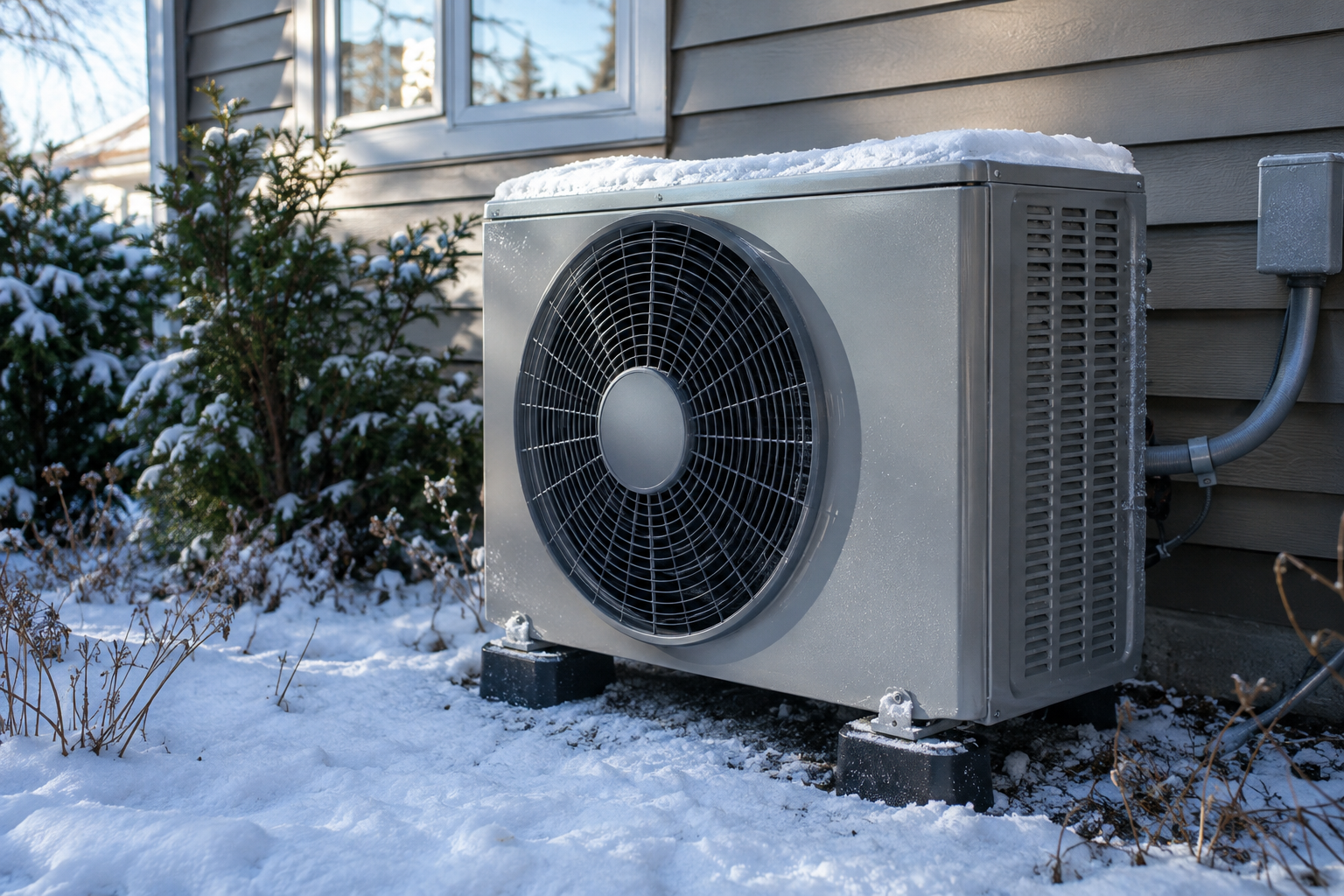
There's no single right answer here, and we'd rather tell you that than oversell one side.
A gas furnace produces a hotter, faster blast of heat, which some homeowners simply prefer in feel. A heat pump tends to deliver steadier, more even heat over longer cycles. Comfort preference is genuinely subjective, and it's worth experiencing both if you can.
Operating cost is where it gets more specific to your situation. A heat pump's cost advantage against a gas furnace depends on your local electric rate versus your local natural gas rate, and those rates vary across South Central Pennsylvania utility territories. A heat pump running on cheap electricity can beat a furnace running on expensive gas, and the reverse is also true. This is a math problem specific to your address, not a universal rule, so it's worth asking a builder or your utility provider for actual rate comparisons before deciding.
Keeping a Heat Pump Running Well Through Winter
Upkeep on a heat pump is fairly low, but it's not nothing.
Filters need regular changing, same as any forced-air system. The outdoor unit needs to stay clear of snow and ice buildup, since it's pulling air from outside all winter long, and a buried unit can't do its job. Annual professional service helps catch small issues before they turn into a cold house in February. None of this is dramatic, but skipping it is usually where performance problems start.
Why a Well-Built Home Changes the Equation
A heat pump doesn't operate in a vacuum. It operates inside a house, and the house itself determines how hard that system has to work.
A home with a tight building envelope and proper insulation loses less heat to begin with, which means any heating system, heat pump or furnace, cycles less and works less to maintain comfort. This is part of why we build every Garman home with continuous insulation and HERS testing in mind. A better-built shell means whatever heating system is inside it has an easier job, which shows up as lower energy bills and steadier comfort through a Pennsylvania winter.
Questions to Ask a Builder About Heating
Before you finalize a new home, it's worth asking a few direct questions:
- What heating system does this home use, and why was it chosen for this climate?
- If it's a heat pump, is it rated for cold climate performance, and what's the backup heat source?
- How was the system sized for this specific home, not just the floor plan in general?
- What does the insulation and air sealing look like, since that affects how hard the system has to work?
A builder who can answer these clearly is a builder who's actually thought about your winter, not just your closing date.
Quick Answers
Can a heat pump heat a Pennsylvania home through winter?
Yes. Modern heat pumps, especially cold climate models, are built and tested to perform at low outdoor temperatures and can fully heat a Pennsylvania home through the winter season.
What is a cold climate heat pump?
A cold climate heat pump is a model that has passed ENERGY STAR testing confirming it still delivers at least 70 percent of its rated heating capacity at 5 degrees Fahrenheit compared to 47 degrees.
Do heat pumps need backup heat in Pennsylvania?
Many heat pump systems include backup, or auxiliary, heat to cover the coldest days when outdoor temperatures drop low enough to reduce the heat pump's output. This is standard design, not a flaw.
Is a heat pump cheaper to run than a gas furnace in PA?
It depends on your local electric and natural gas rates. A heat pump can cost less to operate where electricity is affordable relative to gas, but the comparison is specific to your utility territory.
Does home construction quality affect heat pump performance?
Yes. A tight, well-insulated home reduces heat loss, which means a heat pump has to work less to maintain comfort, improving both performance and energy use.
The Right System Comes Down to Your Home
There isn't a single answer that applies to every household in South Central Pennsylvania. The right heating system depends on your specific home, your local climate exposure, and your utility rates, not on a general rule about heat pumps or furnaces. What matters is asking the right questions, understanding how the system was sized for your home, and knowing that the building itself plays as big a role in your winter comfort as the equipment does.
If you're exploring a new home and want to understand how energy efficiency, insulation, and building science work together to keep a home comfortable through a Pennsylvania winter, we're happy to walk you through it. Contact our team or visit our energy efficiency page to see how we build homes that ask less of whatever system is heating them.
 0