


Nest Notes
Hard Water in Central PA: How to Tell If You Need a Water Softener
November 4, 2026
Hard Water in Central PA: How to Tell If You Need a Water Softener
If you see white spots on your dishes or crusty buildup on your faucets, you may have hard water. It is one of the most common water quality issues in South Central Pennsylvania, and it shows up whether your home sits on a public water line in Mechanicsburg or draws from a private well out in Perry County. Here is how to tell for sure, what is actually happening in your pipes, and what your options are before you spend money fixing a problem you have not confirmed.
Key Takeaways
- Hard water comes from calcium, magnesium, and other dissolved minerals that occur naturally in groundwater and in some public supplies.
- Penn State Extension classifies water under 60 mg/L of total hardness as soft and anything over 180 mg/L as very hard, with most homeowners starting to notice symptoms around 120 mg/L.
- Common signs include scale buildup anywhere water is heated, spots on glassware, and soap or detergent that will not lather the way it should.
- Public water customers can check their hardness level through their supplier or an annual Consumer Confidence Report, while private well owners are responsible for their own testing.
- About 75 percent of Pennsylvania residents get their water from a public supply, according to Penn State Extension, with the rest relying on private wells, springs, or cisterns.
- Traditional ion exchange softeners are the most effective way to remove hardness, per Penn State Extension. Magnetic, electronic, and citric acid units have shown mixed results and are generally not recommended.
- Bacteria or high iron levels need to be addressed before water reaches a softening unit, not after.
- Whether you need a softener comes down to your actual test results and how much the effects bother you, not a blanket rule for every home.
What Hard Water Actually Is
Hard water is water carrying higher levels of calcium, magnesium, and other minerals picked up as it moves through rock and soil. It is extremely common across Central Pennsylvania given the region's geology, and it affects both public systems and private wells.
Penn State Extension draws a clear line here. Water under 60 mg/L of total hardness is considered soft. Water above 180 mg/L is very hard. Most homeowners do not start noticing problems until hardness climbs to around 120 mg/L, which is also the threshold Penn State Extension points to for household complaints Water Tests for Households Using Public Water Supplies. There is no federal or state standard that caps hardness, so a public supply can run high and still meet every regulatory requirement.
The Signs of Hard Water in Your Home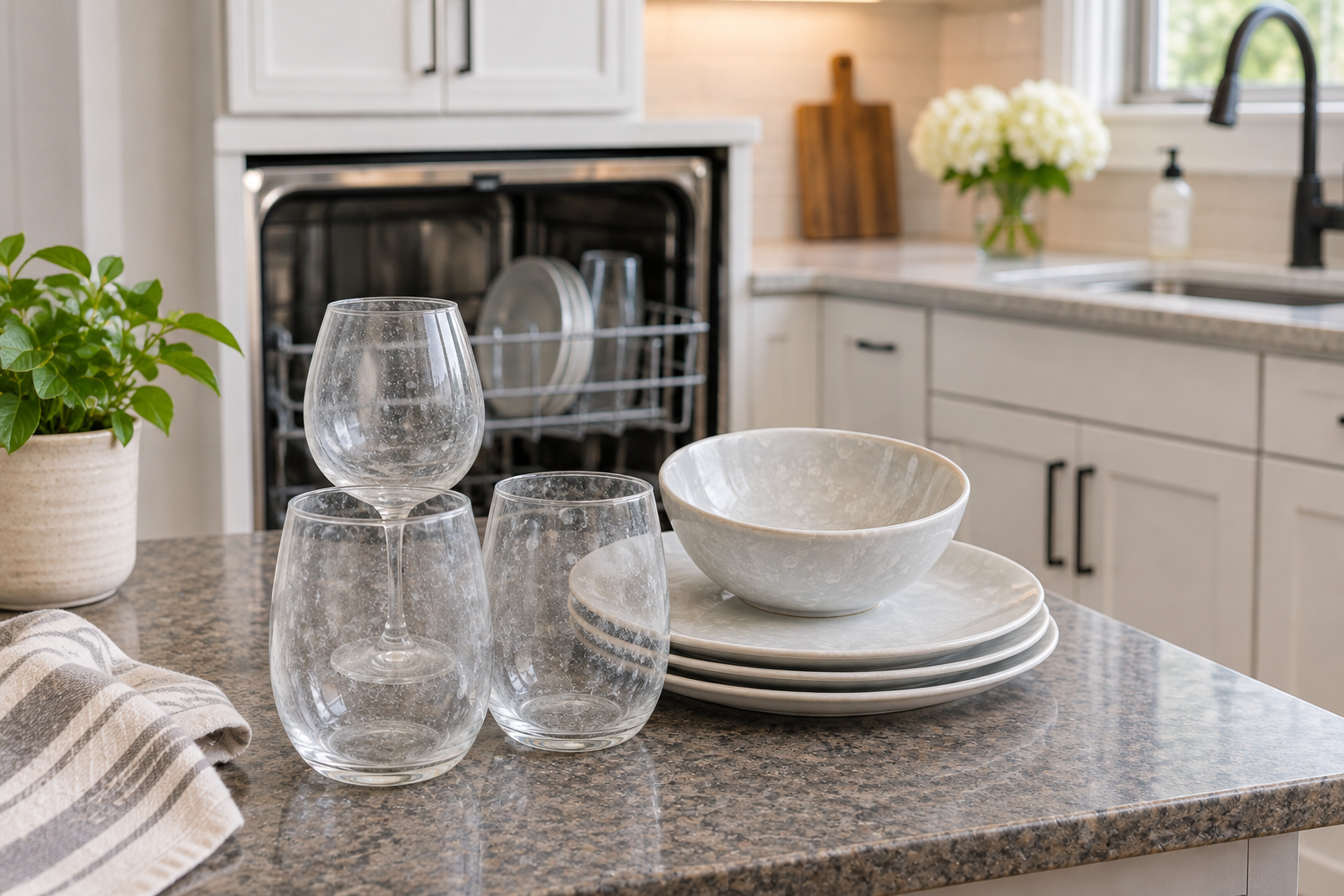
Hard water tends to announce itself in the same handful of ways, no matter where you live:
- A gray or white scale buildup anywhere water gets heated, including coffee makers, kettles, and water heaters
- Spots or a cloudy film on glassware and dishes straight out of the dishwasher
- Soap and detergent that will not lather well, which usually means using more of it for laundry and showers
- Crusty mineral deposits around faucets and showerheads
If more than one of these sounds familiar, hardness is worth confirming rather than guessing about.
How to Find Out for Sure: Public Water vs. a Private Well
The way you confirm hard water depends on where your water comes from.
If you are on a public supply, you have a head start. Public water systems are regulated by the EPA and the Pennsylvania Department of Environmental Protection, and they are required to test for dozens of contaminants on a routine basis. About 75 percent of Pennsylvania residents get their water this way. Your supplier issues an annual Consumer Confidence Report with hardness and other results, and you can also call them directly or check the EPA's CCR website Water Tests for Households Using Public Water Supplies.
If you are on a private well, spring, or cistern, none of that regulation applies. Testing and treatment are entirely the homeowner's responsibility, since private systems are unregulated in Pennsylvania. That makes private well water testing in PA something you have to initiate yourself, through an accredited lab such as Penn State's Agricultural Analytical Services Lab or another state-accredited testing lab Water Tests for Households Using Public Water Supplies.
What a Water Softener Actually Does
A traditional water softener runs on ion exchange. Hard water passes through a resin bed coated in sodium ions, and the calcium and magnesium swap places with that sodium as the water flows through. What comes out the other side no longer forms the scale buildup that causes staining and soap trouble. Penn State Extension identifies this ion exchange process as the most effective method for removing hardness Water Softening.
Softeners are point of entry systems, meaning they treat all the water coming into the house, not just the water at one tap.
Water Softener vs. Filter: Why Alternatives Fall Short
It is worth knowing the difference between a water softener and a filter, because they solve different problems. A filter typically removes sediment, chlorine taste, or specific contaminants. It does not change the mineral content that causes hardness.
Some products market themselves as softener alternatives, using magnets, electronic charges, or citric acid instead of ion exchange. Penn State Extension notes these nontraditional methods have shown mixed results and are generally not recommended Water Softening. If hardness is the problem you are trying to solve, ion exchange remains the method with a track record behind it.
Fix Other Water Issues Before You Soften
A softener is not a catch-all treatment, and installing one before addressing other issues can make things worse. If your water has bacteria or high iron levels, those need to be resolved and filtered out before the water ever reaches a softening unit Water Softening. Running contaminated or iron-heavy water through a softener's resin bed can foul the system rather than fix your water.
What Upkeep Looks Like
Softeners are not install-and-forget systems. The resin needs to stay charged, which means keeping the unit stocked with salt pellets. Most units run automatic regeneration cycles on a set schedule to recharge that resin and flush out the minerals they have collected. Beyond that, periodic service and occasional testing help confirm the system is still working the way it should, rather than assuming it is.
Do You Actually Need One?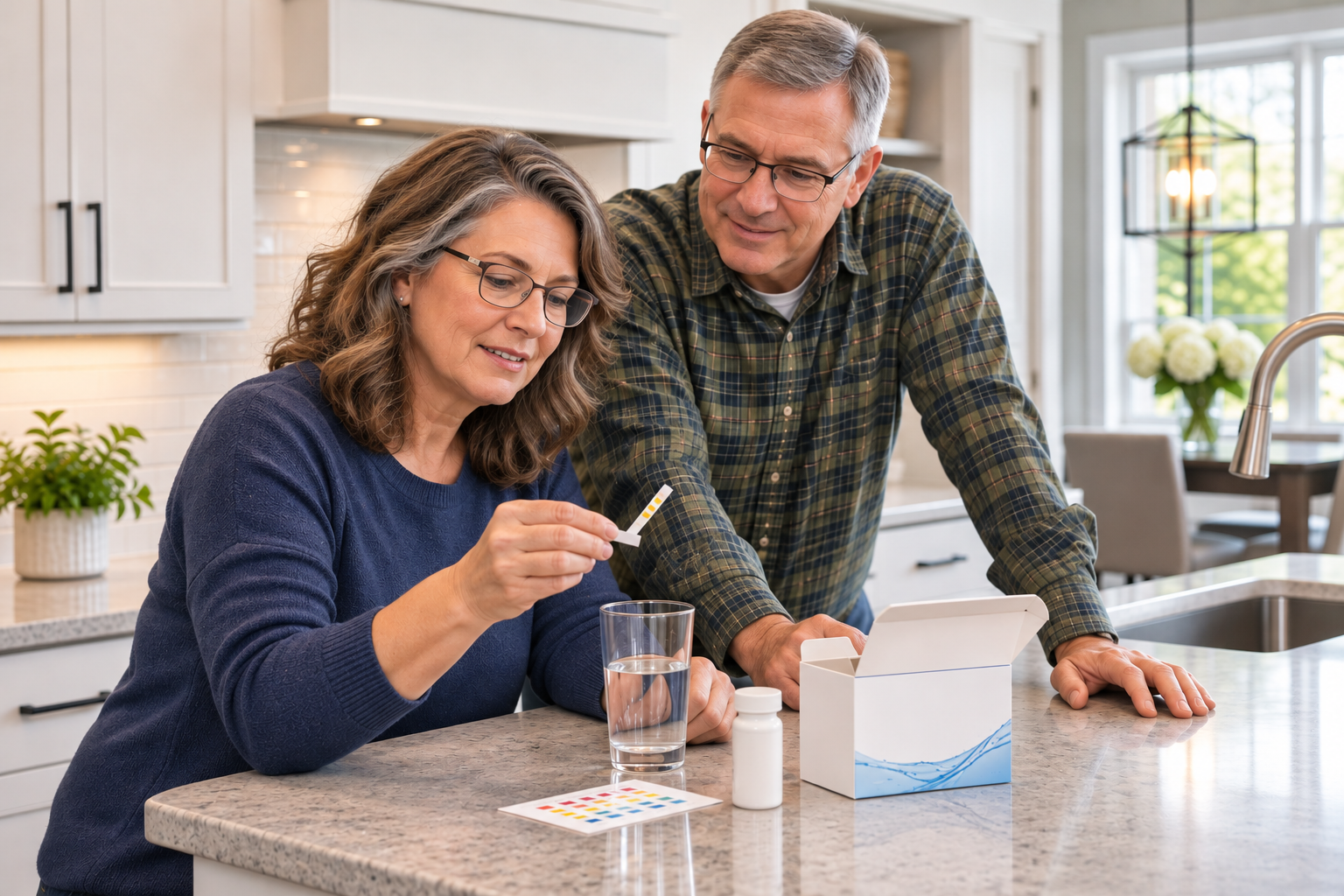
There is no universal answer here. Treating hardness is a personal decision based on two things: what your water actually tests at, and how much the effects bother you day to day. A homeowner dealing with heavy scale and constantly cloudy glassware may decide a softener is worth it. Someone with mild hardness and no real complaints may decide it is not. Either way, that decision should start with a real test result, not an assumption based on how the water in a previous house behaved.
Questions to Ask Your Builder About Water
If you are building or buying a new home in Central PA, it is worth asking a few questions early:
- Is the home on public water or a private well?
- If it is on a well, what does the water quality testing show?
- Is the plumbing set up in a way that would allow a softener to be added later if you decide you want one?
Getting clear answers up front means you are not guessing after you move in.
Test Your Water First, Then Decide
Hard water in Central Pennsylvania is common enough that most homeowners run into it at some point, whether they are on a municipal line or a private well. The signs are easy to spot once you know what to look for, but a real test result is the only way to know where your water actually falls and what, if anything, is worth doing about it.
If you are exploring a new home across Lancaster, Lebanon, Cumberland, York, Dauphin, or Perry County, our team at Garman Builders can walk you through what water source a specific community relies on and help you understand the plumbing setup before you commit. Contact us to talk through what matters most for your next home.
FAQ
What causes hard water in Central Pennsylvania?
Hard water comes from calcium, magnesium, and other minerals that dissolve into groundwater as it moves through rock and soil. It affects both private wells and public water supplies across the region, since there is no standard that limits how much hardness a public system can carry.
How do I know if I have hard water?
Look for scale buildup anywhere water is heated, spotty or cloudy glassware, and soap or detergent that will not lather well. For a confirmed answer, public water customers can check their supplier's Consumer Confidence Report, and private well owners should have their water tested by an accredited lab.
Do water softeners remove iron and bacteria?
No. A traditional ion exchange softener is built to remove hardness minerals like calcium and magnesium. Bacteria and high iron levels need to be treated and filtered separately, before water ever reaches the softening unit.
What is the difference between a water softener and a filter?
A filter typically targets sediment, taste, or specific contaminants. A softener uses ion exchange specifically to remove the calcium and magnesium that cause hardness. They solve different problems and are not interchangeable.
Is private well water in PA automatically tested for hardness?
No. Private wells, springs, and cisterns are unregulated in Pennsylvania, and testing is entirely the homeowner's responsibility. Public water supplies, by contrast, undergo routine, regulated testing for dozens of contaminants.


 0