


Nest Notes
Do You Need Flood Insurance Outside a High-Risk Flood Zone?
November 6, 2026
Do You Need Flood Insurance Outside a High-Risk Flood Zone?
Not required is not the same as no risk. If your lender told you flood insurance wasn't necessary because your home sits outside a high-risk flood zone, that's a lending rule, not a guarantee against water in your basement. Here's how we think buyers should approach flood insurance when the map says "moderate" or "low" risk instead of "high."
A lot of homeowners hear "not in a flood zone" and stop thinking about flooding altogether. The reality is more nuanced, and understanding it can save you from a costly surprise later. Below, we break down what flood zones actually mean, why your homeowners policy probably won't help if water gets in, and how to check your own risk in a few minutes.
Key Takeaways
- FEMA flood zones that start with A or V are high-risk. Zones marked B, C or X are moderate to lower risk, not zero risk.
- Most standard homeowners insurance policies do not cover flood damage, according to FEMA's FloodSmart program.
- Nearly one-third of National Flood Insurance Program claims from 2014 to 2024 came from outside high-risk flood areas.
- Between 2003 and 2023, 99 percent of counties in the United States experienced at least one flood event, per FEMA.
- Flood insurance is generally required by lenders only for homes in high-risk zones with government-backed mortgages. Outside those zones, it's usually optional.
- You can check your property's flood risk in minutes using the FEMA Flood Map Service Center or FloodSmart.gov.
- Deciding whether to carry flood insurance comes down to your location, your budget, and how much peace of mind matters to you.
What Flood Zones Actually Mean
FEMA flood maps sort every property into a risk category, and the letter designation tells you where you land. Zones starting with A or V are considered high-risk, also called Special Flood Hazard Areas. Zones marked B, C or X cover moderate to lower risk areas.
These designations matter for lending, but they were never meant to be read as "safe" versus "unsafe." A property in Zone X can still flood. It's just less likely to flood as frequently or as severely as a property in Zone A.
Does Homeowners Insurance Cover Flooding?
Short answer: usually not. FEMA's FloodSmart program is direct about this: most homeowners insurance policies exclude flood damage entirely. That means a burst pipe inside your home might be covered, but water that enters from rising creeks, heavy runoff, or a storm surge typically isn't, unless you've purchased a separate flood policy.
This is one of the more misunderstood parts of homeownership. Buyers assume their standard policy has them covered for "water damage" broadly. It doesn't work that way, and finding that out after a flood is the worst possible time to learn it.
You're Still at Risk Outside High-Risk Zones
Here's the number that should change how you think about this: nearly one-third of NFIP flood insurance claims between 2014 and 2024 came from properties located outside current high-risk flood areas. That's not a rounding error. That's a meaningful share of flood damage happening to homeowners who were told they likely didn't need coverage.
Moderate and lower-risk designations often reflect mitigation efforts already in place, like levees, or areas where flooding tends to be shallower rather than nonexistent. Shallow flooding can still ruin flooring, drywall, mechanicals, and personal belongings. The risk is lower. It isn't gone.
How Common Is Flooding, Really?
Flooding isn't a coastal problem or a once-in-a-generation event. FEMA reports that between 2003 and 2023, 99 percent of counties across the United States experienced a flood event. Heavy rain, fast runoff, overwhelmed storm drains, and rising creeks don't check the flood map before they cause damage.
Put plainly: if you live in a county in the U.S., there's a very good chance a flood has already happened near you, whether or not it made the news.
When Lenders Require Flood Insurance
If your home sits in a high-risk flood zone (an A or V designation) and you have a government-backed mortgage, flood insurance isn't optional. Your lender will require it as a condition of the loan.
Outside high-risk zones, the decision is usually yours. Some lenders may still recommend it depending on local flood history, but the choice to carry coverage in a moderate or lower-risk zone generally comes down to what you're comfortable with, not what's mandated.
How to Check Your Own Flood Risk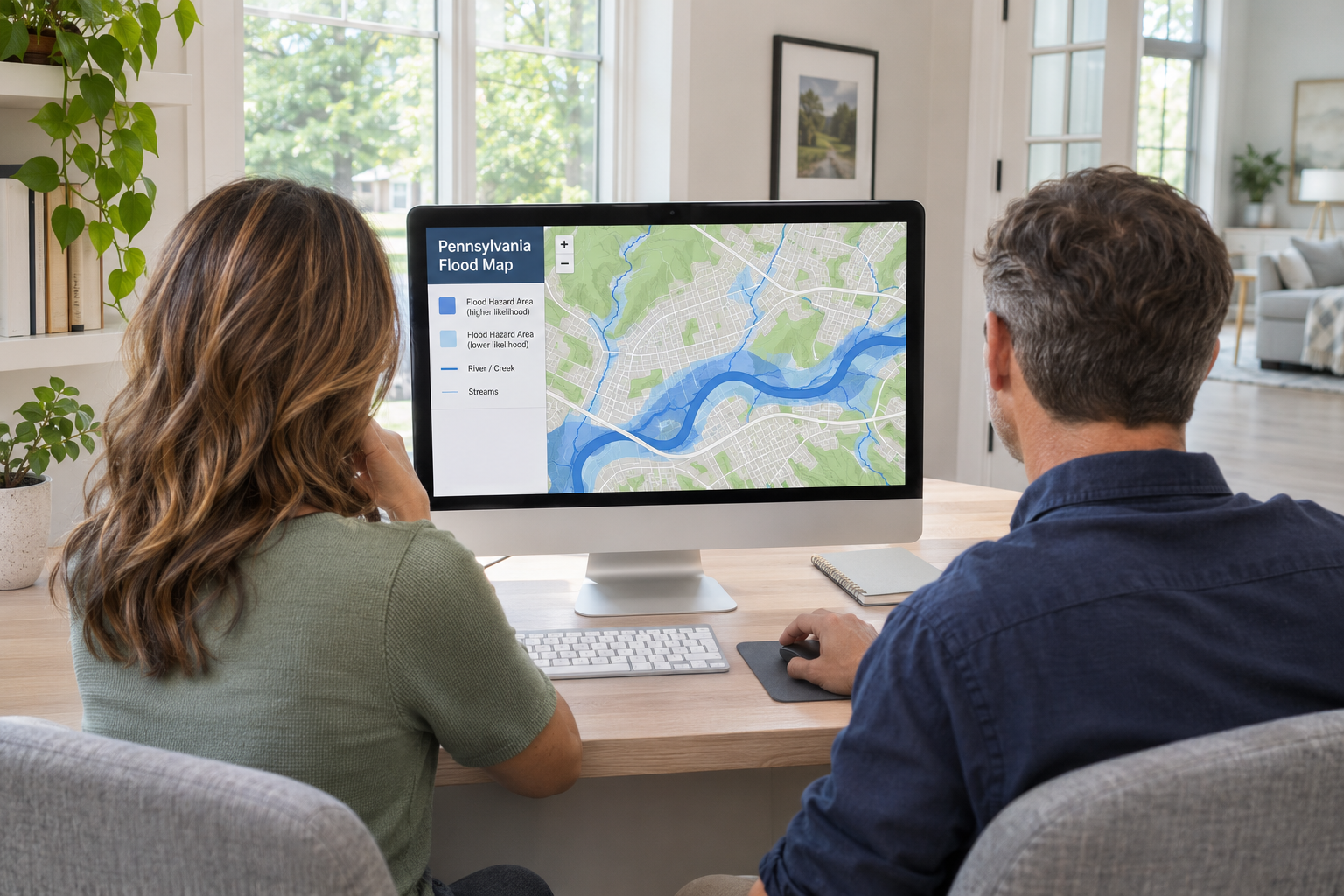
You don't need to guess, and you don't need to take a lender's word for it. Two free tools can tell you exactly where your property stands:
- FEMA Flood Map Service Center (msc.fema.gov): enter your address to pull the official flood map and zone designation for your property.
- FloodSmart.gov: FEMA's consumer-facing site walks through what your risk level means and what to do about it.
Both are free, both take just a few minutes, and both give you something concrete to work from instead of a general assumption about your neighborhood.
How to Decide If Flood Insurance Makes Sense for You
Once you know your zone, the decision comes down to three things: your location, your budget, and your tolerance for risk.
If you're in a moderate or lower-risk zone near a creek, a floodplain, or an area with known drainage issues, that history matters more than the letter on the map. If your home sits on higher ground well away from water sources, your risk profile looks different. Either way, talk with a licensed insurance agent who can walk through your specific address, your area's flood history, and what a policy would actually cost for your situation. They can tell you more about your exposure than a zone letter ever will.
Peace of Mind Starts With Knowing Where You Stand
Checking your flood risk takes a few minutes. Not checking it, and assuming "not required" means "not at risk," is how homeowners end up paying out of pocket for damage they never saw coming. Whether you're buying new construction or have lived in your home for years, it's worth knowing exactly where your property falls and what that means for your coverage.
If you're in the process of buying a new home in South Central Pennsylvania and have questions about your community, your lot, or what to expect as a homeowner, reach out to our team. We're happy to point you toward the right resources so you can move forward with confidence, not guesswork.
Frequently Asked Questions
Do I need flood insurance if I'm not in a high-risk flood zone?
It's usually not required by your lender, but it can still be a smart purchase. Nearly one-third of NFIP claims from 2014 to 2024 came from outside high-risk flood areas, so "not required" doesn't mean "no risk."
Does homeowners insurance cover flooding?
Most standard homeowners insurance policies do not cover flood damage. Flood coverage typically requires a separate policy, often through the National Flood Insurance Program or a private flood insurer.
What does Flood Zone X mean?
Zone X is a moderate to lower-risk flood designation. It's not a high-risk zone, but properties in Zone X can still experience flooding, and lenders generally don't require flood insurance there.
How do I find my home's flood zone?
Use the FEMA Flood Map Service Center at msc.fema.gov or FloodSmart.gov. Both let you enter an address and see the official flood zone designation for that property in just a few minutes.
Is flooding really that common outside of coastal areas?
Yes. FEMA reports that 99 percent of U.S. counties experienced a flood event between 2003 and 2023, meaning flood risk extends well beyond coastal and riverfront communities.

 0