


Nest Notes
Buying Near a Resort Community: What to Actually Think Through Before You Commit

September 22, 2026
Buying Near a Resort Community: What to Actually Think Through Before You Commit
A home near a resort setting sounds appealing on paper. The views, the walking trails, the sense that every day feels a little like a getaway. But resort adjacent new construction is a different kind of decision than a standard home purchase, and the appeal on the brochure doesn't always match the reality of daily life. Before you buy into a community near a resort, golf club, or destination-style setting, there are a handful of questions worth working through first.
This isn't about any one property. It's about the category of buying near a resort community, and the specific things that separate buyers who love where they landed from buyers who wish they'd asked more questions first.
Key Takeaways
- Resort adjacent and resort integrated are not the same thing, and the difference affects your HOA structure, your pricing, and what you're actually allowed to use.
- What looks walkable on a site map is not always walkable in daily practice. Distance and frequency of use are two different questions.
- Homesite location matters more in resort adjacent communities than in most neighborhoods, especially around sightlines, shared access roads, and event traffic.
- Not every amenity on a resort's property is available to nearby homeowners. Some require membership, some are open, and it varies by community.
- Resort settings often run on an event calendar, weddings, seasonal gatherings, programming, and that rhythm is worth understanding before you buy, not after.
- Be honest with yourself about whether you want to walk to the resort often or just enjoy knowing it's five minutes away. Both are valid, but they lead to different homesite choices.
- A resort adjacent setting can be perfect for one season of life and less ideal for another. Think about permanence, not just present appeal.
Resort Adjacent vs. Resort Integrated: Know the Difference
The first thing to sort out is which category you're actually looking at, because "near a resort" can mean two very different things.
A resort integrated community is built inside or directly connected to the resort's operations. HOA fees often fund shared amenities, and residents may have contractual access, or obligations, tied to the resort itself. Pricing typically reflects that integration, and so does the fine print.
A resort adjacent community, by contrast, sits near a destination-style setting without being formally part of it. The Porches of Allenberry in Boiling Springs is a good example of this. It's positioned near the Allenberry Resort's grounds and the character that comes with it, but it operates as its own neighborhood with its own HOA and its own governance, not as an extension of the resort's business.
This distinction matters because it changes what you're actually buying. Resort adjacent living gives you proximity to a destination feel without folding resort operations into your monthly dues. That's usually a more straightforward, more predictable structure, but it also means you shouldn't assume access to every resort amenity just because you live nearby. We'll get to that.
If you're still comparing community types more broadly, our guide on what to know before choosing a new home community in South Central PA covers the foundational questions that apply beyond resort settings too.
The Daily Convenience Question: Walkable or Just Nearby?
Here's where a lot of resort adjacent decisions get made on assumptions instead of facts.
"Close to the resort" can mean a two-minute walk down a lit path, or it can mean a five-minute drive around a road that isn't built for pedestrians. Both get marketed with the same kind of language. Before you buy, walk the actual route yourself, at different times of day, and ask what it looks like in December versus June.
The honest question isn't "is it close." It's "will I actually use it." A restaurant or trail that's technically a ten-minute walk but crosses a busy road or an unlit stretch tends to get used a lot less than one that's a genuinely easy stroll. Buyers often overestimate how often they'll walk somewhere and underestimate how much a short drive changes their habits. Figure out which one is true for the specific homesite you're considering, not the community as a whole.
The Privacy Consideration: How Close Is Comfortable?
Proximity cuts both ways. The same closeness that makes a resort setting convenient can also mean traffic, noise, and sightlines you didn't plan for.
Before committing to a specific homesite, ask about a few things directly:
- What's the sightline from the backyard and primary windows? Does it face resort grounds, a parking area, a walking path, or another home?
- Are there shared access points, walking trails, or roads that cut near or through the property, and who uses them?
- How does event traffic move through the neighborhood during busy weekends, weddings, or seasonal programming?
These questions matter more in resort adjacent communities than in a typical subdivision, because destination settings tend to draw more outside visitors than a standard neighborhood does. A homesite on the quiet edge of a community can feel completely different from one closer to a shared entrance or a resort-facing view, even within the same development.
The Amenities Question: What's Actually Yours to Use
This is the part buyers most often get wrong. Living near a resort does not automatically mean you have access to it.
Some resort adjacent communities include specific, negotiated access to certain amenities, a trail system, a dining venue, event lawns. Others offer none of that, and the resort operates entirely separately, open to the public or to paying guests only, with no special standing for nearby homeowners. This varies significantly from one community to the next, and it's rarely obvious from a listing.
Ask directly: which amenities are open to residents, which require a separate membership or fee, and which are guest-only regardless of where you live. Get this in writing if you can, not just from a sales conversation. It's also worth understanding how this shapes your HOA dues, since HOA structure and amenity access are usually connected. Our breakdown of HOA fees in Central PA walks through what those fees typically cover and what they don't, which is worth reading alongside any resort adjacent purchase.
The Events and Seasonality Factor
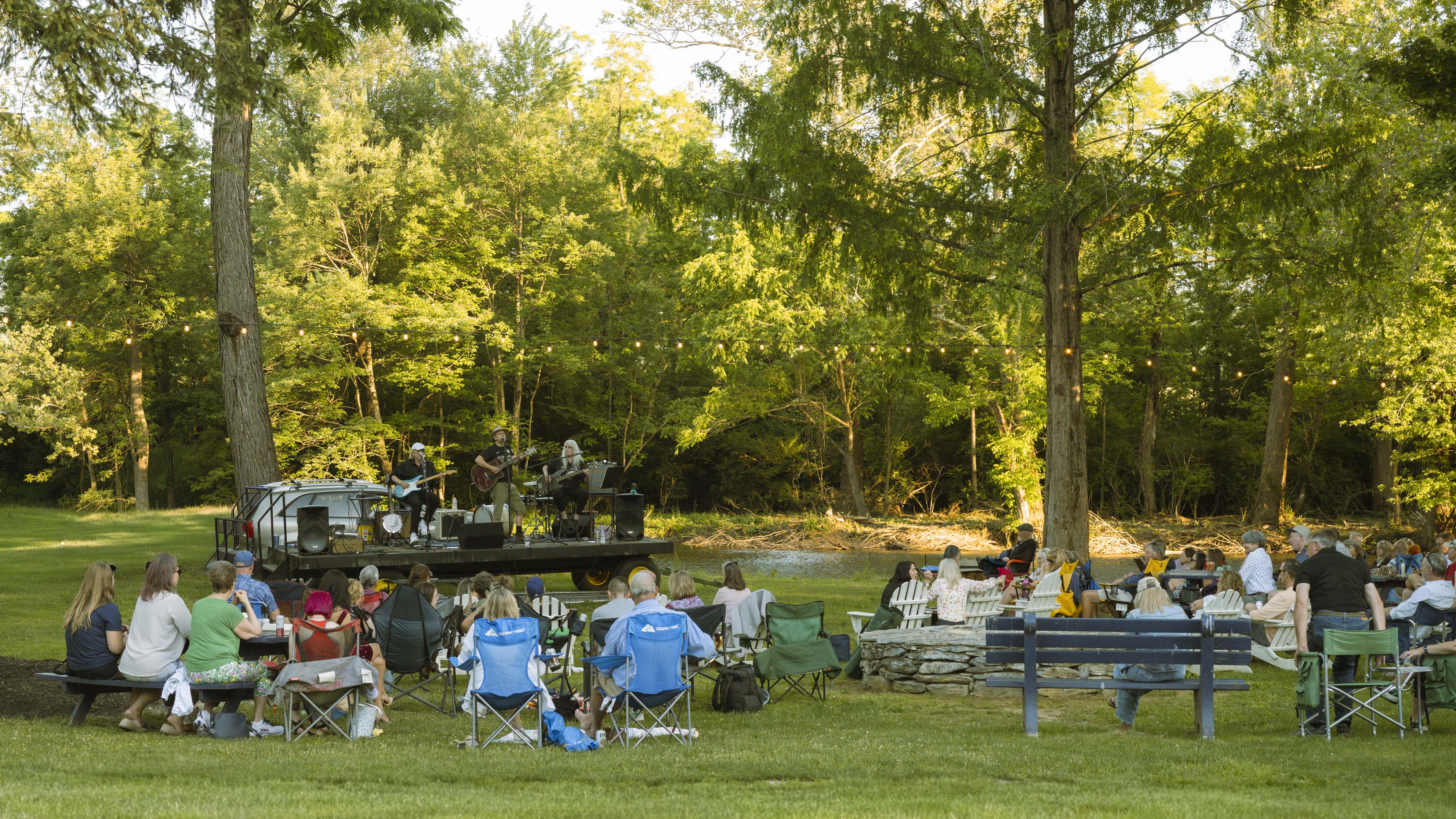 Resort settings, by nature, host things. Weddings, seasonal festivals, corporate retreats, holiday programming. That's part of what makes them feel special, and it's also something to understand ahead of time rather than discover on a Saturday afternoon in June.
Ask about the resort's typical event calendar and how often the neighborhood experiences increased traffic, parking overflow, or noise from gatherings. A few weekends a year is a very different experience than a packed calendar from spring through fall. Neither is wrong, but you want to know which one you're signing up for.
This is also where talking to current residents helps more than any brochure. People who've lived through a full season near the resort can tell you what the calendar actually feels like on the ground.
Walkability vs. Destination Feel: Be Honest About What You Want
There are two kinds of buyers drawn to resort adjacent communities, and it's worth figuring out which one you are before you shop for a homesite.
One buyer wants to walk to the resort regularly, treat it like an extension of their own backyard, and build it into daily routine. The other wants to know it's there, enjoy it a few times a month, and otherwise appreciate the setting from a comfortable distance. Both are completely reasonable. The mistake is buying a homesite built for one preference while actually wanting the other.
If daily walkability matters to you, prioritize homesites close to the connecting paths and be willing to accept more visibility and traffic in exchange. If you'd rather enjoy the setting without the foot traffic, a homesite a short drive from the resort's core often delivers the same lifestyle benefit with more privacy day to day. Being honest about which one you actually are saves a lot of second-guessing after closing.
Does This Fit a Season of Life or a Permanent Preference?
Resort adjacent living tends to appeal strongly to certain stages of life. Empty nesters who want more activity, more amenities, and more reasons to be social often find it energizing. Buyers in the middle of raising a young family sometimes find the same setting, with its event traffic and shared spaces, less practical day to day.
Before you buy, ask whether this fits how you're living right now or how you expect to be living in five or ten years. A resort adjacent setting that feels perfect during an active, social season of life can feel like more than you want once your priorities shift toward quiet and predictability, or the reverse. There's no wrong answer here, but it's worth thinking through honestly rather than deciding based on how appealing the setting feels on a single visit.
How The Porches of Allenberry Puts This Into Practice
The Porches of Allenberry in Boiling Springs is a useful example of how these questions play out in a real community, without being the whole story here.
It sits near the Allenberry Resort's grounds in a way that offers genuine proximity to a destination-style setting, walking trails, scenic character, a sense of place, while operating as its own neighborhood with its own HOA structure. Homesites vary in how close they sit to shared paths and resort-facing views, which is exactly the kind of privacy and sightline consideration we mentioned earlier. And like most resort adjacent settings, understanding which amenities are genuinely available to residents versus resort guests is part of doing your homework before choosing a specific lot.
We've written more specifically about what makes this community work as a lifestyle in Why The Porches of Allenberry Is More Than a Neighborhood, It's a Lifestyle, and if you want the place-specific picture of what living near Allenberry Resort actually looks like day to day, that's covered in our companion piece, What Buyers Should Know About Living Near Allenberry Resort. This piece is meant to give you the framework to evaluate any resort adjacent community, Porches included, rather than to make the case for one specific place.
A Checklist for Evaluating Any Resort-Adjacent Community
Use this when you're comparing resort adjacent options, not just the one you're currently touring.
- Confirm whether the community is resort adjacent or resort integrated, and understand how that affects HOA structure and pricing.
- Walk the actual route between the homesite and the resort's amenities at different times of day.
- Ask directly which amenities are open to residents, which require membership, and which are guest-only.
- Review sightlines and shared access points from the specific homesite, not just the neighborhood entrance.
- Ask about the resort's typical event calendar and how it affects traffic and noise throughout the year.
- Talk to current residents about what a full season near the resort actually feels like.
- Decide honestly whether you want daily walkability or occasional proximity, and choose a homesite that matches.
- Consider whether this setting fits your current season of life or a longer-term preference.
Buying With Clarity, Not Just Curb Appeal
A resort adjacent setting can be one of the best decisions a buyer makes, or one that quietly doesn't fit once the newness wears off. The difference usually comes down to how many of these questions got asked before the offer, not after moving day. Take the time to walk the route, ask about amenities in writing, and be honest about which kind of buyer you actually are.
If you're evaluating a resort adjacent community in South Central Pennsylvania, including The Porches of Allenberry, our team can walk you through the specific HOA structure, amenity access, and homesite options available. Reach out to start that conversation, or explore our full range of communities to see what fits the way you actually want to live.
Frequently Asked Questions
What's the difference between a resort adjacent and resort integrated community?
A resort integrated community is built inside or contractually connected to a resort's operations, often with HOA fees tied to shared amenities. A resort adjacent community sits near a destination-style setting but operates independently, with its own HOA and no automatic resort access.
Do homeowners near a resort automatically get access to resort amenities?
Not always. Access varies significantly by community. Some resort adjacent neighborhoods include specific negotiated access to certain amenities, while others offer none, leaving the resort's amenities open only to paying guests or members.
How much does resort event traffic actually affect daily life?
It depends on the resort's calendar. Communities near venues with frequent weddings or seasonal programming may see regular weekend traffic and noise, while others host events only a few times a year. Ask about the calendar directly before buying.
Is a resort adjacent community a good fit for a family with young children?
It can be, but it depends on the specific setting and how much event traffic and shared foot traffic the community sees. Some resort adjacent neighborhoods feel quiet and family-friendly, while others lean more social and active. Evaluate the specific homesite and calendar before deciding.
Does living near a resort increase HOA fees?
It depends on the community structure. Resort integrated communities often build shared amenity costs into HOA fees. Resort adjacent communities, like The Porches of Allenberry, typically maintain a more standard HOA structure since the resort operates separately.


 0
0