


Nest Notes
New Construction Delay: What Happens if Your Home Building Timeline Slips?

August 16, 2026
Some schedule movement is normal in new home construction, and most delays are measured in weeks, not months. Here is what typically causes delays, how builders usually communicate them, and what your options are if your timeline shifts.
That question sits in the back of a lot of buyers’ minds, even when everything is going well. You can understand the normal sequence of a build, but the harder question is what happens when real life gets in the way. Weather changes. An inspection gets pushed. A product shows up late. Suddenly the concern is not the process on paper, it is your move, your lease, your rate lock, and your closing date.
In this guide, we’ll walk through what a new construction delay usually looks like, what causes a home building timeline delay, what is in your control, and how we communicate schedule changes at Garman Builders. If you are still learning the standard timeline, read How Long Does It Take to Build a New Home in Pennsylvania?
Key Takeaways
- Some movement in a new home schedule is normal because construction depends on weather, materials, permits and inspections.
- Most delays are measured in weeks, not months, though exact timing depends on the stage of construction and the cause.
- Common causes of delay include major weather events, fluctuating material lead times, township permitting schedules and buyer-driven changes.
- Good builder delay communication should be proactive, clear and updated as new information comes in.
- Buyers have the most control over the timeline when they make design selections on time and respond quickly to document requests.
- If a schedule shift could affect your lease, sale of your current home or temporary housing plan, it is better to talk through backup options early.
- A construction delay can affect your mortgage timing, so your lender and builder should be part of the conversation before a rate lock becomes a problem.
- At Garman, we pair timeline communication with a guaranteed settlement date, which gives buyers more confidence from contract to closing.
Why Some Schedule Movement Is Normal in New Home Construction
A home is not built in a vacuum. It is built through a sequence of crews, materials, approvals and inspections that all have to line up at the right time.
That means a construction calendar is not the same thing as a desk calendar. A builder can plan carefully, manage trades well and still have a few moving parts that depend on outside factors. Weather matters. Municipal offices have their own schedules. Inspectors are handling multiple projects. Manufacturers and suppliers do not always hold the same lead times month after month.
This is why some schedule movement is expected in new construction. It is not always a sign that something is wrong. It is often just part of building a real home in the real world.
If weather is one of your biggest concerns, Is Winter a Bad Time to Build a Home in Pennsylvania? offers helpful context on what seasonal building really looks like here in South Central PA.
What Causes New Home Construction Delays?
The most common answer to what causes new home construction delays is simple: timing issues between work, materials and approvals. Here are the most common reasons in plain language.
Weather Events Beyond Typical Seasonal Variation
Builders plan for normal seasonal conditions. Rain in spring and cold in winter are not surprises in Pennsylvania.
What causes delays is weather beyond the usual pattern. Extended heavy rain can affect excavation, foundations and site access. Snow or ice events can interrupt trade schedules and deliveries. High winds and severe storms can also pause exterior work for safety reasons.
Short answer: normal seasons are expected, major weather disruptions are where timing can slip.
Material or Appliance Lead Times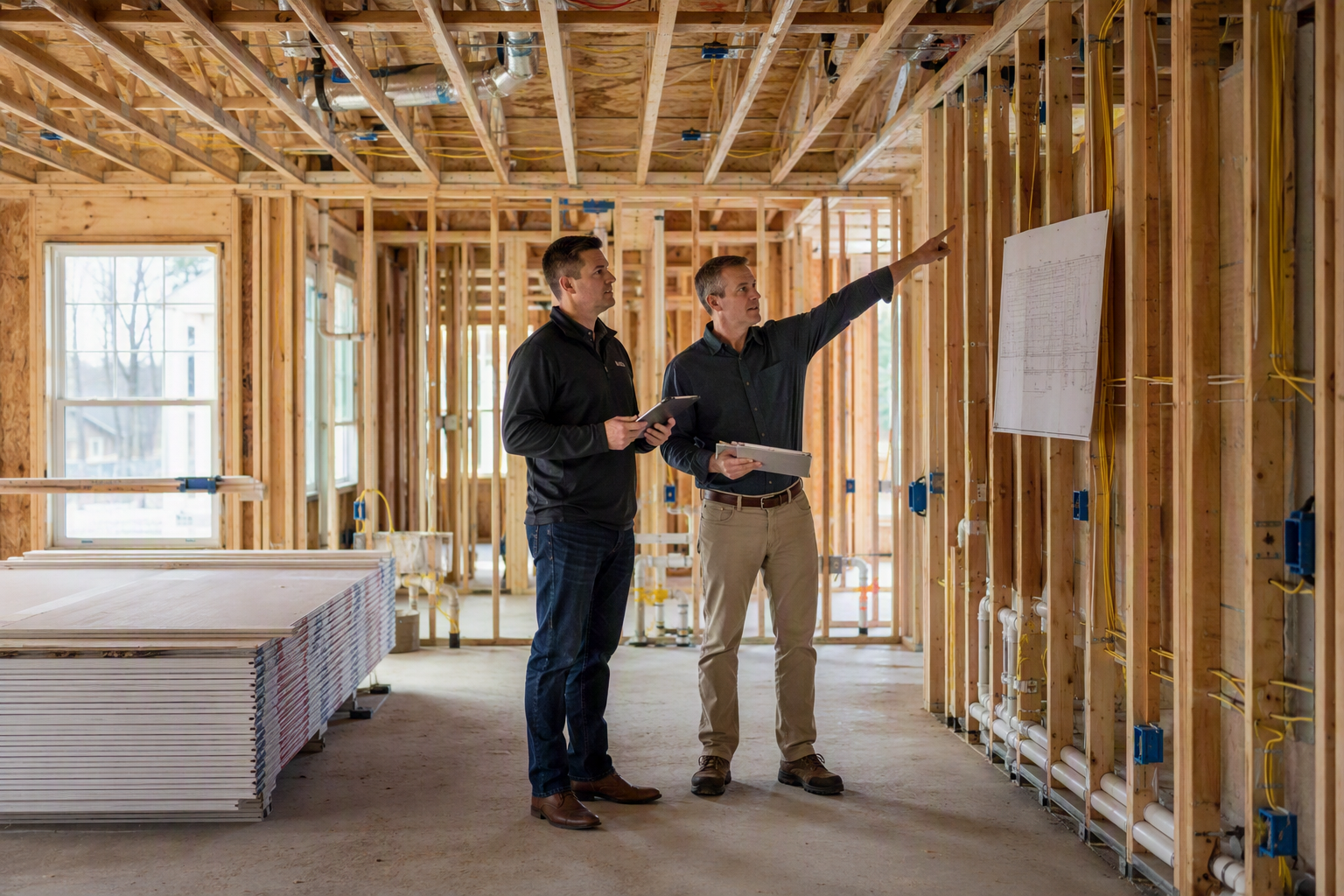
Not every product arrives on the same schedule. Windows, cabinets, appliances, specialty finishes and certain mechanical components can all carry lead times, and those lead times can change.
Sometimes the issue is not that something is unavailable forever. It is that a needed item arrives later than projected, which can shift the work that depends on it. If one key piece is late, the rest of the schedule may need to adjust around it.
This is one reason why design decisions matter. Late product changes can create avoidable timing problems.
Permitting and Inspection Scheduling
Townships, municipalities and inspection offices play a real role in the homebuilding timeline. Builders have to work within those schedules.
A permit review can take longer than expected. An inspection window may move. A reinspection may be needed before the next phase can start. These are not unusual events, but they can create a home building timeline delay because certain work cannot continue until approvals are complete.
Buyer-Driven Delays
This is the part buyers actually have the most power over.
Late design selections, delayed paperwork, financing document slowdowns and change orders after key decisions have already been made can all affect the build schedule. The earlier a home is in the process, the easier it is to absorb changes. Later changes usually have a bigger ripple effect.
If you want the shortest version: quick decisions and quick responses help keep a build moving.
What Builder Delay Communication Should Look Like
Builder delay communication should be proactive, specific and honest.
If there is a delay, buyers should not feel like they are guessing what happened or what comes next. A good builder explains the cause in plain language, shares what stage of the build is affected, outlines the current impact on timing and gives an updated estimate based on the information available at that point.
That last part matters. Early in a delay, the exact number of days may not be known yet. What buyers should expect is not false precision. They should expect real communication and regular updates.
A useful timeline update usually includes:
- what changed
- why it changed
- whether the delay affects the critical path or just one portion of the job
- the current best estimate for the next milestone
- what the buyer should do, if anything
If you are unsure who typically shares those updates, Who’s Who During Your Home Build can help you understand the roles involved.
What to Do if a Delay Affects Your Current Living Situation
A schedule shift gets stressful fast when it touches where you are living right now.
If you are renting, ask early about extension flexibility. Some landlords can work with a month-to-month arrangement or a short extension if they have enough notice. If you own a home and are coordinating a sale, a backup plan matters even if everything looks on track today. How to Time Your Current Home Sale With Buying a New Build walks through that side of the equation in more detail.
Temporary housing is sometimes part of the conversation too. That might mean staying with family for a short period, arranging a short-term rental or planning for storage if two moves become necessary. None of that is ideal. But it is a lot easier to manage when discussed early instead of after a delay is fully confirmed.
The practical advice is simple: if your timeline is tight, bring it up before it becomes urgent.
How Delays Affect Your Rate Lock
If your rate lock expires during construction delay, the next step depends on your lender, your loan program and the terms of the original lock.
A rate lock is meant to protect your interest rate for a defined period. If construction moves past that period, the lender may offer an extension, require a relock or price the loan based on current market conditions. That is why timing matters. Lock too early and you may run out of runway. Lock too late and you may miss the chance to secure terms you were comfortable with.
The best approach is to time your lock with some buffer and stay in close contact with your lender as construction progresses. This is also why pre-qualification and financing discussions should start early, not late.
What Is in Your Control, and What Is Not
Buyers cannot control the weather, township scheduling or supplier timelines.
Buyers can control how quickly they respond.
If we had to name the biggest lever a buyer has over schedule, it is this: meet design selection deadlines and return requested documents fast. That includes financing paperwork, approval signatures, option selections and change decisions. A one-day delay on the buyer side does not always equal a one-day delay in construction. Sometimes it causes a much bigger scheduling issue because crews, orders and inspections are already lined up.
What you can usually control:
- responding quickly to emails and document requests
- making design selections by the deadline
- avoiding late change orders when possible
- staying in contact with your lender
- asking questions early if your current housing timeline is tight
What you usually cannot control:
- severe weather
- permit office timing
- inspector availability
- supplier and manufacturer delays
- broader labor and scheduling conditions
When a Delay Warrants a Real Conversation With Your Builder
Not every small shift is a red flag.
A short adjustment that is explained clearly and updated promptly is usually within the normal range of construction. The bigger concern is when communication is vague, inconsistent or missing. That is when buyers start to feel stuck, and fairly so.
A real conversation is warranted when:
- your move-out date or home sale deadline is approaching
- your financing timeline may be affected
- the updated schedule is no longer clear
- repeated delays are stacking up without explanation
- you need to understand what decisions or backup plans should happen now
The point of that conversation is not to create pressure. It is to get clarity. Buyers should know where things stand, what the current estimate is and what planning steps make sense next.
How Garman Approaches Timeline Communication
At Garman Builders, we know timeline questions are not really about the calendar. They are about confidence.
That is why we focus on clear communication from contract to closing, practical guidance during the build and a customer experience that respects the buyer’s time. We also back that up with one of the strongest parts of The Garman EDGE: Guaranteed Settlement.
Our guaranteed closing date gives buyers more certainty as they plan a move, coordinate the sale of a current home or line up financing. If we miss the agreed settlement date, we stand behind that promise and pay buyers for every day the settlement is delayed. It is a direct answer to one of the biggest anxieties buyers carry into the building process.
We cannot control every outside factor involved in homebuilding. No builder can. What we can control is how we plan, how we communicate and how we stand behind the commitments we make.
A Better Way to Plan for the Unexpected
A new home closing pushed back is frustrating. Nobody likes a moving target when they are trying to line up housing, financing and everyday life.
But here is the useful truth: schedule movement in new construction is normal, most delays are manageable, and the best protection is a builder who communicates clearly and a buyer who plans with some margin. That is what gives you more control and more confidence.
If you are thinking about building in South Central Pennsylvania and want a better sense of timeline, communication and what support looks like when questions come up, contact us. We’re here to help you move forward with clarity, not fine print first.
FAQ
How common is a new construction delay?
Some schedule movement is common in new construction because the process depends on weather, materials, permits and inspections. Small shifts do not automatically mean something is wrong. Most delays are part of normal construction variability, not major breakdowns in the project.
What causes new home construction delays most often?
The most common causes are severe weather, changing material lead times, local permitting or inspection scheduling and buyer-driven delays such as late selections or change orders. Different causes affect different stages, so the impact depends on when the delay happens.
If my rate lock expires during construction delay, what happens?
If your rate lock expires during construction delay, your lender may offer an extension, a relock or updated pricing based on current market conditions. The exact outcome depends on your loan terms, which is why early lender communication matters.
How should a builder communicate a delay?
A builder should explain the cause of the delay, the stage of construction it affects, the current timing impact and the next expected milestone. Good builder delay communication is proactive, clear and updated as new information becomes available.
Is a new home closing pushed back by a few weeks normal?
Yes. A new home closing pushed back by a few weeks can fall within the normal range of construction timing, especially when weather, inspections or deliveries shift. A short delay is very different from a long, unexplained one.
What part of the construction timeline can buyers control?
Buyers have the most control over deadlines tied to design selections, financing documents, approval signatures and change requests. Fast responses help keep orders, scheduling and construction milestones on track.
When should I raise concerns about a home building timeline delay?
Raise concerns when your living situation, financing or sale of your current home could be affected, or when the schedule is no longer being explained clearly. The best time to talk through backup plans is before the situation becomes urgent.


 0
0