


Nest Notes
How to Buy a House Without Touring First: Shopping for a New Home Remotely

September 16, 2026
How to Buy a House Without Touring First: Shopping for a New Home Remotely
You do not have to wait until you can fly in to start making real progress on your home search. Shopping for a new home remotely is not a workaround anymore. It is how a lot of our buyers start, especially the ones relocating to South Central Pennsylvania from Philadelphia, Baltimore, DC, and the New York suburbs who are researching Harrisburg-area communities long before they book a flight. The trick is knowing what you can actually decide from a screen and what you should hold off on until you are standing in the room. Here is how to narrow your options from anywhere, and where the line is.
Key Takeaways
- A video walkthrough tells you things photos cannot: how rooms connect, where the light falls, and whether a space feels as big as the square footage suggests.
- Photo galleries can flatter a room. Wide-angle shots and cropped corners are worth a second look, and a quick question to your sales consultant can clear up what a photo can't show.
- Garman's Online Design Studio, powered by Envision, lets you explore finishes and structural options remotely if you're building a to-be-built home rather than buying quick move-in.
- Reading a floor plan is a skill, and it matters more when you can't walk the space in person. Scale, traffic flow, and sightlines all live on that page if you know what to look for.
- Community pages hold more than photos. School district, HOA fees and coverage, and nearby amenities all shape day-to-day life and deserve real attention before you shortlist.
- A phone or video call with a sales consultant fills in the gaps a website never will, from homesite specifics to construction timelines to guaranteed settlement details.
- The goal of remote research is a shortlist of two or three homes, not a final decision. Save that for the visit.
- Some things, like how a space smells, sounds, and feels underfoot, only show up in person. Remote research gets you most of the way there. It does not replace the walk.
Start With the Video Walkthrough, Not the Photo Gallery
If a home has a video tour available, watch it before you do anything else. Photos are curated one frame at a time. Video shows you how a house actually works.
Pay attention to room flow first. Watch how the kitchen opens into the dining space, how the dining space connects to the living room, and whether that path feels natural or like a series of disconnected boxes stitched together. A lot of what makes a floor plan feel good to live in has nothing to do with square footage and everything to do with how you move through it.
Natural light is the second thing to watch for, and it is nearly impossible to judge from a still photo. Notice which rooms have windows on more than one wall, where the primary suite sits relative to the sun, and whether a "bright, open kitchen" in the listing copy is bright because of the camera flash or because of actual window placement. A video shot during the day, even a quick one on a phone, will tell you more about light than ten professional stills.
Scale is the third thing photos consistently distort. A wide-angle lens can make a bedroom look ten feet bigger than it is. Video, especially a slower walkthrough that lingers in a doorway or pans across a room at a normal pace, gives you a better read on how a space will actually hold your furniture, your family, and your daily routine.
Read the Photo Gallery Like a Buyer, Not a Browser
Photos still matter. You just have to read them a little more critically than you would a magazine spread.
Look for the angle first. Most listing photos are shot from a corner, low and wide, because that angle makes a room look larger and captures more of it in one frame. That is not dishonest, it is just how real estate photography works. But it means a kitchen that looks expansive in a photo might feel more modest when you are standing in the middle of it.
Then look for what is missing. If a gallery has photos of every room except one, or shows a bathroom from a single tight angle, that is worth a question. It does not necessarily mean anything is wrong. It might just mean the light was bad that day or the space is small and hard to photograph well. Either way, a quick call to ask "can you tell me more about the layout of the guest bath" costs you nothing and often gets you a straight answer.
Use What Garman Offers to Compare Homes Side by Side
Every floor plan page on our site includes photos, room-by-room breakdowns, and square footage by level, which gives you a real starting point for comparing homes before you ever talk to anyone. If you are building a to-be-built home rather than buying something quick move-in, our Online Design Studio, powered by Envision, lets you explore finishes, fixtures, and structural options on your own time, from wherever you are.
For homes that are already under construction or move-in ready, the most useful tool is often a person, not a piece of software. Ask your sales consultant if they can walk a specific home with you over video, phone in hand, room by room, with you directing where they point the camera. It is not a self-guided 3D tour, but it is closer to actually being there than any gallery of static photos, and it lets you ask questions in real time about the exact home you are considering.
Reading a Floor Plan Becomes More Valuable When You Can't Walk the Space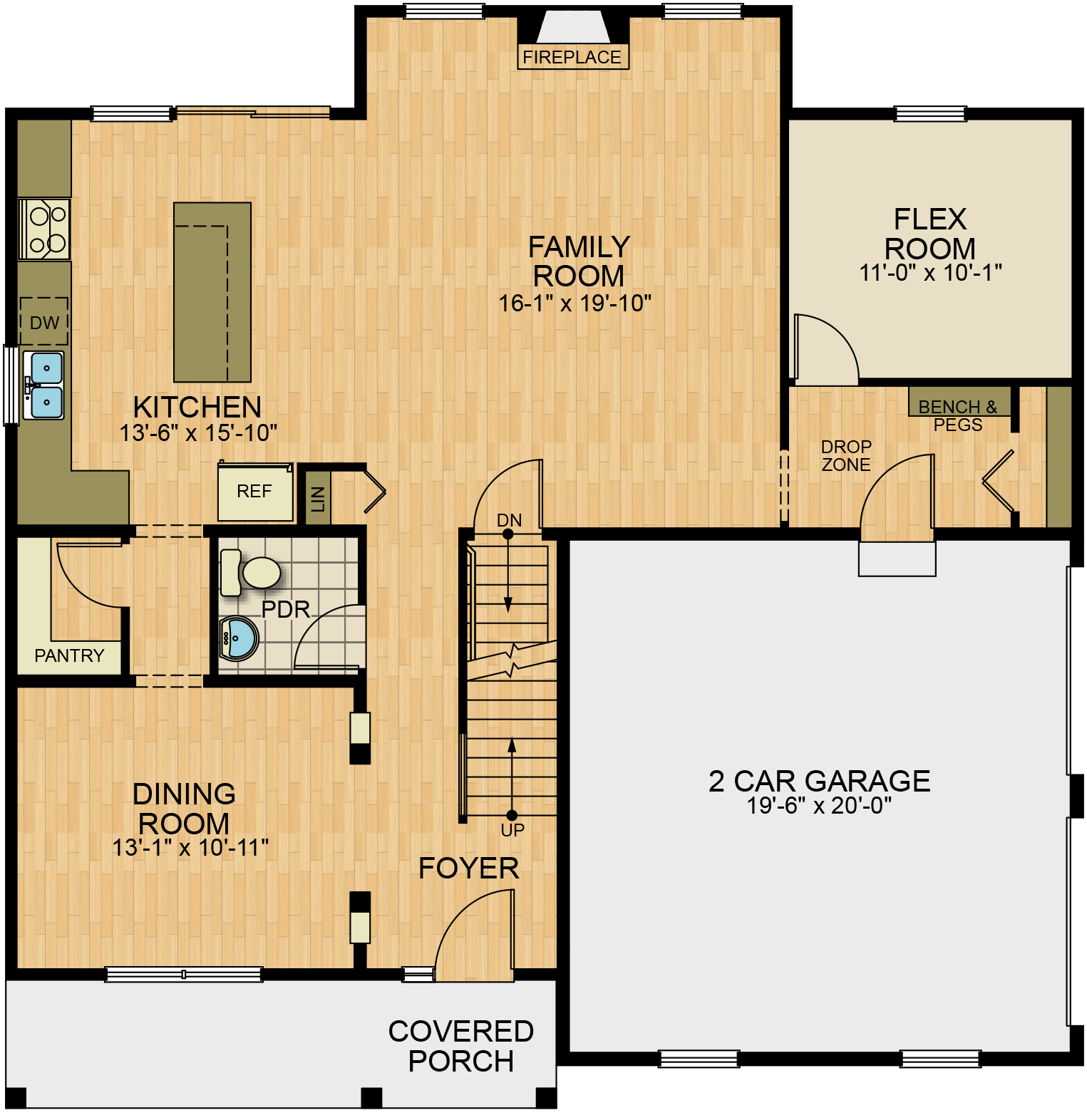
A floor plan is the most honest document in your entire search. It does not have lighting or lens tricks. It just shows you the layout, and if you know how to read one, it will tell you almost everything a walkthrough would.
We cover this in detail in How to Read a New Home Floor Plan Before You Tour, but the short version is this: look at how bedrooms are positioned relative to each other for noise and privacy, check whether the primary suite is separated from secondary bedrooms, trace the path from the garage to the kitchen since that is the route you will walk fifty times a week, and pay attention to where windows are placed rather than just how many rooms there are.
This skill matters more, not less, when you are shopping remotely. When you cannot physically stand in a hallway to judge whether it feels tight, the floor plan is your best substitute. Learn to read it well and you will walk into your eventual visit already knowing which homes are worth your time.
What the Community Page Won't Show You in a Photo
A pretty photo of a clubhouse or a tree-lined street tells you almost nothing about whether a community actually fits your life. The details that matter are usually a few clicks deeper.
Start with the school district if that is relevant to your family. It is listed on every one of our community pages, and it is worth researching independently too, since district boundaries and reputations mean different things to different buyers. Then look at HOA information: what the fee covers, whether it includes lawn care or snow removal, and what it does not. For our 55+ communities like Sagebrook and Wynfield, that HOA coverage is often a real selling point, not fine print to skim past.
Finally, look at what is actually nearby. Not just "close to Harrisburg" or "minutes from Lancaster," but the specific grocery store, the commute route, the parks, and the drive time to the places you will actually go every week. A community that looks similar to three others in photos can feel completely different once you map out what a Tuesday actually looks like there.
Ask the Questions a Website Cannot Answer
At some point, remote research runs into its limit, and that limit is usually a question only a person can answer. This is where a phone or video call with a Garman sales consultant earns its place in your process.
Ask about the things that change by the week: which homesites are still available, what the current construction timeline looks like for a specific plan, whether a lot has a premium and why, and what your guaranteed settlement date would actually be. Ask about financing options, including our Garman Pathways™ programs if affordability is part of your decision. Ask what a typical day-one experience looks like once you do visit, so you know what to expect.
None of that lives on a webpage, and it should not have to. A good sales consultant will treat a video call with an out-of-market buyer the same way they would treat a walk-in, because for a lot of our buyers right now, the phone call is the walk-in.
Build Your Shortlist Before You Ever Set Foot on Site
The point of everything above is not to make a final decision from a distance. It is to get from a long list of possibilities down to two or three homes worth an actual trip.
Use the video walkthroughs, the floor plans, the community details, and your conversations with the sales team to eliminate the homes that clearly are not right, whether that is because the layout does not fit, the community does not match your lifestyle, or the timeline does not line up with your move. Our guide on How to Compare Available Homes Across Garman Communities walks through how to weigh those factors against each other when you are looking at options across multiple towns and price points.
Do this well and your eventual visit stops being an exploratory trip and starts being a confirmation trip. You will walk into homes you already understand on paper, which means you can spend your limited time in town actually feeling the space instead of trying to figure out basic layout questions for the first time.
What to Save an In-Person Visit For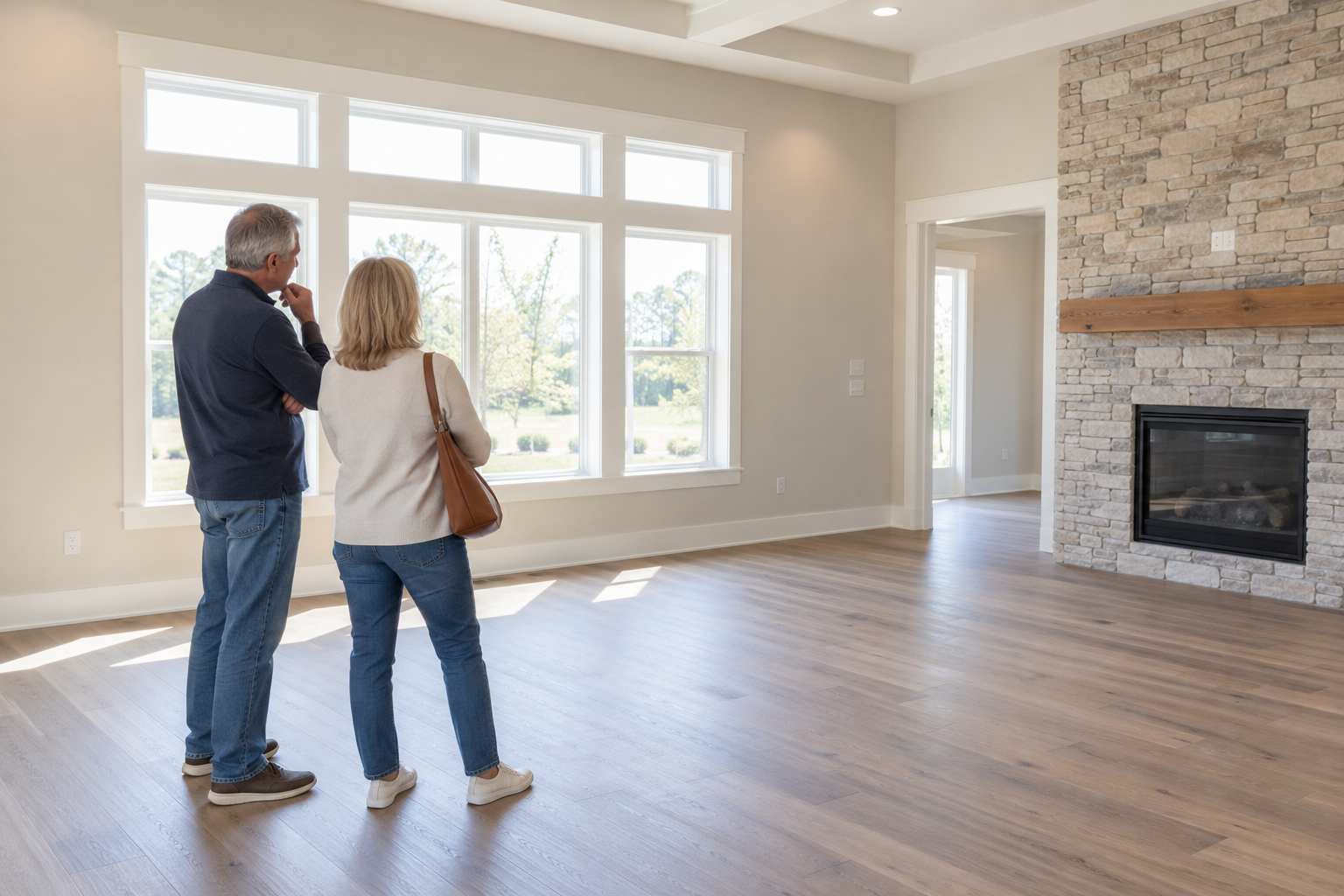
Remote research can get you most of the way there, but it cannot replace everything, and it should not try to.
You cannot judge how a space sounds from a video. Some homes have a hum to them, from HVAC systems or nearby roads or simply how sound carries through an open floor plan, and you will not pick that up on a screen. You cannot judge smell either, which sounds minor until you are standing in a brand new home and realizing how much that "new construction" feeling adds to the experience. And you cannot fully judge scale until your own body is in the room, walking the distance from the kitchen island to the pantry, standing under a ceiling to see if nine feet feels different than you pictured.
These are the things we cover in What to Look for When Touring a Model Home: A Buyer's Walk-Through Checklist, and they are exactly why that visit still matters, even after all the remote research in the world. Once you do make it in, What to Expect During Your First Visit With Garman Builders walks through what that day actually looks like from the moment you arrive.
Most of the Way There, Before You Ever Arrive
Shopping for a new home remotely will not get you a hundred percent of the way to a decision, and it is not supposed to. What it can do is strip away the guesswork, narrow a long list down to a short one, and make sure the visit you eventually take is spent confirming a good fit rather than starting from scratch. If you are relocating and trying to figure out how the timing works alongside a home that is already close to finished, our companion piece on Buying From Out of Market? Why a Quick Move-In Home Can Make the Move Easier is worth reading next.
If you are ready to start narrowing your own list, reach out to our team. We are used to working with buyers who are still hundreds of miles away, and we would rather spend twenty minutes on the phone answering your real questions now than have you waste a flight on a home that was never going to be the right fit.
Frequently Asked Questions
Can I really buy a house without touring it in person?
Some buyers do, though we recommend at least one visit before closing whenever possible. Remote research through video walkthroughs, floor plans, and conversations with a sales consultant can take you very close to a final decision, and an in-person visit is still the best way to confirm it before you sign.
What virtual tools does Garman offer for buyers shopping from out of town?
Every plan page includes photos, room-by-room breakdowns, and square footage by floor. If you are building rather than buying quick move-in, our Online Design Studio, powered by Envision, lets you explore finishes and options remotely. For a closer look at a specific home, ask your sales consultant about a live video walkthrough.
How do I compare floor plans if I can't walk through the homes myself?
Focus on room flow, window placement, and how bedrooms are positioned relative to each other for privacy and noise. Our guide, How to Read a New Home Floor Plan Before You Tour, walks through exactly what to look for on the page.
What should I ask a sales consultant that I can't find on the website?
Ask about current homesite availability, lot premiums, construction timelines, guaranteed settlement dates, and financing options like Garman Pathways™. These details change often and are best confirmed directly with your local team.
How many homes should I have on my shortlist before I visit in person?
Aim for two or three. Use your remote research to eliminate homes that clearly do not fit before you travel, so your visit is focused on confirming the right choice rather than starting the search from the beginning.


 0
0