


Nest Notes
Why Are New Homes So Expensive? A Buyer's Guide to What Goes Into the Price

October 9, 2026
Why Are New Homes So Expensive? A Buyer's Guide to What Goes Into the Price
A new home's price is the sum of land, materials, labor, permits, design and the standards it is built to. Here is what each piece adds, and why understanding it changes the way you shop for a home.
If you've looked at new construction pricing in South Central Pennsylvania and wondered why the number looks the way it does, you're not alone. We hear this question constantly, usually right after a buyer compares a new home to a resale listing down the street and sees a gap that seems hard to explain. The honest answer is that a new home's price isn't one number. It's dozens of numbers stacked on top of each other, starting long before a foundation is poured.
We think buyers deserve a real explanation, not a sales pitch. So this is a breakdown of where the cost actually goes: land and site work, materials, labor, permits, design, energy codes and the construction quality that disappears behind drywall. We'll also be upfront about the pressures every builder in this market is dealing with right now, because pretending those pressures don't exist would be dishonest.
Key Takeaways
- A new home's price reflects land acquisition and site development, materials, skilled labor, permits and fees, design and engineering, code-driven energy standards, and construction quality, not a single line-item markup.
- Site work, including grading, utilities, roads and stormwater management, happens before a single home is built and is part of what a lot "costs" even when it isn't itemized separately.
- Material costs move constantly based on supply, demand and availability, and builders absorb or pass along those swings depending on when a home is contracted and built.
- A shortage of skilled trades, framers, electricians, plumbers, HVAC technicians, affects both the price of labor and how long a home takes to build.
- Permits, inspections and impact or utility fees vary by township and municipality, which is why two homes of similar size in different parts of South Central PA can carry different cost structures.
- Modern energy codes and building standards raise the cost of building a home today but lower the cost of owning and running it for decades.
- The construction quality you can't see once walls are closed, framing, insulation, air sealing, structural detail, is often the biggest difference between a home that performs well and one that doesn't.
- Comparing homes on price per square foot alone misses what's included, how well it's built and what it will cost to live in and maintain.
Land and Site Work: The Cost Before There's a House
Before a home exists, the land has to be bought, and then it has to be made ready to build on. That's two separate costs, and buyers often only think about the first one.
Site work includes grading the lot, running utilities, building the streets that lead to it, and installing stormwater management systems that keep the community from flooding during a hard rain. None of that is visible in the finished product, but all of it has to happen first. A lot in Cumberland County with mature grading and utility access already in place costs differently than raw land that needs roads, sewer and water brought in from scratch.
This is also where school district and location play into price. Land in high-demand areas, like communities near Cumberland Valley or Mechanicsburg Area schools, costs more to acquire than land in more rural stretches of Perry County. That difference shows up in the final price of the home, even though the house itself might be identical.
Materials: What Goes Into the Build, and Why Prices Move
Lumber, concrete, roofing, windows, mechanical systems. Every one of these materials has its own supply chain, and every one of those supply chains has been unpredictable over the past several years.
Material costs move based on availability, demand, tariffs, transportation and a handful of other factors that have nothing to do with the builder and everything to do with global and national supply. A builder locking in a contract today is making assumptions about material costs for a home that won't be framed for months. When those assumptions are wrong, somebody absorbs the difference. Sometimes that's the builder. Sometimes it gets passed to the buyer.
This is one of the real, ongoing cost pressures in home building right now, and we'd rather tell buyers that directly than pretend prices are static. Material costs are a moving target, not a fixed menu.
Labor: Skilled Trades Are Harder to Find, and That Shows Up in Cost and Schedule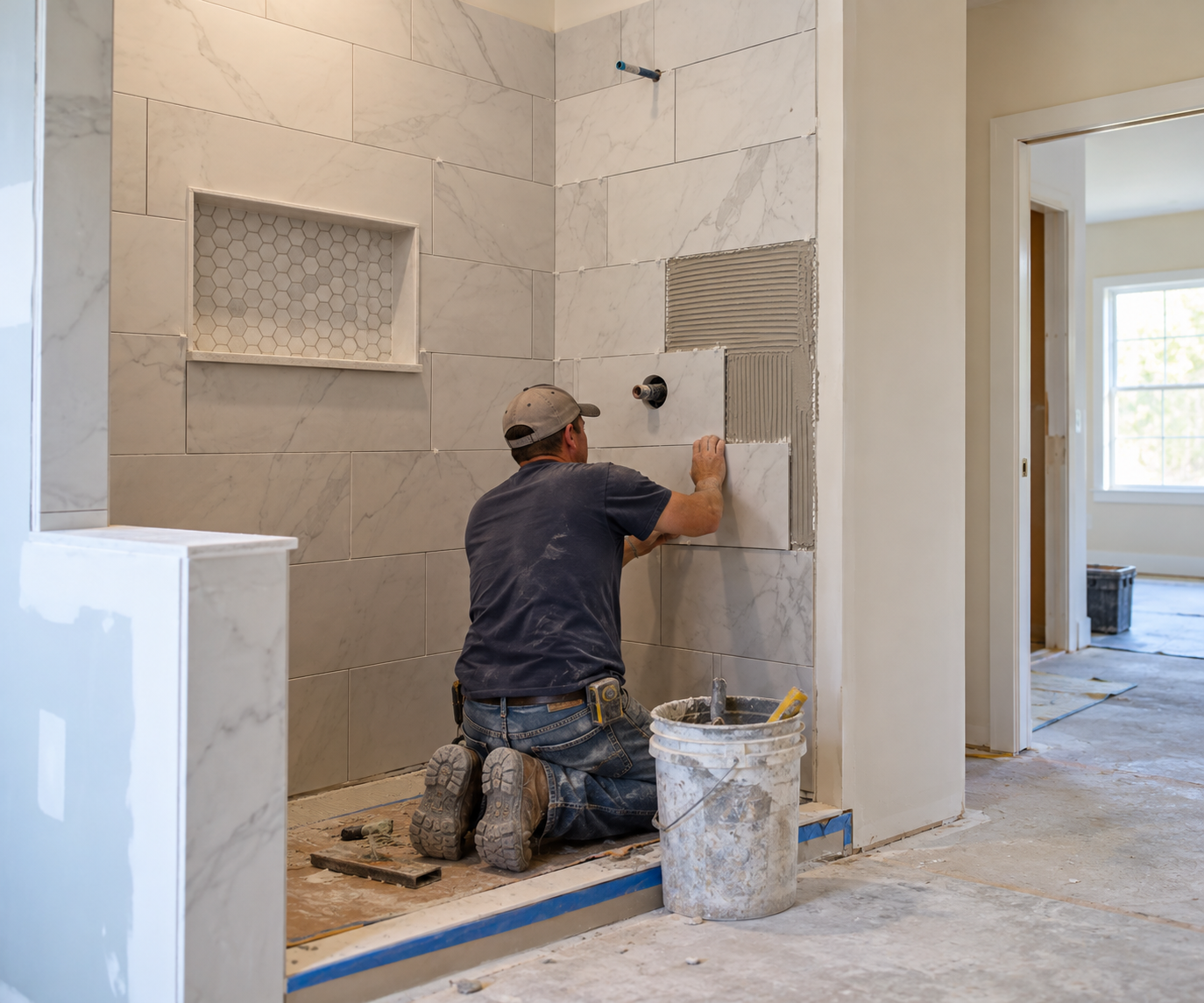
A home is only as good as the people who build it, and right now, there aren't enough of them. The construction industry has a well-documented shortage of skilled trades, framers, electricians, plumbers, HVAC technicians, and that shortage affects every builder in every market, including ours.
Fewer available tradespeople means more competition for their time, which pushes labor costs up. It also means schedules can stretch if a trade partner is backed up on other jobs. This is part of why we invest in long-term trade partnerships and in-house construction support. Strong, consistent relationships with trade partners help us control quality and protect timelines in a labor market that isn't getting easier anytime soon.
Permits and Fees: Different Townships, Different Costs
Every home needs permits, and every permit comes with inspections and fees. What buyers don't always realize is how much these vary from one municipality to the next.
A home built in North Cornwall Township carries different permit and impact fee structures than a home built in Carlisle or Dover. Impact fees, utility connection fees, and inspection requirements are set locally, not by the builder. Two homes that look nearly identical can carry different cost structures purely because of where they sit on the map.
This is part of why pricing isn't uniform across a builder's communities, even within the same region. The house might be the same plan. The township is not.
Design and Engineering: The Work Before the Work
Every home starts as a plan, and every plan has to be engineered to hold up structurally, meet code and function the way it's supposed to. That work, architectural design, structural engineering, plan review, happens before construction begins and is baked into the price of the home.
We also build in a layer most buyers don't think about until they're in it: the Design Studio process. Choosing finishes, fixtures and layout options isn't just a fun afternoon picking out countertops. It's a guided process backed by an in-house design team and architect, supported by our Online Design Studio powered by Envision, that helps buyers make confident choices without guessing. That guidance has value, and it's part of what separates a personalized new home from a spec house with no input at all.
Energy and Code Standards: Paying More Now to Pay Less Later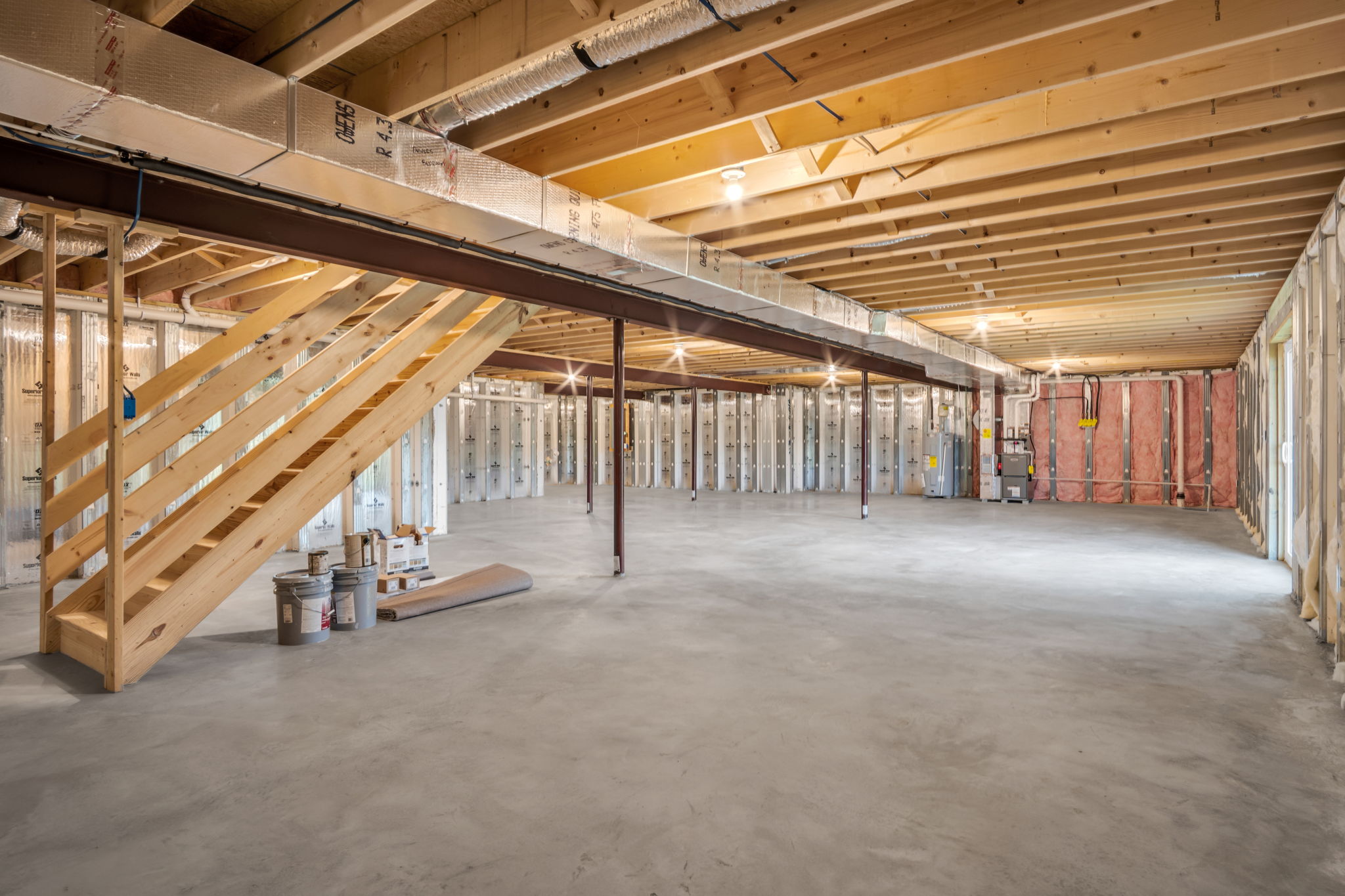
Building codes get stricter every few years, and energy requirements are a big part of that. Better insulation, tighter air sealing, more efficient mechanical systems, these all raise the cost of building a home today compared to a home built a decade ago.
Here's the part that matters for buyers: that upfront cost buys you lower costs every month you live there. Our homes are HERS tested and proven to be 37% more efficient than the average new home built today, which comes down to continuous insulation and smart building practices built into the wall system itself, not just upgraded appliances. That's an investment made once, at construction, that pays back for as long as you own the home.
A cheaper home built to minimum code might cost less at the closing table. It will almost always cost more to heat, cool and maintain for the next twenty years.
Quality Construction: What You're Paying for That You'll Never See
Once drywall goes up, most of what makes a home well built disappears from view. Framing technique, insulation coverage, air sealing detail, the quality of mechanical rough-ins. None of it is visible in a walkthrough. All of it determines how the home performs for decades.
This is the part of the price buyers have the hardest time evaluating, because you genuinely can't see it. A home with sloppy air sealing and a home with meticulous air sealing can look identical on move-in day and feel completely different two winters later. Dedicated field supervision and in-house construction oversight exist specifically to catch the details that would otherwise get buried behind a wall and forgotten.
Why the Price Isn't Just a Markup
It's fair for buyers to wonder how much of a new home's price is pure profit. The honest answer is that overhead, warranty service, and the cost of carrying an entire community through construction all sit inside that number too.
A builder is managing permits, inspections, trade schedules, material deliveries and customer care across dozens of homes at once, often over a multi-year community build-out. Warranty commitments, including follow-up service after settlement, carry real cost long after the sale closes. None of that shows up as a line item on a buyer's contract, but all of it is part of what makes a guaranteed settlement date and dependable construction possible in the first place.
How to Judge Value: Look Past the Price Per Square Foot
Price per square foot is an easy number to compare, and it's also one of the least useful ones. It tells you nothing about what's included, how well the home is built, or what it will cost to run.
When you're comparing builders or comparing new construction to resale, ask what's actually in the price. Is the home HERS tested? Is insulation continuous or minimal? What does the warranty cover, and for how long? Is there a guaranteed settlement date, or just a target? A lower number upfront can turn into a higher number over five years once you factor in energy bills, maintenance and the cost of fixing what wasn't built right the first time.
Understanding the Cost Makes the Value Easier to See
Once you know what's actually inside a new home's price, land, materials, labor, permits, design, energy performance and construction quality, the number on the page starts to make a lot more sense. It's not a markup. It's the sum of everything that has to happen correctly for you to own a home that holds up.
We built our business on explaining this plainly, because buyers who understand what they're paying for make better decisions and feel more confident standing at the closing table. If you want to see what that looks like in one of our South Central PA communities, from Cumberland County to Lebanon, York, Perry and Lancaster counties, reach out and we'll walk you through exactly what's included in the home you're considering.
Frequently Asked Questions
Why are new homes so expensive right now?
New home prices reflect land acquisition and site development, rising material costs, a shortage of skilled trade labor, local permit and impact fees, design and engineering work, and modern energy code requirements. All of these costs are incorporated into the price before a buyer ever sees a contract.
What is the biggest factor in new home construction costs?
There isn't one single biggest factor. Land and site work, materials and labor each represent major cost categories, and all three have faced upward pressure in recent years due to supply constraints and workforce shortages.
How does a labor shortage affect home building?
A shortage of skilled trades, including framers, electricians, plumbers and HVAC technicians, increases labor costs due to competition for available workers and can extend construction timelines when trade partners are booked across multiple projects.
Do permit and impact fees vary by location?
Yes. Permit fees, inspection requirements and impact or utility fees are set at the township and municipal level, not by the builder. Homes of similar size and design can carry different cost structures depending on where they're built.
Why do energy-efficient homes cost more upfront?
Modern energy codes require better insulation, tighter air sealing and more efficient mechanical systems, all of which raise the initial construction cost. That investment typically lowers monthly utility costs and improves comfort for the life of the home.
Is a lower price per square foot always a better deal?
Not necessarily. Price per square foot doesn't account for what's included, the quality of construction, or long-term costs like energy use and maintenance. A lower upfront number can mean higher costs down the road.


 0
0