


Nest Notes
How to Build a Flexible Home Buying Plan (Even When Life Doesn't Cooperate)

October 23, 2026
How to Build a Flexible Home Buying Plan (Even When Life Doesn't Cooperate)
Most buyers picture one path: find a home, sign, wait, move in. Real life rarely works that neatly. Your current home might take longer to sell than you expect. Rates might shift between now and closing. Your job might change your timeline by three months without asking your permission.
A flexible home buying plan is not about predicting every variable. It's about building a plan with enough give in it that a surprise doesn't send you back to square one. That means knowing your real budget range, understanding your options for a home to sell, weighing quick move-in against to-be-built, and having a backup plan before you need one.
We walk buyers through this every day across Cumberland, Dauphin, Lebanon, York, Perry, and Lancaster counties. This guide covers how to plan to buy a new home when your life doesn't move in a straight line, because most lives don't.
Key Takeaways
- Budget with a range: know your comfortable monthly payment and your stretch payment, then use a buying power calculator to test both against real homes.
- If you have a home to sell, decide early whether you'll list first, buy first, or try to line up both closings, since each path changes your timeline and your risk.
- Keep quick move-in and to-be-built homes on the table at the same time. One gives you speed and price certainty, the other gives you time and more design choice.
- Compare lenders and loan types before you fall in love with a floor plan. Ask each lender directly how builder incentives apply to their specific loan products.
- Pick your move-in window around real constraints first, like school start dates, lease end dates, or a job change, then work backward from there.
- Build a plan B before you need one. What happens if your current home takes an extra two months to sell, or rates move before you lock?
- Garman Pathways™ lets buyers walk away without penalty until the final design meeting, and we refund the $1,000 deposit if a buyer doesn't qualify.
- A simple five-part worksheet (budget range, must-haves, timeline, sale plan, backup plan) turns a vague "we want to buy a house" into an actual plan.
Start With a Budget Range, Not a Single Number
Most buyers walk in with one number in their head. That number is usually either too conservative or borrowed from a mortgage calculator they used once and never revisited. Neither gives you much to work with.
A better approach is two numbers: your comfortable payment and your stretch payment. The comfortable number is what you can pay without rearranging your life around it. The stretch number is what you could pay for the right home, in the right community, if it meant getting a layout or lot you really wanted.
Run both numbers through our Buying Power Calculator before you start touring homes. This gives you a real range to work within instead of a single figure that either rules out homes you could actually afford or tempts you toward a payment that's genuinely uncomfortable.
If You Have a Home to Sell First
This is where most flexible home buying plans either hold together or fall apart. You have three real paths, and each one changes your timeline.
List first. You sell your current home, then buy. This removes financial risk but adds a gap: where do you live between closings? Some buyers rent short-term or stay with family. It's not glamorous, but it's predictable.
Buy first. You secure your new home, then list your current one. This works if you can carry two payments temporarily or qualify for financing that accounts for your existing home's equity. It removes the housing gap but adds carrying risk.
Line them up together. You try to time your sale and your new home's settlement to land close together. This is the cleanest outcome on paper, and it's also the hardest to control, since it depends on your buyer's timeline as much as your own.
There's no universally right answer here. The right one depends on your equity, your risk tolerance, and how much flexibility your current housing situation allows. What matters is picking one on purpose instead of defaulting into whichever path happens by accident.
Quick Move-In vs. Build: Keep Both Options Open
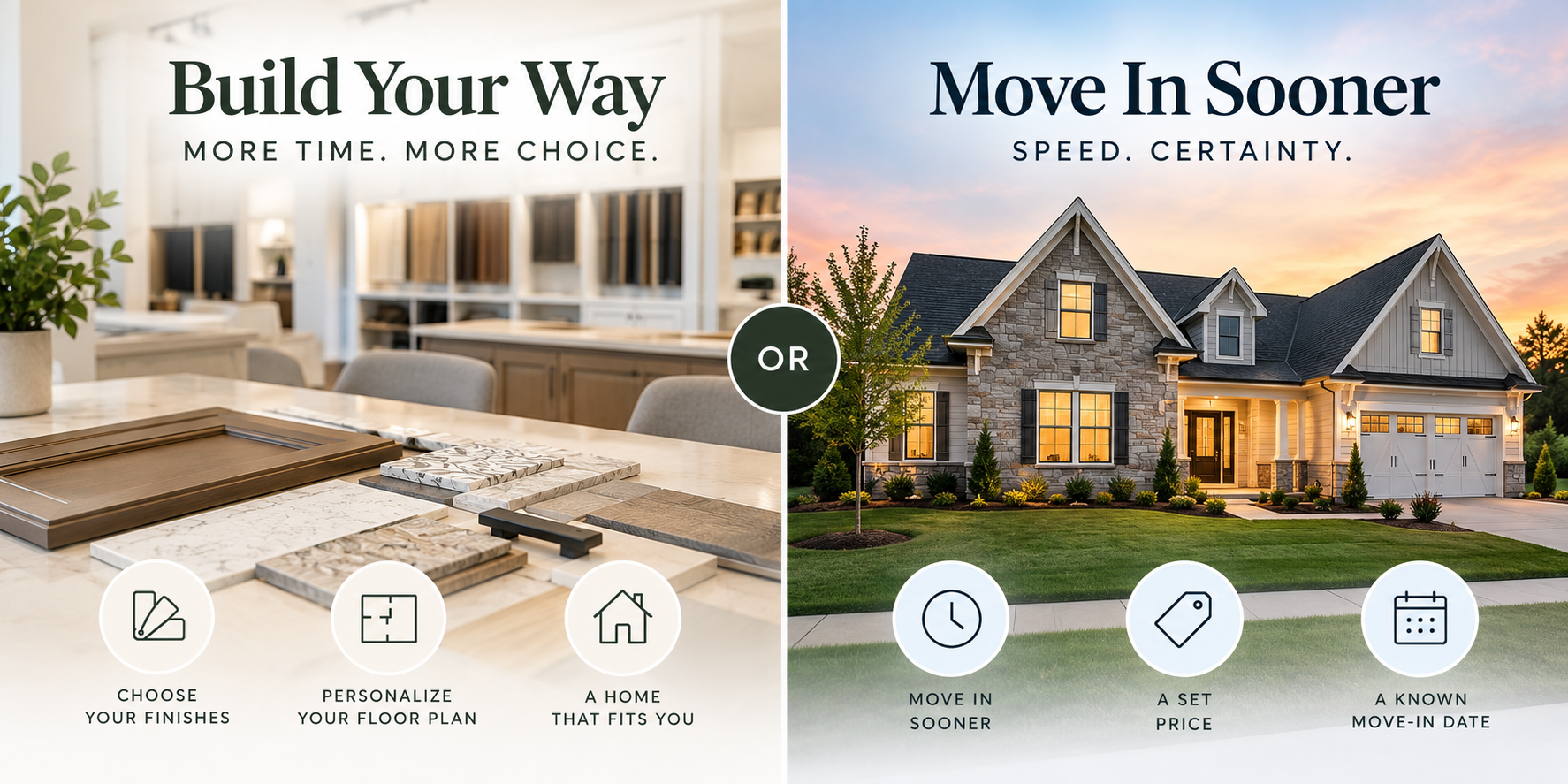
A lot of buyers assume they have to choose between building and buying something that's already available. We'd push back on that framing. The smarter move is to keep both on the table until you've actually compared them side by side.
A to-be-built home gives you time and choice. You walk through our Design Studio, you pick your finishes, and your home takes shape around decisions you made on purpose. This path fits buyers who aren't under a hard deadline and want more control over the final product.
A Quick Move-In home gives you speed and certainty. The home is already underway or complete, the price is set, and the move-in date is known rather than estimated. This fits buyers who need to be in a home by a specific date, or who'd simply rather skip the decision-making process and walk into a finished, well-built home.
Neither option is more "Garman" than the other. Browse our available homes and communities across South Central PA and compare real inventory against real floor plans before deciding which path actually fits your timeline.
Compare Financing Paths Before You Compare Houses
Loan terms, rates, and qualification requirements vary by lender and loan type, so this is one area where we'd rather send you to a professional than guess on your behalf. What we can tell you is that the order matters: talk to a lender before you fall for a specific home.
Compare at least two lenders and ask about the loan types that fit your situation, conventional, FHA, VA, or others depending on your eligibility. Ask each one directly how any builder incentives you're considering apply to their specific products, since the answer isn't always the same from lender to lender. Visit our financing resources for a starting point, then take your questions to a lender who can speak to your exact numbers.
Choosing a Move-In Timeline That Actually Works
Buyers often start timeline planning from the builder's side: how long does construction take, what's the next available slot. We'd flip that. Start with your own constraints first.
Does your child need to start the school year in a new district? Does your current lease end on a specific date? Is a job change pulling your move-in date forward or back? Write those dates down before you talk to us about anything else.
Once you know your real deadline, work backward. A to-be-built home needs more runway than a Quick Move-In home, so your hard constraints will often point you toward one path or the other before you've even toured a model.
Build In a Plan B
The buyers who feel calm throughout this process aren't the ones who had everything go according to plan. They're the ones who had already thought through what they'd do if it didn't.
What happens if your current home sits on the market longer than expected? What happens if rates move between now and your rate lock? You don't need a perfect answer to either question right now. You need a rough one, written down, so you're not solving it for the first time under pressure.
How Garman Builders Supports a Flexible Plan
This is exactly why we built Garman Pathways™ to Homeownership the way we did. Buyers can move forward with a home for as little as $1,000 upfront, and they can walk away at any point up until the final design meeting. If a buyer doesn't end up qualifying, we refund that $1,000 deposit.
That structure exists because we know buyers' circumstances shift between the day they start the process and the day they're ready to commit to final selections. A flexible plan should include a builder who doesn't lock you in before you're ready, and Garman Pathways is built around that idea.
We also offer both Quick Move-In homes and to-be-built options across six South Central PA counties: Cumberland, Dauphin, Lebanon, York, Perry, and Lancaster. Wherever your plan lands, chances are good we have a community and a path that fits it. Explore our special offers to see what's currently available.
A Simple Planning Worksheet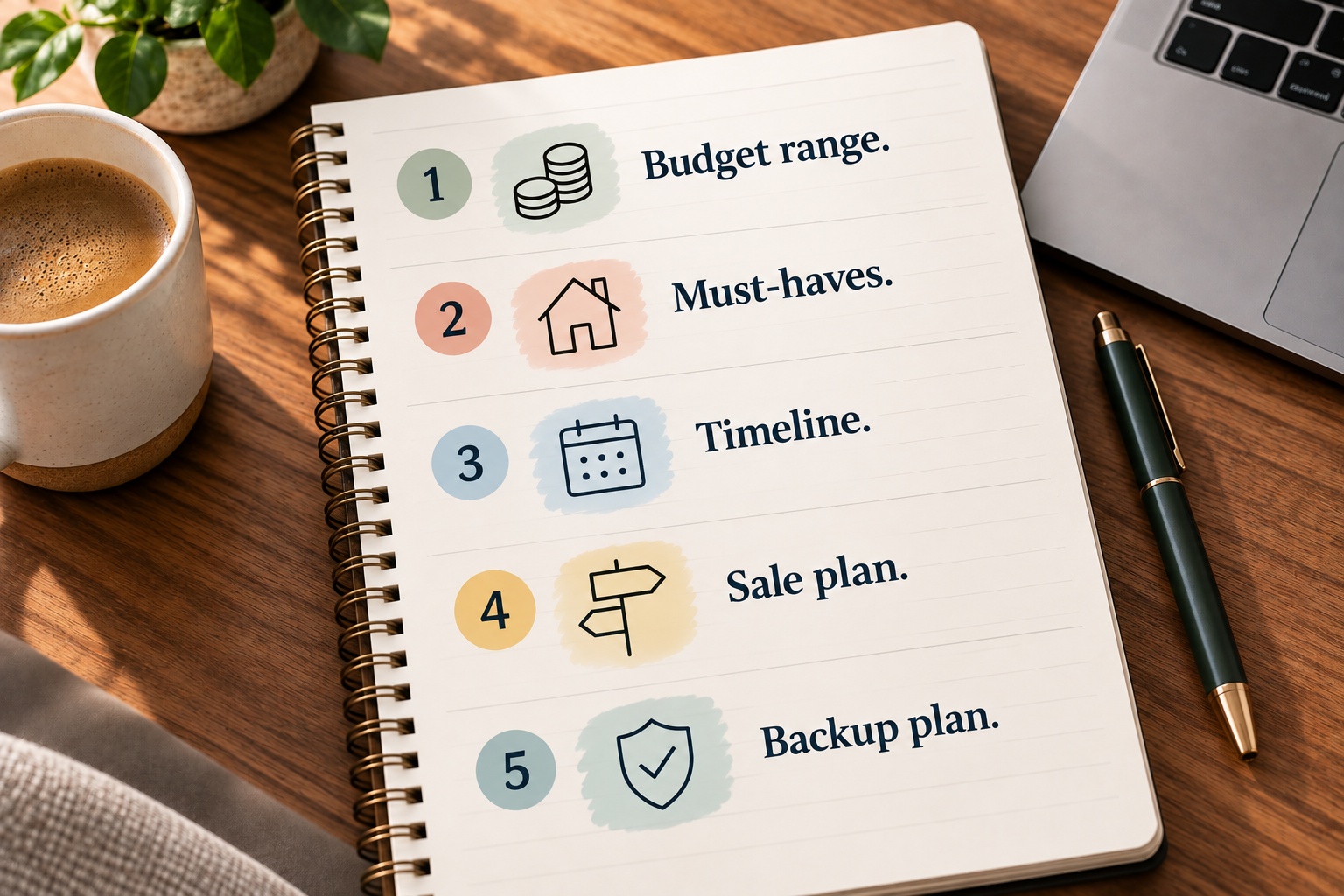
Before you contact a builder or a lender, write down these five things. It takes fifteen minutes and saves weeks of back-and-forth later.
- Budget range. Your comfortable payment and your stretch payment.
- Must-haves. The three or four things you won't compromise on, whether that's a school district, a main-floor primary suite, or a specific commute time.
- Timeline. Your hard deadline, if you have one, and the date you'd move in under ideal conditions.
- Sale plan. List first, buy first, or line them up together, and why.
- Backup plan. What you'll do if your sale takes longer or your rate changes before you lock.
A Plan That Bends Doesn't Break
The buyers who move through this process with the least stress aren't the ones with the most certainty. They're the ones with the most flexibility built in from the start. A budget range instead of a single number. Both building and buying on the table. A sale strategy chosen on purpose. A backup plan written down before it's needed.
That's the kind of plan that absorbs a surprise instead of collapsing under it.
If you're ready to start building a plan that fits your life instead of fighting it, contact our team. We'll walk through your budget, your timeline, and your options across our South Central PA communities, and help you figure out which path actually makes sense for where you are right now.
Frequently Asked Questions
Do I need to sell my current home before I can buy a new one?
No. You can list first, buy first, or try to coordinate both closings together. The right choice depends on your equity, your comfort with carrying two payments temporarily, and how much flexibility your current housing situation allows.
What's the difference between a Quick Move-In home and a to-be-built home?
A Quick Move-In home is already under construction or complete, giving you a known price and a known move-in date. A to-be-built home gives you more time and more control over finishes and layout through the Design Studio, but takes longer to deliver.
How does Garman Pathways work?
Garman Pathways™ lets buyers move forward with as little as $1,000 upfront. Buyers can walk away from the process at any point until the final design meeting, and the $1,000 deposit is refunded if a buyer doesn't end up qualifying.
How long does it take to build a new home in South Central PA?
Timelines vary by home, community, and time of year. A Quick Move-In home can close much sooner than a to-be-built home, which is why it's worth comparing both options against your actual deadline before choosing a path.
What if my home takes longer to sell than expected?
This is exactly why a backup plan matters. Talk through contingency options with your lender and your builder early, whether that's a short-term rental, a bridge strategy, or adjusting your settlement timeline, so you're not deciding under pressure.

 0