


Nest Notes
How to Compare Quick Move-In Homes Without Getting Lost in the Tabs

September 8, 2026
How to Compare Quick Move-In Homes Without Getting Lost in the Tabs
You have five Quick Move-In homes open in five tabs across three communities. Here is how to actually narrow that down.
When you’re browsing available new homes, everything starts to blur after a while. One home has the better kitchen. Another has the shorter commute. Another is ready sooner. Another has the floor plan you liked from the start. And if you’re comparing from memory, you’ll miss something.
This guide is about how to compare Quick Move-In homes from an inventory-shopping perspective: location, floor plan, price point, size, included features and timeline. If you also need to compare the full monthly cost of two homes, including taxes, insurance, HOA fees and utilities, read our guide on How to Compare Two Homes With Different Monthly Payments?. That is the financial comparison. This is the practical narrowing-down framework.
Key Takeaways
- Compare Quick Move-In homes side by side instead of trying to remember the details from each listing.
- Focus on six main factors: location, floor plan, price point, home size, included features and timeline.
- Current incentives can vary by home, so price should be compared with what is included.
- A home that photographs beautifully still needs to work for your commute, school needs and daily routine.
- Your priorities should guide the comparison. A buyer who needs to move quickly will weigh timeline differently than a buyer focused on long-term layout fit.
- Narrow your list to two or three homes, then tour them in the same week while the details are still fresh.
- The best choice is the home that fits your life on paper and feels right in person.
How to Compare Quick Move-In Homes Side by Side
The easiest way to compare Quick Move-In homes is to put your top three to five options into one simple side-by-side view. Use the same six categories for each home: location and community, floor plan, price point, size, included features and timeline to close.
This keeps the decision grounded. You stop bouncing between listing photos and start seeing the real tradeoffs.
A basic comparison might look like this:
| Home | Community | Floor Plan | Price Point | Size | Included Features | Timeline |
|---|---|---|---|---|---|---|
| Home 1 | Community A | Plan Name | Price | Sq. Ft. | Key finishes or selections | Ready date |
| Home 2 | Community B | Plan Name | Price | Sq. Ft. | Key finishes or selections | Ready date |
| Home 3 | Community C | Plan Name | Price | Sq. Ft. | Key finishes or selections | Ready date |
You don’t need a complicated spreadsheet. A notebook works. So does a notes app. The point is to get the homes out of your head and into one view.
1. Compare Location and Community First
Location is the factor buyers are most tempted to “figure out later.” Don’t.
A Quick Move-In home only works if the community supports your daily life. That means looking at the commute, school district, nearby shopping, family routines, parks, medical care, weekend plans and how the area feels at different times of day.
For buyers comparing available homes across South Central PA, the same floor plan can feel very different depending on whether it’s in Cumberland County, Lebanon County, York County, Lancaster County or Perry County. A Carlisle location may support one commute. A Mechanicsburg community may offer another school district. A Lebanon County home may provide a different price point or access to Hershey, Harrisburg, Lancaster or Reading.
If you’re still deciding where you want to live, start with our guide on What to Know Before Choosing a New Home Community in South Central PA.
Ask yourself:
- Does this location make the weekday routine easier?
- Is the school district important for our household?
- How far is it from work, family or the places we go most?
- Does the community match the lifestyle we want?
- Would we still choose this home if the photos were removed?
That last question helps. A beautiful kitchen does not fix a commute that wears you down every day.
2. Compare the Floor Plan and Layout Fit
The floor plan matters more than the square footage on the listing.
A 2,100-square-foot home with the right layout can live better than a larger home with awkward spaces. When comparing new construction inventory, look at how the home supports your actual household, not just how it looks in photos.
Pay attention to:
- Bedroom placement
- Main living flow
- Kitchen and dining connection
- Mudroom or drop zone space
- Home office or flex room options
- Storage
- Primary suite privacy
- Guest space
- Garage access
- Outdoor living connections
For growing families, the right plan may mean open gathering areas with private spaces when everyone needs quiet. For move-up buyers, it may mean a better kitchen, more storage or a dedicated office. For active adults, it may mean right-sized living, fewer stairs or a layout that feels comfortable for everyday use.
At Garman Builders, we talk a lot about homes that are Built for the Way You Live because layout is where that idea becomes real. A home should support the way your mornings work, where backpacks land, how you host, how you rest and how life changes over time.
3. Compare Price Point With Incentives and Included Value
Price matters. But comparing only the listed price can lead you in the wrong direction.
Quick Move-In homes often vary in included features, selected finishes, homesite premiums and current incentives. One home may be priced higher because more selections are already included. Another may have a current offer that changes the value picture. Another may appear more affordable at first glance but require tradeoffs that matter to you.
This is where comparing available new homes becomes different from comparing resale listings. With new construction, you need to understand what is already built into the home.
Look at:
- Base price versus final listed price
- Included design selections
- Appliances, fixtures or finishes already chosen
- Finished spaces, if applicable
- Homesite differences
- Community HOA details
- Any current incentive specific to that home
- Estimated closing timeline
If you are comparing monthly payments, that is a separate step. Taxes, insurance, HOA fees, utility expectations and financing can change the real monthly cost. For that side of the decision, use our guide on How to Compare Two Homes With Different Monthly Payments?.
For this stage, stay focused on inventory value: what home are you getting, where is it located and what is already included?
4. Compare Home Size Against Your Actual Space Needs
Square footage is useful, but it is not the whole story.
Before choosing between Quick Move-In homes, write down what you actually need the space to do. Not what sounds nice. What your household needs every week.
For example:
- Do you need four bedrooms or would three bedrooms plus a flex room work better?
- Is a larger kitchen more important than a formal dining space?
- Do you need a home office with a door?
- How much storage do you need for sports gear, holiday bins or hobbies?
- Will overnight guests need their own comfortable space?
- Are you trying to right-size into less maintenance without feeling cramped?
This step helps you avoid paying for space you won’t use or choosing a home that feels tight six months after settlement.
The better question is not “Which home is bigger?” It is “Which home uses space better for the way we live?”
5. Compare Included Features and Finishes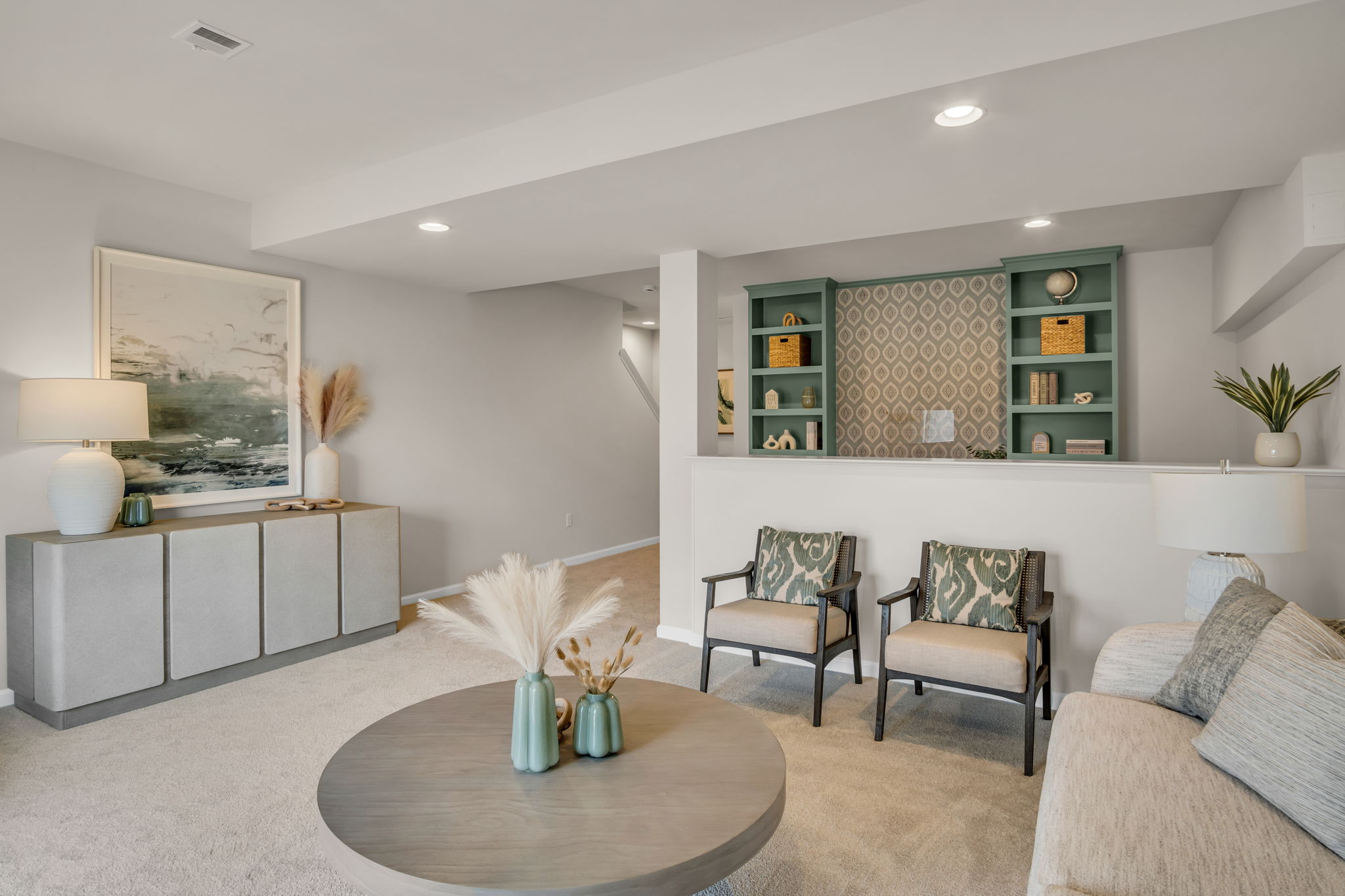
Quick Move-In homes are not blank slates. That is part of the appeal.
Many selections have already been made, which can save time and reduce decision fatigue. But it also means each available home has its own personality. Cabinets, countertops, flooring, fixtures, exterior colors and optional features may vary from home to home.
When comparing Garman available homes, look closely at what is already selected. One home may have a warm, traditional feel. Another may lean cleaner and more modern. One may include finishes you would have chosen anyway. Another may require you to compromise on a detail that will bother you later.
Compare:
- Cabinet color and style
- Countertops
- Flooring
- Lighting
- Bathroom finishes
- Kitchen layout details
- Exterior finishes
- Basement or bonus spaces, where applicable
- Outdoor living features
- Garage size or storage options
Photos help, but they don’t always tell the full story. Finishes feel different in person. Light changes from room to room. The sound, scale and flow of a home rarely come through on a screen.
6. Compare the Timeline to Close
Not every Quick Move-In home is available at the same stage.
Some homes may be ready now. Others may be under construction and ready soon. Some may have finish selections completed but still need final construction steps. The timeline matters if you are selling another home, relocating, starting a new job, timing a lease end or trying to get settled before a school year.
If you are seeing terms like “Ready Soon,” read our guide on What “Ready Soon” Really Means When Shopping for a New Home. It explains what that stage can mean and what buyers should ask before assuming a move-in date.
When comparing timelines, ask:
- Is the home complete, nearly complete or still under construction?
- What is the expected settlement timing?
- Are there construction milestones still remaining?
- Does the timeline align with my current home sale or lease?
- If I need to move quickly, which homes realistically fit?
Garman’s guaranteed settlement date is part of The Garman EDGE, our framework for delivering better-built, more efficient homes with greater confidence. Once that date is set, buyers can plan with more clarity. That matters when movers, school schedules, rate locks and life plans are involved.
A Simple Way to Narrow Your List
Once you have your top three to five homes in one view, mark each factor as:
- Strong fit
- Workable fit
- Poor fit
Do not overthink it. The goal is to see patterns.
A home with five strong-fit categories deserves a closer look. A home with two poor-fit categories probably needs to come off the list, even if the photos are great.
Then rank your six factors by importance.
For example, if you need to move within 60 days, timeline may be the heaviest factor. If you are planning to stay in the home long term, location and floor plan may matter more than a slightly faster close. If you are focused on value, price point and included features should sit near the top.
Different buyers should reach different answers. That is the point.
How to Weigh What Matters Most to You
The right Quick Move-In home is not always the one with the lowest price or the largest square footage. It is the one that best matches your priorities.
A buyer focused on a fast close should weigh timeline heavily. A buyer with school-age children may put community and school district first. A move-up buyer may care most about floor plan, finishes and long-term function. An active adult buyer may prioritize low-maintenance living, single-level comfort or proximity to family and everyday conveniences.
Use this simple ranking:
- Must-have factors
- Strong preference factors
- Nice-to-have factors
Must-haves should not be compromised casually. Strong preferences can be weighed against value. Nice-to-haves should not drive the whole decision.
This keeps the process honest. It also helps couples or family members make decisions together when each person is drawn to a different home.
Common Mistakes When Comparing Quick Move-In Homes
The biggest mistake is comparing only price.
A lower price does not always mean a better fit. If another home includes more of the finishes you want, sits in a better community for your routine or has a layout that works longer for your household, the value comparison changes.
Another common mistake is falling in love with photos before confirming the community works. Listing photos are useful. They are not a substitute for understanding the drive, surroundings, school district, HOA details and everyday convenience.
Other mistakes include:
- Comparing homes one at a time from memory
- Ignoring timeline until the end
- Overvaluing square footage without studying layout
- Assuming all Quick Move-In homes include the same selections
- Forgetting to ask which incentives apply to which home
- Touring too many homes without a shortlist
Too many options can make buyers freeze. A clear comparison gives the decision some structure.
Why Touring Your Shortlist Still Matters
Paper can narrow the list. It cannot choose the home for you.
Once you have two or three strong options, tour them in person. Walk the main living space. Stand in the kitchen. Open the pantry. Check the bedroom placement. Look at the garage. Notice the light. Drive the route you would actually take to work, school or family.
You’ll learn quickly which home feels natural.
If it is your first time visiting with our team, read What to Expect During Your First Visit With Garman Builders. We want buyers to feel informed, not pressured. A visit should help you understand the home, the community and the next steps clearly.
Your Best Next Step: Narrow, Then Tour in the Same Week
After you compare your top homes side by side, narrow the list to two or three. Then schedule visits during the same week while the details are fresh.
That timing helps. You can compare the homes more clearly, remember how each one felt and ask better questions. If you wait too long between visits, the details start to blur again.
A Quick Move-In home can be a smart way to move forward with more clarity, especially when the location, layout, price point, included features and timeline all line up. Start with the side-by-side comparison. Then come see the homes for yourself.
Explore our current Quick Move-In and available homes or contact Garman Builders to talk through your shortlist with our team. We’ll help you compare your options clearly so you can choose with more confidence.
FAQ
What is the best way to compare Quick Move-In homes?
The best way to compare Quick Move-In homes is to place your top three to five options in one side-by-side view. Compare the same six factors for each home: location, floor plan, price point, size, included features and timeline to close.
Should I compare Quick Move-In homes by price first?
Price is important, but it should not be the only starting point. Compare price alongside location, included finishes, incentives, layout and timeline. A home with a higher price may include features or community benefits that create stronger overall value.
How many available new homes should I tour?
Start by narrowing your list to two or three homes, then tour them during the same week if possible. This keeps the details fresh and makes it easier to compare layout, finishes, community feel and commute.
Are all Quick Move-In homes ready right away?
No. Quick Move-In homes can be at different stages of availability. Some are complete, while others are under construction or “Ready Soon.” Always ask about the expected settlement timing before making a decision based on timeline.
What matters more, square footage or layout?
Layout usually matters more than square footage. A well-designed home with efficient space, good storage and the right room placement can live better than a larger home with spaces that do not fit your routine.
Why should I tour after comparing homes online?
Online listings help you narrow the list, but an in-person tour shows how the home actually feels. You can experience the flow, light, finishes, storage, room sizes and community setting in a way photos cannot fully capture.


 0
0