


Nest Notes
Can You Customize a Quick Move-In Home? What Can Change Before Closing

September 8, 2026
Can You Customize a Quick Move-In Home? What Can Change Before Closing
It depends on how far along the home is. A home still under construction may allow some changes, while a fully completed home generally does not. That is the clearest answer to the question, can you customize a quick move in home?
For buyers asking about changes to QMI home before closing, the timing matters more than almost anything else. A quick move-in home, sometimes called a QMI home or spec home, is already in motion. Plans have been approved. Materials may be ordered. Some finishes may already be installed.
That does not mean every choice is off the table. It does mean flexibility is tied to the home’s construction stage, the community, supplier timelines, building schedule and what has already been committed.
Here is how to think about it before you fall in love with a quick move-in home and start picturing all the changes you want to make.
Key Takeaways
- A quick move-in home may allow limited changes if it is still early enough in construction.
- A completed move-in ready home generally has locked-in finishes.
- Structural layout, exterior elevation, flooring and cabinetry are almost never changeable once a QMI home is underway.
- Paint colors, light fixtures or minor selections may still be flexible if they have not been installed or ordered.
- Cosmetic updates like hardware, paint and lighting can always be changed by the homeowner after closing.
- The earlier you ask about a specific QMI home, the more likely some flexibility remains.
- The best question is not “Can I customize this home?” It is “What stage is this home in, and what is still open for change?”
- Buyers who want extensive personalization are usually better served by a to-be-built home.
Can You Customize a Quick Move-In Home?
A quick move-in home can sometimes be customized in small ways, but it is not the same as building from the ground up. The amount of quick move in home flexibility depends on what has already been built, ordered or installed.
A home in an early construction stage may still have a few open decisions. A home that is nearly finished usually has very little room for changes. A completed home is ready because the major decisions have already been made.
That is part of the tradeoff.
With a quick move-in home, you gain speed, certainty and a clearer picture of what you are buying. You can often walk the home or review selections that are already set. You are not starting with a blank sheet of paper. For many buyers, that is helpful.
If you want to understand why pre-selected finishes can make the process easier, read our related guide: Why Already-Selected Finishes Can Make Buying a New Home Easier.
How Completion Stage Determines Flexibility
The construction stage is the first thing to ask about. Not the model name. Not the square footage. Not even the closing timeline.
The stage tells you what is still possible.
A home in early framing may still allow certain selections if those items have not been ordered and if changing them does not affect the schedule. A home with drywall complete, cabinetry installed or flooring underway will have far less flexibility. At that point, selections are no longer just ideas on paper. They are materials, labor schedules and installation dates.
A fully completed home generally does not allow pre-closing changes. The home is finished, cleaned, inspected and prepared for settlement. Asking for changes at that point can create delays, added costs or warranty complications.
Here is the practical way to look at it:
- Early construction: Some minor selections may still be open.
- Mid-construction: Flexibility narrows quickly as materials are ordered and installed.
- Late construction: Most selections are locked in.
- Completed home: Changes are generally handled after closing by the homeowner.
If you are shopping for a home that is listed as ready soon, timing can feel confusing. Our guide, What “Ready Soon” Really Means When Shopping for a New Home, explains how that phrase connects to construction progress and move-in planning.
What Is Almost Never Changeable Once a QMI Home Is Underway or Complete
Some new construction change requests sound simple from the outside but are not simple once construction begins.
Structural layout is the biggest one. Moving walls, changing room sizes, adjusting stair placement or adding major spaces affects engineering, permits, inspections and the construction schedule. Once a quick move-in home is underway, those items are almost always set.
The same is true for the exterior elevation. Rooflines, window placement, porch design and exterior materials are part of the approved plan and community streetscape. These are not late-stage changes.
Major finish categories are also difficult to change once they have been ordered or installed. That includes:
- Flooring
- Cabinetry
- Countertops
- Plumbing fixtures
- Tile selections
- Exterior colors
- Major electrical placement
Cabinetry is a good example. A buyer may think, “I just want a different color.” But cabinets are measured, ordered, delivered and installed on a schedule. Changing them after that point can affect countertops, plumbing, appliances and settlement timing.
That does not mean the answer is always no. It means these items need to be discussed early and reviewed by the sales and construction teams before anyone assumes they can change.
What Sometimes Remains Flexible Depending on Timing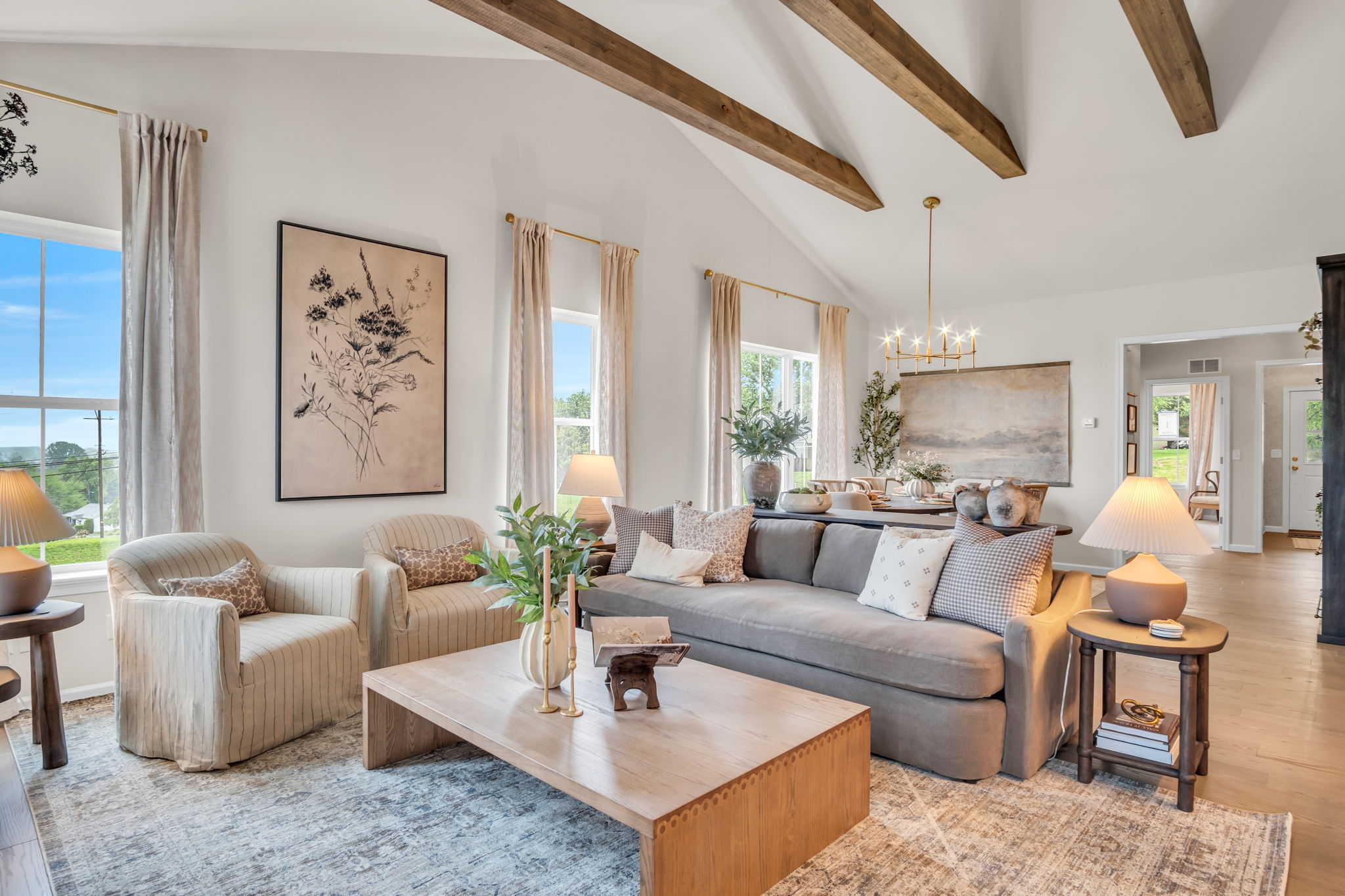
Some items may still be flexible if they have not been ordered, delivered or installed. This is where the construction stage matters.
Depending on timing, a quick move-in home may still allow limited changes such as:
- Paint color in select cases
- Light fixture choices
- Certain hardware selections
- Minor finish details not yet installed
- Small decorative items that do not affect construction sequencing
Even then, the answer is not automatic. A change has to work with the home’s schedule, supplier availability, construction progress and settlement date. A small change made too late can still become a delay.
That is why we do not recommend thinking of a QMI home as “customizable” in the broad sense. It is better to think of it as a home with possible remaining selections, depending on timing.
If you are comparing that to a full design experience, our guide What to Expect at Your Design Studio Appointment can help you understand how personalization works when you build a home from an earlier stage.
What Can You Change on a Move-In Ready Home After Closing?
A move-in ready home is usually finished before you buy it, but that does not mean it can never reflect your style. It means most changes become homeowner updates after closing.
After closing, you can update cosmetic items on your own timeline, including:
- Interior paint
- Cabinet hardware
- Light fixtures
- Ceiling fans
- Window treatments
- Decorative shelving
- Accent walls
- Mirrors
- Landscaping touches, depending on community guidelines
These are the kinds of updates many homeowners prefer to make after living in the home for a while. Paint is easier to choose once you see how the light moves through the rooms. Hardware is easier to select once furniture arrives. Lighting feels different when you know where you read, cook, work and gather.
This is one of the practical benefits of a quick move-in home. You can move in sooner, settle into the space then make smaller updates when you are ready.
Why Asking Early Matters
The earlier you engage with a specific QMI home, the more likely some flexibility still exists.
That does not mean every early-stage home can be changed. It does mean there is more room to ask. Once materials are ordered or installation begins, flexibility narrows. Once the home is complete, the conversation usually shifts from pre-closing changes to future homeowner updates.
If you are about a quick move-in home, ask about the construction stage right away. Do not wait until after you have reviewed the floor plan, toured the community and started mentally swapping finishes.
Ask early. Get clear answers. Then decide whether the home gives you the right balance of speed, style, location and control.
For a broader look at when a QMI home makes sense compared to building from scratch, read Build a New Home or Buy a Quick Move-In: An FAQ Guide to Choosing Your Path.
The Right Question to Ask Your Sales Consultant
The wrong question is too broad: “Can I customize this home?”
That question usually leads to frustration because “customize” means different things to different buyers. One person means changing the floor plan. Another means choosing a different pendant light. Those are not the same request.
Ask this instead:
“What stage is this home in, and what is still open for change?”
That question gives your sales consultant room to answer clearly. It also keeps the conversation grounded in what is actually possible.
Helpful follow-up questions include:
- Have the cabinets been ordered?
- Has flooring been selected or installed?
- Are paint colors final?
- Are light fixtures still open?
- Would this change affect the closing date?
- Is this a pre-closing change or something I should handle after settlement?
A good sales consultant will not guess. They will confirm what is still open, what is already locked in and what would affect the home’s schedule.
That clarity matters. At Garman Builders, confidence from contract to closing is part of how we serve buyers. A QMI home should make the process feel simpler, not murkier.
Setting Realistic Expectations About Customizing a Spec Home
Customizing a spec home is different from designing a to-be-built home. A quick move-in home gives you speed and certainty. A to-be-built home gives you more control.
Both paths can be right.
A QMI home is a good fit when you want a new home sooner, prefer fewer decisions or find a home where the layout, location and finishes already work well for your life. It is also helpful when you want a clearer settlement timeline and less time spent making selections.
A to-be-built home is a better fit when you want to choose more of the details from the start. That includes homesite selection, floor plan options and a more complete design process through the Design Studio.
The key is knowing which kind of buyer you are.
If you need extensive customization, do not force a QMI home to become something it is not. You will be happier starting earlier in the process. If the quick move-in home already gives you most of what you want, small after-closing updates may be enough to make it feel like yours.
That is the balance: more speed or more selection control.
A Smarter Way to Choose Your Next Home
A quick move-in home can be a smart path when you want new construction without the full build timeline. You get a better-built home, a clearer picture of what is included and a faster road to settlement.
Just go in with the right expectations.
Some changes may be possible early. Most major selections are locked in once construction moves forward. Finished homes are generally sold as completed, with cosmetic updates handled after closing.
If you are looking at a Garman quick move-in home in South Central Pennsylvania, talk with our team early. We will help you understand the home’s stage, what is still open and whether a QMI or to-be-built home is the better fit for the way you want to live.
Explore available homes or contact us to ask about current quick move-in opportunities.
FAQ: Changes to a QMI Home Before Closing
Can you customize a quick move-in home?
Sometimes. A quick move-in home may allow limited customization if it is still early enough in construction and the requested item has not been ordered or installed. Completed homes generally do not allow pre-closing changes.
What can you change on a move-in ready home?
Before closing, very little is usually changeable on a completed move-in ready home. After closing, homeowners can update cosmetic items such as paint, light fixtures, cabinet hardware, window treatments and other decorative details.
Can I change flooring in a quick move-in home?
Flooring is usually not changeable once it has been ordered or installed. If the home is in an early enough stage, your sales consultant can confirm whether flooring is still open. In most QMI homes, flooring is treated as a major finish category and locks in early.
Can I change cabinets in a QMI home?
Cabinet changes are rarely available once a QMI home is underway. Cabinetry affects measurements, countertops, plumbing, appliances and installation schedules. If cabinets have already been ordered or installed, they are generally locked in.
Can I choose paint colors in a quick move-in home?
Paint color may be flexible in select cases if painting has not started and if the change does not affect the schedule. Once paint is complete, buyers usually handle repainting after closing.
Are light fixtures changeable before closing?
Light fixtures may be changeable if they have not been ordered or installed. If they are already in place, buyers can update them after closing on their own timeline.
Should I buy a quick move-in home or build from scratch?
Buy a quick move-in home if you value speed, certainty and fewer decisions. Build from scratch if you want more control over floor plan options, finishes and design selections. The right choice depends on how much flexibility matters to you.


 0
0