


Nest Notes
HOA Fees Explained: What They Cover, How They Work, and What to Ask Before You Buy

July 29, 2026
HOA Fees Explained: What They Cover, How They Work, and What to Ask Before You Buy
An HOA fee is a monthly or annual payment that covers shared costs in your community. What it covers varies enormously, and understanding the difference is how you compare communities honestly.
This matters more than buyers expect. Two homes can look similar on paper, but the HOA fee may cover very different things, from a neighborhood entrance and open space to a clubhouse, lawn care, snow removal, building insurance, or major exterior maintenance. If you do not know what is included, you are not making a true apples-to-apples comparison.
At Garman Builders, HOA fees in our communities vary by neighborhood and home type. Buyers should consult the on-site sales agent for current pricing and specific inclusions before making a decision.
Key Takeaways
- HOA fees are payments that support shared community costs, but what they cover depends on the type of community.
- Single-family neighborhoods usually have lower fees than condo buildings because they cover fewer shared responsibilities.
- Condo HOA fees are often higher because they may include exterior building maintenance, structural insurance, shared systems, elevator service, and common interior spaces.
- In 55+ and low-maintenance communities, higher fees may cover valuable services like lawn care, snow removal, and amenities.
- HOA fees are part of your monthly housing cost, and lenders count them in your debt-to-income ratio.
- A healthy HOA should have reserve funds for future repairs and a reasonable history of fee adjustments.
- Special assessments can happen when major expenses arise and reserves are not enough to cover them.
- Before you buy, ask exactly what the fee covers, how it has changed over time, and whether any assessments are expected.
What an HOA Actually Is
HOA stands for homeowners association. It is the governing body that manages certain shared responsibilities in a neighborhood, townhome community, condo building, or planned development.
That sounds simple. In practice, there are a few moving parts buyers should understand.
The HOA
The association itself is the legal entity responsible for maintaining common elements, collecting fees, enforcing community rules, and handling shared financial obligations.
The Board
The board is the decision-making group that oversees the association. Depending on the stage of the community, the board may still be controlled by the builder or may have transitioned to homeowners.
This matters because board control affects how decisions are made, how budgets are set, and how the community evolves over time.
The Management Company
Many HOAs hire a professional management company to handle day-to-day operations. That can include billing, coordinating vendors, managing maintenance requests, organizing meetings, and helping enforce community standards.
The management company is not the same as the board. The company manages operations, but the board governs the association.
The CC&Rs and Governing Documents
CC&Rs stands for Covenants, Conditions, and Restrictions. These are the rules and legal documents that define how the community operates and what owners can and cannot do.
They usually cover things like:
- exterior changes
- pet rules
- parking restrictions
- rental policies
- maintenance responsibilities
- use of amenities
- assessment procedures
Before you buy, you should know who is responsible for what. That is not a small detail. It shapes your monthly cost, your freedom as a homeowner, and your long-term risk.
Typical HOA Fee Ranges in Central PA
This is where buyers often want a single number. There is no honest single number.
In Central Pennsylvania, HOA fees vary based on the type of community, the services included, the amount of shared property, and whether the community includes amenities or building-level maintenance. Exact fees change over time, so buyers should always confirm current costs and inclusions with the on-site agent.
Still, the broad pattern is consistent.
Standard Single-Family Subdivision
In a traditional single-family neighborhood, the HOA fee is usually modest and often paid annually or in smaller monthly installments. These fees commonly support shared items like entrance landscaping, signage, stormwater areas, open space, and basic common-area upkeep.
The reason the fee is lower is straightforward. Homeowners are usually responsible for their own lawn, roof, siding, snow removal, and home insurance.
Amenity-Rich or 55+ Community

In an amenity-focused or active adult community, the fee is often higher because it covers more day-to-day services and shared lifestyle features. That can include clubhouse operations, fitness spaces, walking trails, lawn care, snow removal, and community gathering areas.
For buyers exploring low-maintenance living, that higher fee is often the point. You are paying for fewer chores, more convenience, and access to amenities you would not maintain on your own. If you are considering that lifestyle, our blog on Is Low-Maintenance Living Right for You? is a helpful next step.
Buyers looking at active adult communities should also explore 6 Unique Advantages of Living in a 55+ Community and 6 Quick Move-In Homes Now Available at Wynfield at Annville for more context on how community design and maintenance support the way people want to live in this stage of life.
Condo Building
Condo HOA fees are typically the highest because the association is responsible for much more. In a condo building, the fee may cover the building envelope, roof, shared hallways, lobby spaces, elevators, access systems, parking areas, structural insurance, and reserve contributions for future repairs.
That is a different financial model than a detached home or simple townhome community. You are not just paying for landscaping. You are sharing the operating and long-term upkeep costs of an entire building.
For buyers considering 117 On The Boulevard, this is one of the most important financial questions to understand early. Our post on Luxury Condo Living in Lebanon, PA: A New Way to Live at 117 On The Boulevard offers a broader look at the lifestyle, and What to Know Before Buying a New Construction Condo: A Buyer’s Guide covers the condo purchase process in more depth.
What HOA Fees Commonly Cover
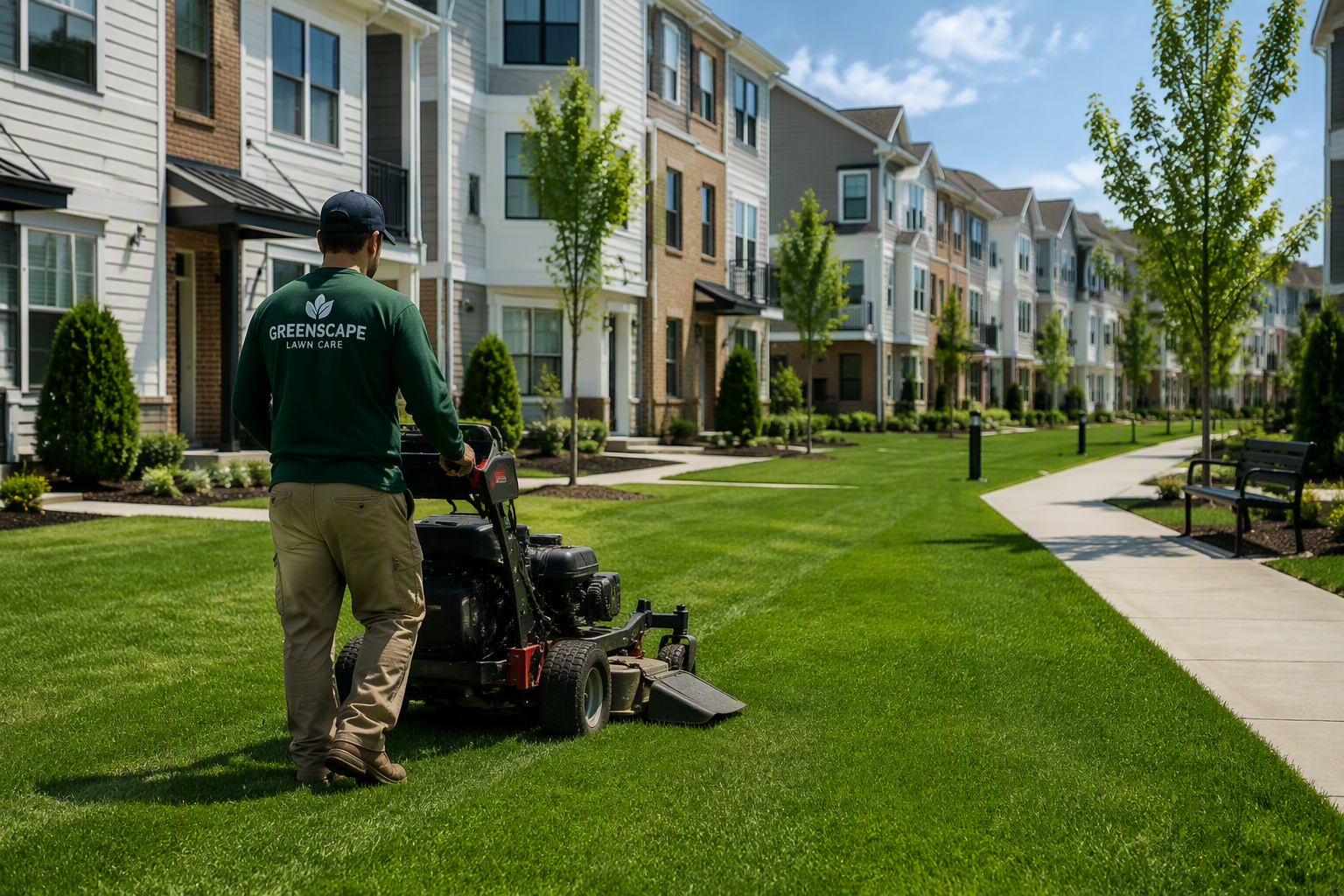
When buyers ask, “What do HOA fees cover?” the real answer is “it depends on the community documents.” But there are common categories that show up again and again.
Common Area Landscaping and Entrance Maintenance
This is one of the most basic HOA responsibilities. The fee may support mowing and maintaining shared green space, seasonal landscaping at the entrance, irrigation for common areas, signage, and general upkeep of visible neighborhood features.
Snow Removal on Shared Roads and Walks
In some communities, especially low-maintenance neighborhoods, HOA fees help pay for snow removal on private roads, shared sidewalks, and common walkways. In others, snow removal is limited or not included at all.
That distinction matters in winter, and it matters when you compare fees.
Amenity Operation
If the community has a clubhouse, pool, fitness room, pickleball or tennis courts, walking trails, or gathering spaces, those amenities require ongoing operating dollars. Cleaning, utilities, staffing, maintenance, repairs, and insurance all cost money.
Amenities are never “free.” The HOA fee is how they stay usable.
Trash and Recycling
Some communities include trash and recycling service in the HOA fee. Some do not. It is a useful inclusion, but it should never be assumed.
Reserve Fund Contributions
A well-run HOA should set aside money for future major repairs and replacement costs. This savings pool is called the reserve fund.
Reserve contributions are not glamorous, but they matter. They help the association prepare for future expenses instead of scrambling when something costly breaks or wears out.
What Condo HOA Fees Cover That Single-Family Fees Do Not
This is where condo buyers need a different lens.
A condo association is often responsible for building-level costs that do not exist in the same way in a detached single-family community. That changes the size of the fee and the value behind it.
Exterior Building Maintenance and Roof
In a condo building, the association often maintains the roof, exterior walls, siding, masonry, trim, and other shared exterior components.
A detached homeowner usually handles those expenses alone. Condo owners share them through the HOA.
Elevator Service and Inspection
If the building has an elevator, that system requires regular maintenance, inspections, testing, and repairs. That is a real operating cost, and it is one reason condo fees can be noticeably higher.
Building Insurance on the Structure
Condo associations typically carry master insurance on the building structure and shared common areas. Owners still need their own insurance for contents, interior improvements where required, and personal liability, but the association handles the larger building-level policy.
Shared Corridor, Lobby, and Parking Area Upkeep
Hallways, entry lobbies, mail areas, stairwells, parking areas, and other common elements do not maintain themselves. Cleaning, lighting, repairs, painting, flooring replacement, and security features all come with ongoing cost.
Controlled Access Systems
Many condo communities include controlled entry or access systems for convenience and security. Those systems require maintenance and occasional updates.
The result is simple. Condo fees often cover more because condo ownership includes more shared responsibility.
What HOA Fees Almost Never Cover
This is just as important as what is included.
In most cases, HOA fees do not cover your personal utility bills, your interior living space, your appliances, or your personal homeowners insurance. They also usually do not cover your mortgage, property taxes, or routine maintenance inside your home.
That means buyers should assume they are still responsible for:
- electric, gas, water, sewer, cable, and internet unless stated otherwise
- appliance repair or replacement
- interior paint, flooring, cabinets, and finishes
- contents insurance
- personal liability coverage
- interior plumbing and mechanical issues, depending on the governing documents
Never guess here. Ask for the documentation.
How HOA Fees Affect Your Mortgage Qualification
HOA fees are not a side note in the mortgage process. Lenders count them as part of your monthly obligations when calculating debt-to-income ratio.
That affects how much home you qualify for.
A home with a lower purchase price but a significant monthly HOA fee can impact your approval differently than a home with no HOA or a smaller fee. That does not make the fee bad. It means the fee is part of the full affordability picture.
If you are early in the process, read How to Calculate How Much House You Can Afford. It is one of the clearest ways to avoid falling in love with a home before you understand the full monthly number.
You should also factor HOA costs alongside closing costs, escrows, insurance, taxes, and utilities.
Special Assessments: What They Are and Why They Matter
A special assessment is an extra charge the HOA imposes on owners when the association needs money beyond its regular budget and reserves.
That usually happens for one of three reasons:
- A major repair comes up and the reserve fund is not large enough.
- An unexpected expense hits, such as storm damage or a system failure.
- The association has under-collected fees for too long and now needs to catch up.
Special assessments are not automatically a red flag. Sometimes a community faces a legitimate one-time issue. But repeated assessments, or large assessments with little warning, can signal weak budgeting or poor reserve planning.
How Often Do Special Assessments Happen?
There is no universal schedule. In well-managed communities with strong reserves, they may be rare. In underfunded associations, they can happen more often than owners expect.
How to Evaluate Reserve Fund Health
Ask whether the association has a reserve study and whether current reserve balances are keeping pace with future repair needs.
A reserve study is a planning tool that estimates the remaining life and replacement cost of major shared components, like roofs, pavement, elevators, siding, or mechanical systems. It helps the HOA budget responsibly over time.
If the reserve balance is thin and major components are aging, buyers should pay attention.
How HOA Fees Change Over Time
HOA fees are not fixed forever. They rise when the underlying costs rise.
That includes:
- landscaping and snow removal contracts
- insurance premiums
- utility costs for shared spaces
- staffing or management costs
- repair and replacement needs
- reserve fund contributions
- inflation
A healthy increase is not the same thing as a failing HOA. In fact, a community that never raises fees can be the riskier one if it is quietly underfunding reserves.
What a Healthy Increase Looks Like
Healthy adjustments are usually gradual, understandable, and tied to real budget needs. The association should be able to explain why the increase is happening and how the money will be used.
Warning Signs to Watch
Pay closer attention if you see:
- sharp fee increases with little explanation
- very low reserve balances
- repeated special assessments
- deferred maintenance
- aging amenities or exterior components with no funding plan
- unclear financial reporting
The goal is not to find the absolute lowest fee. The goal is to find a community that is maintaining itself responsibly.
Questions to Ask Before You Buy
These questions will give you a much clearer picture of what you are really paying for.
1. What is the current fee, and what exactly does it cover?
Ask for the most current amount and a written breakdown of inclusions. Do not rely on assumptions, and do not rely on what is common in another community.
For Garman Builders communities, HOA fees vary by neighborhood and product type. The on-site sales agent can walk you through the current fee structure and what is included for the specific home you are considering.
2. What has the fee history looked like over the last five years?
This shows whether increases have been gradual and predictable or sudden and uneven.
3. What is the reserve fund balance relative to the reserve study?
This is one of the best indicators of long-term financial health, especially in a condo or amenity-rich community.
4. Have there been special assessments, and are any anticipated?
You want a direct answer here. Past assessments are not always a deal-breaker, but they do deserve explanation.
5. Who controls the board right now, the builder or the homeowners?
In newer communities, the board may still be under builder control until turnover occurs. That is normal, but buyers should know where that process stands.
6. What are the rules on rentals, pets, parking, and exterior changes?
These are everyday lifestyle issues, and they affect resale flexibility too. Read the governing documents before you commit.
When a Higher HOA Fee Is Actually the Better Deal

This is the part buyers miss when they focus only on the monthly number.
A higher HOA fee can be the better deal if it covers services and costs you would otherwise pay on your own. Lawn care, snow removal, exterior maintenance, amenity access, building insurance, and future capital repairs all have real value. The honest comparison is not fee versus no fee. It is fee versus what those same responsibilities would cost you in time, money, and hassle if you handled them yourself.
That is especially true for low-maintenance and condo living.
If a fee covers your exterior upkeep, shared building systems, common-area maintenance, and lifestyle amenities, the number may be entirely reasonable. If you want fewer chores, more predictability, and a more lock-and-leave lifestyle, that fee may buy exactly the kind of convenience you want.
This is why buyers exploring 117 On The Boulevard, active adult communities, or other low-maintenance options should look at the full picture, not just the line item.
How to Compare Communities Honestly
The smartest way to compare HOA fees is to ask four simple questions:
- What services are included?
- What major expenses remain my responsibility?
- How healthy is the reserve fund?
- How does this fee affect my monthly payment and qualification?
That gives you a much more accurate picture than fee shopping alone.
A modest fee in a single-family community may be perfect if you want more control and do not mind handling your own maintenance. A higher fee in a condo or 55+ community may be the better fit if you value convenience, shared amenities, and fewer day-to-day responsibilities.
The right answer depends on how you want to live. That has always been the real question.
What This Means for Garman Buyers
At Garman Builders, we build homes and communities for different stages of life, not one-size-fits-all buyers. That means HOA structures vary too.
In some communities, the fee may be limited to common area maintenance. In others, especially low-maintenance, 55+, townhome, or condo settings, the fee may support broader services and shared amenities. The best next step is simple: ask for the current fee, ask for the inclusions in writing, and weigh that against the lifestyle and responsibilities you want.
If you are starting your search, our team can help you sort through those differences clearly. No fine print first. Just real answers, so you can move forward with more confidence.
Frequently Asked Questions
What do HOA fees cover?
HOA fees cover shared community costs. Depending on the neighborhood, that can include common-area landscaping, snow removal, amenity maintenance, trash service, reserve fund contributions, building insurance, exterior maintenance, and upkeep of shared spaces. The exact coverage depends on the governing documents for that community.
Are condo HOA fees higher than single-family HOA fees?
Yes, condo HOA fees are often higher because they usually cover more. In addition to common-area upkeep, condo fees may include exterior building maintenance, roof care, elevators, structural insurance, shared hallways, lobby areas, access systems, and reserve funding for major building repairs.
Do HOA fees include utilities?
Usually not. In most communities, HOA fees do not cover your personal electric, gas, internet, contents insurance, or interior maintenance. Some associations may include certain services, but buyers should confirm exactly what is covered before purchasing.
How do HOA fees affect mortgage approval?
Lenders include HOA fees in your debt-to-income calculation. That means the fee directly affects how much home you qualify for. A home with a higher HOA fee may reduce your borrowing capacity even if the purchase price is lower.
What is a special assessment?
A special assessment is an extra charge owners pay when the HOA needs money beyond regular fees and reserves. It may be used for major repairs, unexpected damage, or underfunded maintenance obligations. Buyers should ask whether the community has had past assessments or expects future ones.
What is an HOA reserve fund?
An HOA reserve fund is money set aside for future major repairs and replacements. In a condo or amenity-rich community, that might include roofs, pavement, elevators, building systems, or exterior elements. A healthy reserve fund helps reduce the chance of sudden special assessments.
Can HOA fees go up over time?
Yes. HOA fees often increase as insurance, maintenance, labor, utilities, and reserve funding needs rise. Reasonable increases are normal. The key is whether the HOA has a clear budget, solid planning, and good communication about why fees are changing.
How can I find out the HOA fee for a Garman Builders community?
HOA fees in Garman Builders communities vary by neighborhood, home type, and included services. Buyers should speak with the on-site sales agent for the most current fee information and a clear explanation of what that fee covers.
If you are comparing communities and want straight answers about fees, maintenance, and what fits your lifestyle best, contact us or visit one of our communities. We will walk you through the details, explain what is included, and help you find a home that is Built for the Way You Live.


 0
0