


Nest Notes
Move-Up Buyer Guide: When to Move Up to a Bigger House.

July 28, 2026
Your current home was perfect for who you were when you bought it. But you are not that person anymore.
Maybe your family has grown. Maybe work changed. Maybe the house that once felt just right now feels tight, inconvenient or a little out of step with how you actually live. That is the move-up buyer reality. A home can still be good, still be well cared for, still hold a lot of memories, and still no longer fit.
If you are wondering when to move up to a bigger house, this guide will help you sort through the emotional signals and the practical ones. We will walk through the signs it may be time, the financial questions to answer, how to think about timing and how Garman Pathways™ can give move-up buyers more control.
Key Takeaways
- A move-up home makes sense when your current home no longer supports your daily life, not just when you want something newer.
- Common signs include growing families, lack of storage, no real home office, long commutes and a layout that no longer fits your stage of life.
- Move-up decisions should include both lifestyle needs and financial realities like equity, timing and monthly payment comfort.
- Quick Move-In homes can reduce overlap, shorten the transition and make moving to a bigger home more manageable.
- Garman Pathways™ includes a No Commitment Contract option that can help move-up buyers reserve a new home before fully committing to the sale of their current one.
- The right next step is not always a bigger house. It is a better-fitting home built for the way you live now.
- Buyers make better decisions when they define what is not working first, then match that to budget, location and timing.
- Starting with a Buyer Power Calculator and community tours can turn a vague idea into a clear plan.
What is a move-up buyer?
A move-up buyer is a current homeowner who is purchasing their next home because their needs, lifestyle or priorities changed. That next home may be larger, better located, more functional or better suited to a new life stage.
For some buyers, that means more square footage. For others, it means a first-floor primary suite, a better school district, a shorter commute or a low-maintenance home in a community that fits what comes next.
The 8 signs it is time to move up
1. Your family has grown, or is about to
This is the most obvious signal, and still one of the biggest.
A one-child layout can feel very different with two kids. A spare bedroom that worked as a nursery may not work once siblings need separate spaces. And if you have grandparents staying more often, or a baby on the way, the pressure shows up fast.
We see this often with growing families across South Central Pennsylvania. What once felt efficient starts to feel crowded at the exact time life gets busier. Morning routines get harder. Bedtimes get noisier. Storage disappears.
A move-up home gives you room to handle what daily life actually looks like now, not what it looked like three or five years ago.
2. You are constantly running out of space or storage
Running out of room is not always about square footage. Sometimes it is about a house that just does not use space well.
If coats pile up by the door, toys take over the living room, pantry items spill into random cabinets and the garage has become your backup storage unit, your home is telling you something. The issue is not clutter. It is function.
Thoughtful design matters here. Better flow, more usable storage, larger closets, mudroom space, walk-in pantries and flexible rooms can make a home feel dramatically different without chasing size for its own sake. That is the difference between moving to a bigger home and moving to a home that works better.
3. You are working from home and do not have a real workspace
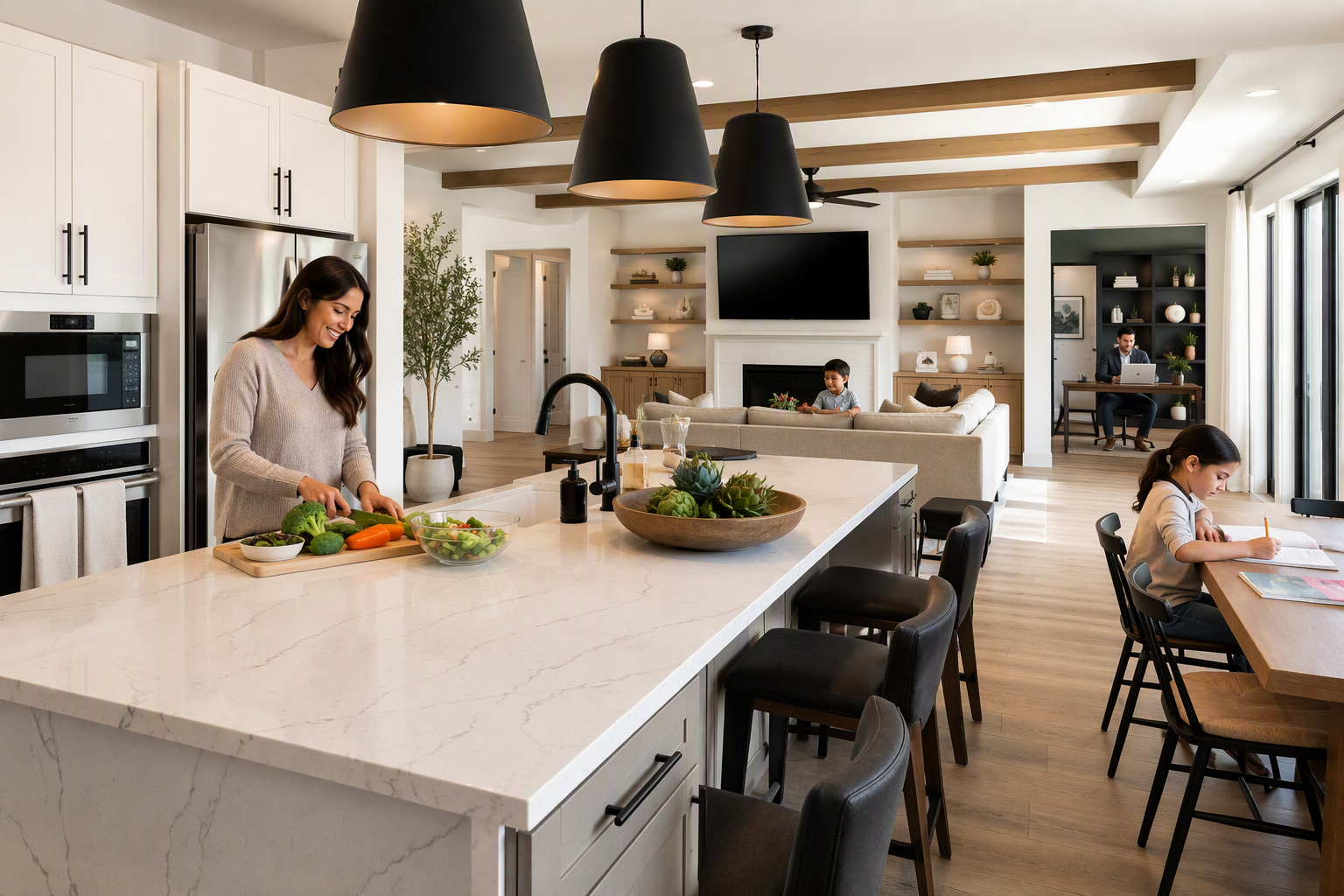
A laptop at the kitchen island worked for a while. So did the guest room desk setup. Then it stopped working.
If your calls compete with family noise, if your paperwork takes over shared space or if you are ending every workday by packing your office into a drawer, your house is pulling double duty without the right setup. That gets old.
Remote and hybrid work changed what buyers need from a home. A dedicated study, flex room or quiet corner with real separation can make the whole house feel more settled. It also gives work its place, which helps home still feel like home.
4. You want a first-floor primary suite
Life is different at 45 than it was at 30.
That does not mean you are ready for less home. It means you may want a home that works better long term. For some move-up buyers, that starts with a first-floor primary suite, easier daily living and a layout that gives privacy without relying on stairs for everything.
We see this with buyers in several stages of life. Some are busy professionals planning ahead. Some are mature families who want a quieter primary retreat. Some are right-sizing into a new chapter where comfort and convenience matter more than excess square footage.
A move-up decision is not always about more. Sometimes it is about smarter ways forward.
5. Your kitchen no longer fits how you cook and entertain
Kitchens tell the truth.
If your family crowds the same few feet every evening, if prep space runs out during ordinary meals or if hosting feels stressful because the room was not built for gathering, that matters. The kitchen is one of the clearest signs that a home no longer matches your life.
A move-up home often solves this with a larger island, better storage, improved flow and a more open connection to dining and living spaces. And when buyers can personalize finishes through our Design Studio, the result feels even more aligned with how they cook, host and live every day.
6. You are driving too far for schools, work or family
Sometimes the house is not the real problem. The location is.
A long commute gets old. So does feeling too far from school routines, grandparents, childcare help or the places you spend most of your week. What felt manageable when you bought may feel like a constant drag now.
That is one reason location remains such a powerful move-up trigger. Buyers are not just moving for more house. They are moving for better daily rhythm. In South Central Pennsylvania, that could mean getting closer to Harrisburg, Lancaster, Hershey, Mechanicsburg, Carlisle or the school district that makes the most sense for your family.
A better home in the wrong place is still the wrong fit.
7. You want to be in a community that matches where life is heading
The right home includes the right setting around it.
A young couple might have wanted an affordable first step near work. A growing family may now want more yard space, a better school district or a neighborhood with more room to spread out. An active adult buyer may want low-maintenance living, single-level design and amenities that support a more carefree routine.
This is where the move-up decision becomes less about walls and more about the life happening around them. Community matters. So does the feeling that your surroundings match your next chapter.
8. Your current home is fine, but fine is not what you want anymore
This one is more emotional, but it is real.
Not every move-up buyer is reacting to a crisis. Sometimes your current home is fine. It functions. Nothing is terribly wrong. But it does not reflect where your life is going, and you feel that every day.
That does not make you ungrateful. It makes you honest.
A home should support your life, your routines and the future you are building. If your house feels like a version of your life you have already outgrown, that is worth paying attention to.
Three composite move-up stories we see all the time
The growing family buyer
They bought their first home when one child felt far away. Now there are toys in every room, baby gear in the hallway and nowhere for grandparents to stay. They are not looking for flashy. They want breathing room, better storage and a layout that can carry the family into the next decade.
The career-change relocation buyer
A job change changed everything. Maybe the new role is closer to Harrisburg or Lancaster. Maybe hybrid work means they need a real office. Maybe they have more buying power than before and want a home that reflects that progress. The current house still works on paper, but not for the schedule they live now.
The one-story next chapter buyer
They are not downsizing in the old sense of the word. They are right-sizing. They want a first-floor primary suite, less upkeep, guest space for family visits and a home they will be proud to own for years. They still want style, comfort and room to host. They just want it in a layout that makes more sense now.
The financial questions every move-up buyer should work through

Lifestyle is what starts the conversation. Numbers are what make the plan real.
How much equity do you have in your current home?
Your equity position affects everything. It can shape your down payment, monthly payment comfort and how flexible you can be with timing.
Start by estimating your current home value conservatively. Then subtract what you still owe, plus likely selling costs. Do not assume every dollar of market appreciation becomes usable cash. This is one place buyers get themselves in trouble.
A local lender and real estate professional can help you pressure-test the numbers early.
How should you time the sale and purchase?
This is one of the biggest stress points for move-up buyers.
If you sell first, you may have more certainty around budget and equity but feel rushed finding the next home. If you buy first, you may get the home you want but worry about overlap, carrying costs or timing the sale of your current property.
There is no one answer for everyone. The right path depends on your budget strength, market conditions and comfort with risk.
Should you use a bridge loan or a sale contingency?
A bridge loan can help some buyers access equity from their current home before that home sells. This creates flexibility, but it also adds financing complexity and carrying cost considerations.
A sale contingency can reduce risk by tying your purchase to the successful sale of your current home. The tradeoff is that contingencies can limit options in some situations.
This is exactly why move-up buyers need a plan before they fall in love with a house. Structure matters.
Can you realistically carry two mortgage payments for a period of time?
Some buyers can handle temporary overlap. Others should not.
Be honest here. Stretching to manage dual housing costs is one of the fastest ways to turn an exciting move into a stressful one. The right move-up home should create more confidence, not less.
The Garman Pathways™ advantage for move-up buyers
Move-up buyers often need more flexibility than first-time buyers. That is where Garman Pathways™ stands out.
One of the strongest tools for this audience is the No Commitment Contract. It gives qualified buyers a way to reserve a new build without fully committing before their current home is sold. That matters because it can reduce the pressure of trying to line up two major transactions perfectly at the same time.
For move-up buyers, that means more control. More time to work through the sale of the current home. More confidence while planning the transition. Less of the all-or-nothing pressure that makes this stage feel harder than it needs to be.
This is part of what we mean when we say a smarter way to buy.
Why Quick Move-In homes can be a major advantage
For some move-up buyers, building from the ground up is the right fit. For others, speed matters more.
A Quick Move-In home can shorten the timeline, reduce overlap risk and make the transition easier to manage. You still get the benefits of a better-built, more efficient home, but without the full build wait.
That can be a major advantage if:
- your current home is already on the market
- your family needs to move on a tighter timeline
- a job change accelerated your plans
- you want to avoid a long period of dual housing uncertainty
Quick Move-In homes are especially useful for move-up buyers who want more certainty from contract to closing. And with Garman’s Guaranteed Settlement promise, that confidence becomes even more meaningful.
The 6-question decision framework
If you are trying to figure out when to move up to a bigger house, start here.
1. What is not working in my current home?
Be specific. Not “we need more space.” What kind of space? For what? Where does the house break down during a normal week?
The clearer the friction points, the easier it is to shop for the right solution.
2. What would “working” look like?
This is where you translate frustration into criteria.
Maybe “working” means a home office with a door. Maybe it means a first-floor primary suite. Maybe it means a better kitchen layout, more storage or a shorter drive to school pickup. Define it clearly.
3. What is my equity position?
Do the math early. A move-up decision is easier when you know your likely down payment range, your available proceeds and the monthly payment that still feels responsible.
4. What is my target neighborhood or community?
Think beyond the house. School district, commute, access to family, low-maintenance living, outdoor space and everyday convenience all belong in this decision.
We build across communities in South Central PA because buyers are not all looking for the same next chapter.
5. What is my realistic timeline?
Not your ideal timeline. Your real one.
How long will it take to prep your current home? When do you want to move? Are you working around a school calendar, a lease end, a job start date or family support needs? Real timing makes better decisions.
6. Do I need to sell before I buy, or can I bridge?
This is the structure question. It affects risk, flexibility and what type of home opportunity makes the most sense. It is also a great conversation to have early with a lender.
Common move-up mistakes to avoid
Rushing the sale of your current home
A fast move can create unnecessary pressure. If you list before you understand your next move, you may end up making a reactive decision instead of a smart one.
Overestimating equity
Optimistic math causes real problems. Use realistic value assumptions and account for selling costs.
Underestimating design center costs on a new build
Personalization is one of the best parts of buying new. It also needs a budget.
If you are building from the ground up, understand which features are included and where you may want to invest more. Our Design Studio helps buyers make confident choices, but the planning should happen upfront.
Moving up too far and stretching the budget
This is the biggest one.
The point of a move-up home is a better fit, not financial strain. More house is not better if the payment steals your margin every month. Keep the target aligned with your real comfort level.
A smart way to start the process

The best first step is not guessing. It is getting clear.
Start with our Buyer Power Calculator to understand your target range. Then explore communities that match the way your life is changing, whether that means more room for a growing family, a shorter commute, a first-floor primary suite or a lower-maintenance next chapter.
You can also learn more about new versus used homes, explore our available homes and review our homebuilding process to see what the path forward looks like.
If your current home no longer fits, that feeling is worth taking seriously. A better next step starts with clarity, and we are here to help you find it.
Ready to explore your next home? Use the Buyer Power Calculator, tour a Garman community that fits your next stage of life or contact our team to talk through your move-up options with more confidence and more control.
Frequently Asked Questions
FAQ
When should you move up to a bigger house?
You should move up when your current home no longer supports your daily life, location needs or stage of life. Common triggers include a growing family, lack of storage, remote work needs, a long commute or wanting a more functional layout.
What is a move-up buyer?
A move-up buyer is a homeowner purchasing their next home because their current one no longer fits their needs. That next home may offer more space, a better location, a different layout or features that better match how they live now.
Is moving to a bigger home always the right answer?
No. The right answer is a better-fitting home. Sometimes that means more square footage. Sometimes it means better design, a first-floor primary suite, lower maintenance or a community that better fits your next chapter.
Should I sell my current home before buying my next one?
It depends on your equity, financing strength and comfort with risk. Selling first can improve budget certainty. Buying first can help you secure the right home. Some buyers also explore bridge financing or builder programs that create more flexibility.
What financial questions should move-up buyers ask first?
Start with four: how much equity you have, what monthly payment feels comfortable, whether you can carry overlapping housing costs and whether you need to sell before you buy. Those answers shape your options.
What is the benefit of a Quick Move-In home for a move-up buyer?
A Quick Move-In home can reduce the wait, shorten the transition and lower the risk of long overlap between selling your current home and moving into your next one. It adds speed and certainty when timing matters.
How does Garman Pathways™ help move-up buyers?
Garman Pathways™ offers tools designed to give buyers more control. For move-up buyers, the No Commitment Contract can allow you to reserve a new build without fully committing before your current home is sold.
What is the best first step if I think I am ready to move up?
Start with your numbers. Use a Buyer Power Calculator to understand your target range, then tour communities and available homes that fit the way your life is changing. That gives you a clearer path than browsing homes without a plan.


 0
0