


Nest Notes
Interest Rates and Buying Power: How Rates Affect Home Affordability

August 27, 2026
A one percent change in interest rate can move your buying power by tens of thousands of dollars on the same monthly payment. Here is why rate matters as much as price.
When buyers look at homes, price usually gets the most attention. That makes sense. It is the number on the listing, the number on the contract and the number everyone talks about first.
But your monthly payment is shaped by more than price. Interest rates and buying power are closely connected because the rate determines how much of your payment goes toward interest and how much goes toward the home itself. A higher rate can make the same home feel less affordable. A lower rate can bring homes back into reach without the price changing at all.
That is why we encourage buyers to compare payment scenarios before ruling homes in or out. The right number to watch is not just the home price. It is the payment that price creates at the rate available to you.
Key Takeaways
- A small interest rate change can shift your buying power by tens of thousands of dollars.
- Higher rates reduce the loan amount you can support at the same monthly payment.
- Lower rates can bring a higher-priced home back into a comfortable payment range.
- Rate locks help protect your estimated payment during the homebuying or building process.
- Rate buy-downs can temporarily or permanently reduce the effective interest rate, depending on the program.
- Comparing homes by price alone misses the biggest factor most buyers actually feel: monthly payment.
- Rerun the Buying Power Calculator whenever rates move meaningfully.
How Interest Rates and Buying Power Work Together
Your mortgage payment is built around a simple relationship: the loan amount, the interest rate and the loan term.
When the interest rate rises, more of your monthly payment goes toward interest. That leaves less room in the payment for principal, which is the amount you borrowed to buy the home. If your target monthly payment stays the same, a higher rate means you qualify for or feel comfortable with a smaller loan.
When the interest rate falls, the opposite happens. Less of the payment goes toward interest, which means the same payment can support a larger loan amount.
That is the heart of how rates affect home affordability. The home price matters, but the rate determines how much buying power that payment creates.
The Mechanics: Why a Higher Rate Shrinks the Loan You Can Support
Think of your monthly payment as a fixed container. If your comfortable principal and interest payment is $2,000 per month, that container can only hold so much.
At a lower rate, interest takes up less space. More of the payment can support the actual loan balance.
At a higher rate, interest takes up more space. The payment stays the same, but the loan amount it can support gets smaller.
That is why two buyers with the same income, down payment and monthly comfort zone can have different buying power depending on when they lock their rate. It is also why a buyer should not assume a certain price range is always affordable or always out of reach. The rate can change the answer.
For a deeper look at what your calculator results mean after you run the numbers, read Affordable, Stretch or Difficult? What Your Buying Power Calculator Results Actually Mean.
Worked Example: Same Monthly Payment, Three Different Rates
Here is a rounded example using a $2,000 monthly principal and interest payment on a 30-year loan. This is for illustration only. It does not include taxes, homeowner’s insurance, HOA dues, mortgage insurance or other costs that may affect your total monthly payment.
| Illustrative Interest Rate | Approximate Loan Amount Supported by $2,000/month | Approximate Home Price with 10% Down |
|---|---|---|
| 5.5% | $352,000 | $391,000 |
| 6.5% | $316,000 | $351,000 |
| 7.5% | $286,000 | $318,000 |
In this example, moving from 5.5% to 6.5% changes the supported home price by about $40,000 with the same monthly principal and interest payment. Moving from 6.5% to 7.5% changes it by roughly $34,000.
Nothing changed about the buyer’s target payment. The rate changed, so the buying power changed.
That is the part buyers miss when they only compare homes by sticker price.
Why Today’s Rate Should Not Be the Only Filter You Use
Rates move. Sometimes they move slowly. Sometimes they move enough to change the homes worth considering.
If you rule out a price range based only on today’s rate, you may want to revisit it if rates improve. A home that felt like a stretch at one rate may become more comfortable at another. The payment is the real test.
The reverse is true too. If rates rise, a home that once felt comfortable may need a closer look. That does not always mean you need to stop your search. It does mean you should rerun the numbers with a clear view of monthly payment, cash needed and long-term comfort.
A smarter buying process keeps the payment front and center. If you are still deciding what monthly payment feels realistic, start with What Monthly Payment Can You Comfortably Afford?.
Rate Locks Explained: Protecting Your Buying Power Calculation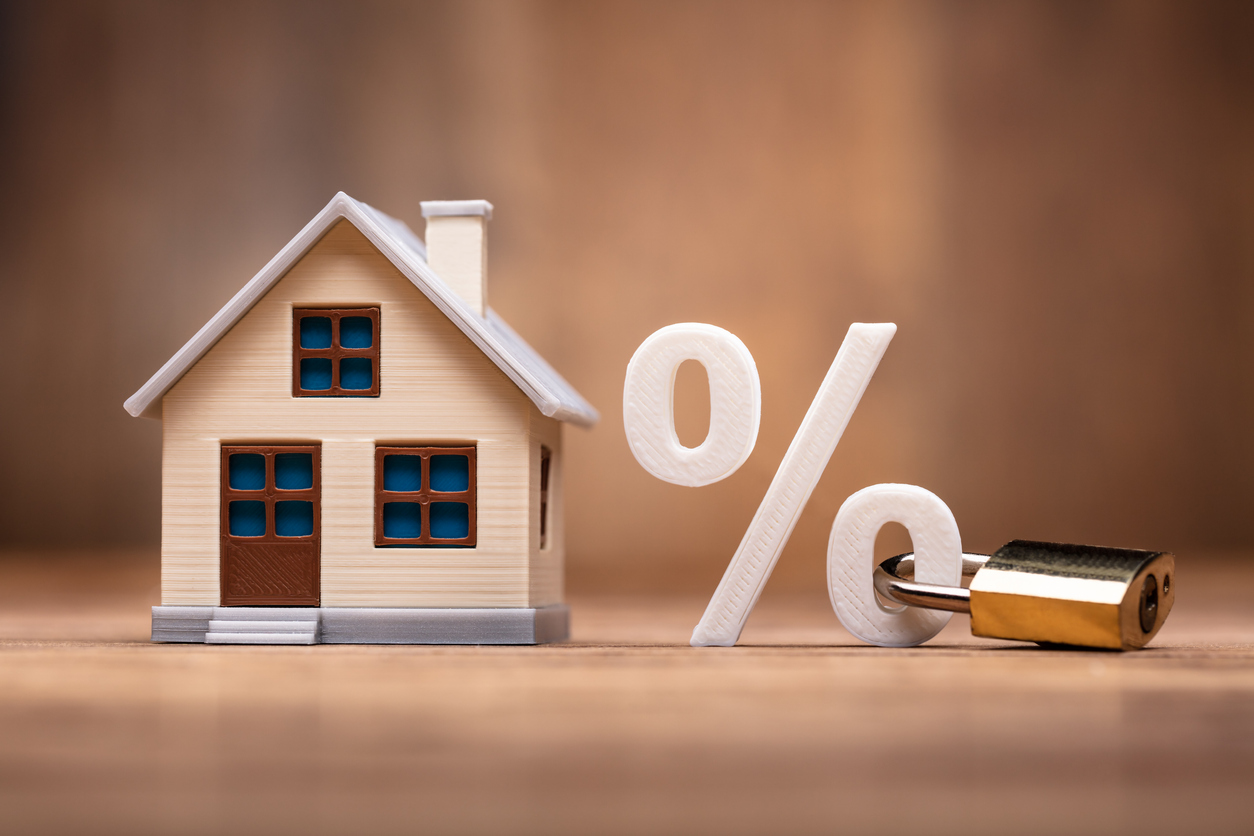
A rate lock is an agreement that holds your mortgage interest rate for a set period of time while your loan moves toward closing. The goal is simple: protect your payment from rate changes during that window.
For new construction buyers, timing matters because your settlement date may be tied to a build schedule. A rate lock can help protect the buying power calculation you used when choosing your home, but the lock period needs to match the timeline.
That is why pre-qualification and lender conversations matter early. You want to understand your buying power before you fall in love with a home, and you want to know when it makes sense to lock based on your expected settlement timing.
For more on timing, read When Should You Get Pre-Qualified for a New Construction Home?.
Rate Buy-Down Explained: How Buy-Downs Change the Picture
A rate buy-down reduces the interest rate used to calculate your mortgage payment. That can directly improve buying power because a lower effective rate allows the same monthly payment to support a higher loan amount.
There are two common types:
- Temporary rate buy-down: The interest rate is reduced for an early period of the loan, often the first year or first few years. After that period, the rate adjusts according to the loan terms.
- Permanent rate buy-down: The interest rate is reduced for the life of the loan, often through upfront funds paid toward discount points or a builder or lender incentive.
The details matter. A temporary buy-down can make the early payment more manageable, but buyers still need to understand the payment after the temporary period ends. A permanent buy-down can improve long-term payment affordability, but the structure depends on the available program and lender terms.
If a rate buy-down is part of an incentive, ask how it affects your payment today and later. Programs change, and the exact numbers should be reviewed with the lending team before you rely on them.
For more context on builder incentives and rate buy-downs, read Can You Negotiate With a Home Builder?.
Why Price Alone Is the Wrong Comparison
Two homes with different prices can produce surprisingly close monthly payments depending on rate, taxes, HOA dues, incentives and financing structure.
A lower-priced resale home is not automatically the more affordable home to own. It may come with older systems, higher maintenance needs or less efficient construction. A new home may offer a higher purchase price but stronger efficiency, fewer near-term maintenance concerns and builder incentives that improve the monthly payment.
That is why we look at the full picture. Price matters, but payment is what affects your monthly life.
At Garman Builders, we build better-built, more efficient homes designed around the way people actually live. The Garman EDGE includes efficiency, design and building science, guaranteed settlement and excellence. Those pieces matter because your home is not just a purchase price. It is a place to live, maintain, heat, cool and enjoy for years.
The Practical Takeaway: Rerun the Calculator When Rates Move
Your buying power is not fixed. It changes when rates change, when your down payment changes, when incentives change and when your comfort level changes.
Use the Buying Power Calculator before you rule a home in or out. Then rerun it whenever rates move meaningfully. A small rate shift can change the price range that fits your payment.
That does not mean you should chase rates every day. That gets exhausting fast. But if rates move enough to affect your payment, the smartest next step is to compare the numbers again with a clear head.
FAQ
How much does a one percent rate change affect buying power?
A one percent rate change can move buying power by tens of thousands of dollars, depending on the loan amount, down payment and loan term. In an illustrative 30-year loan example, the same $2,000 principal and interest payment supported about $40,000 more home price at 5.5% than at 6.5%.
How do interest rates affect home affordability?
Interest rates affect home affordability by changing how much of your monthly mortgage payment goes toward interest. A higher rate means more of the payment goes to interest, so the same monthly payment supports a smaller loan. A lower rate allows the same payment to support more borrowing power.
Should I compare homes by price or monthly payment?
Compare both, but monthly payment gives a clearer picture of affordability. Price tells you what the home costs. Payment shows what the home costs you each month based on the rate, loan amount, taxes, insurance and other factors.
What is a rate buy-down?
A rate buy-down is a financing strategy that reduces the interest rate used to calculate your mortgage payment. A temporary buy-down lowers the rate for an early period of the loan. A permanent buy-down lowers the rate for the loan term, depending on the program.
Does a rate lock protect my monthly payment?
A rate lock protects the interest rate for a set period of time, which helps protect your estimated mortgage payment during that window. For new construction, the lock period should be matched carefully to the expected settlement timeline.
Should I wait for rates to drop before buying a new home?
Waiting for rates to drop can help if rates move lower, but it can also mean missing a home, homesite or incentive that fits your needs now. The better move is to compare real payment scenarios and understand what is affordable at today’s rate and at possible lower rates.
When should I rerun the Buying Power Calculator?
Rerun the Buying Power Calculator whenever rates move meaningfully, your down payment changes, your income changes or a new incentive becomes available. Your buying power can change even when the home price stays the same.
A Smarter Way to Look at Buying Power
Interest rate, payment and price all work together. If you only look at one, you miss the real affordability picture.
Before you rule out a home or stretch toward one, run the numbers. Our Buying Power Calculator can help you compare scenarios and understand what feels affordable, what feels like a stretch and what needs more conversation.
If you are ready to talk through your options, contact our team. We will help you look at the numbers clearly, without pressure, so you can move forward with more control and more confidence.


 0
0