


Nest Notes
Is It Risky to Buy in a New Community Before It's Built? A Buyer's FAQ

October 9, 2026
Is It Risky to Buy in a New Community Before It's Built? A Buyer's FAQ
Buying early in a new community carries different risks than buying in a finished one, and most of them can be checked before you sign. Here is how.
We hear this question often from buyers looking at Laurel Forge and other new communities still in their early phases. There are no finished homes to walk through yet, no mature streetscape, no neighbors already settled in. What exists is a plan, a timeline, and a builder's word. That is enough information to make a confident decision, as long as you know what to look for.
This FAQ walks through the concerns we hear most from buyers considering a pre construction new home, and gives you a concrete way to check each one before you commit.
Key Takeaways
- Buying a home before it is built means judging a plan and a timeline rather than a finished product, which changes what due diligence looks like.
- The concerns buyers raise most often center on completion timing, how reality will match renderings, construction disruption, cost changes, and how a homesite will feel once the neighborhood fills in.
- A builder's site plan, phasing plan, and HOA documents answer most of these questions directly, before you ever sign a contract.
- Walking the land and asking what is planned on the lots beside and behind your homesite tells you more than any rendering can.
- A builder's track record in other communities is the strongest evidence you have. Ask to tour a finished community from a similar stage of development.
- Buying early gives you the widest selection of homesites, the most room to personalize, and access to incentives that may not be available once a community fills in.
- New construction comes with protections resale homes do not offer, including warranty coverage and clear contract terms.
- If the unknowns of early construction feel like more than you want to manage, a Quick Move-In home gives you new construction without the wait.
What Is Actually Different When You Buy Before a Community Is Built
In a finished community, you can walk the streets, see the landscaping, meet a few neighbors, and get a feel for how the place lives day to day. None of that exists yet in a community like Laurel Forge in its early phases. What you have instead is a site plan, a set of floor plans, and a builder's history of delivering on both.
That is not a smaller amount of information. It is a different kind of information. You are not evaluating a finished product. You are evaluating a plan, a company, and a timeline, and each of those can be checked just as thoroughly as a finished house can be inspected.
The Concerns Buyers Raise Most Often
Most questions about buying in a new community fall into one of five categories.
The community will not be finished as promised. Buyers worry that amenities, roads, or common areas will take longer than expected, or that construction will drag on indefinitely.
The finished product will not match the renderings. A site plan and a marketing image can look different from what actually gets built, especially when it comes to amenities and surrounding homes.
Months of construction activity. Early buyers often live beside active job sites for a while. That means trucks, noise, and dust before the neighborhood settles into something quieter.
Price or HOA fees could change. Buyers want to know whether what they are quoted today is what they will actually pay once the community is further along.
The homesite will feel different once the neighborhood fills in. A lot that feels open and private on a site visit can feel very different once the surrounding homes go up.
Every one of these is reasonable. Every one of these is also checkable.
How to Check Each Concern Before You Sign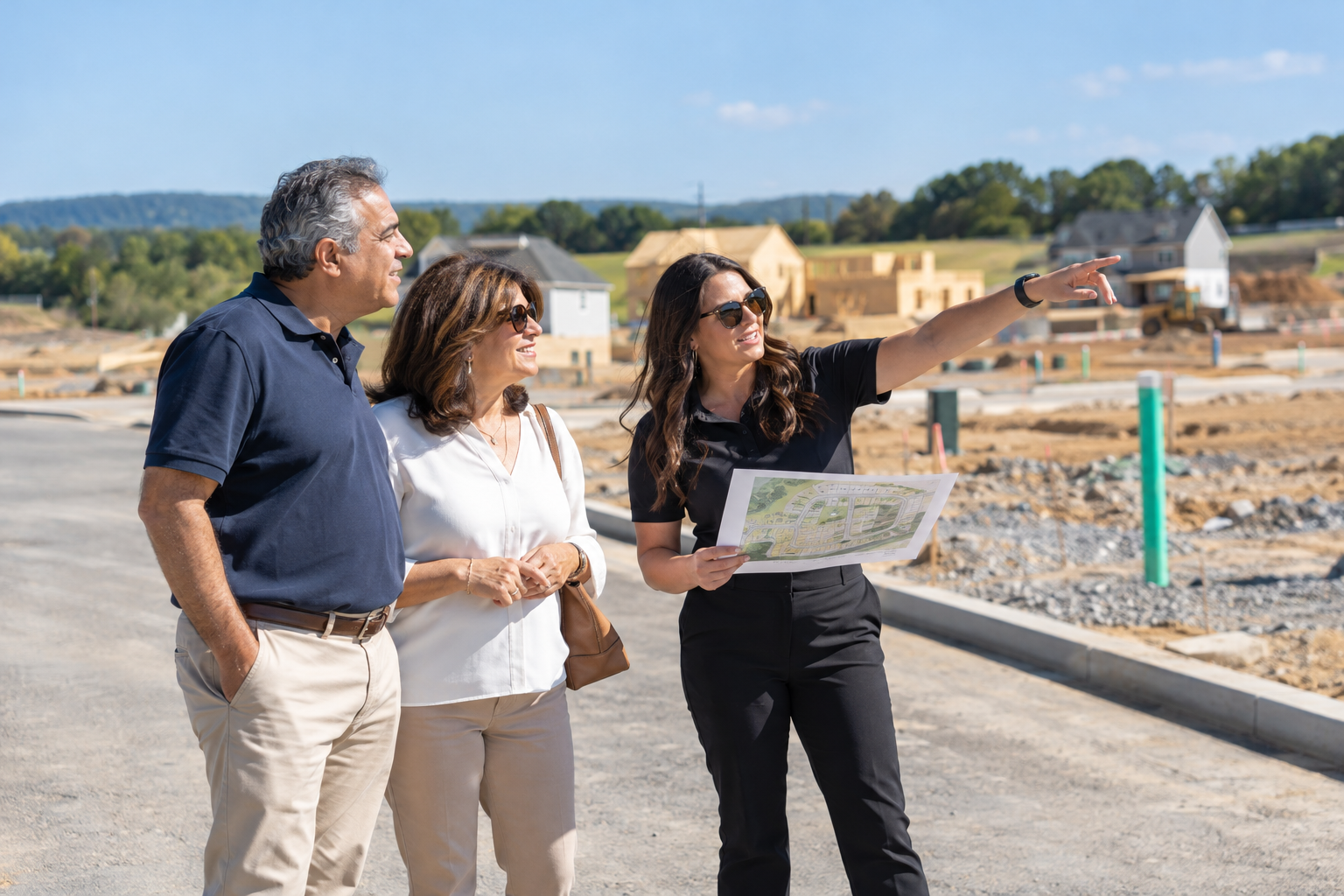
You do not have to take any of this on faith. Here is where the answers actually live.
- Completion worries: Ask about the builder's track record, not just this community's projected timeline. A company's history of finishing what it starts tells you more than any projection can.
- Renderings versus reality: Ask to see the official site plan and phasing plan, not just marketing images. These documents show exactly what is planned, where, and in what order.
- Fees and pricing: HOA documents outline what is covered, what is not, and how fees are structured. Read them before you sign, not after.
- Construction disruption: Ask the builder directly how phasing is sequenced and which areas will see activity first. A straightforward answer is a good sign.
- Homesite feel: Walk the land yourself. Stand where your home will sit and ask what is planned on the lots beside and behind it. Get the amenity timeline in writing so you know exactly what has been committed to on paper, not just described in conversation.
Why a Builder's Track Record Is the Best Evidence You Have
A site plan tells you what is intended. A finished community tells you whether a builder actually delivers on what is intended. That is the difference between a projection and proof.
Ask to tour a finished Garman community from a similar stage of development to the one you are considering. Walk it. Talk to homeowners if you can. A builder with more than 50 years in South Central Pennsylvania has a visible history you can check in person, not just a promise on paper.
The Upside of Buying Early (That's Easy to Overlook)
Buyers focused on the unknowns of a new community sometimes miss what they gain by getting in early.
- The widest homesite selection. Early buyers choose from the full range of available lots, including the ones with the best orientation, privacy, or views.
- More room to personalize. Buying early in a community like Laurel Forge means more flexibility to work with our Design Studio from the ground up, rather than choosing from what is left.
- Incentives. Early buyers in a community may see incentives that are not available once a neighborhood fills in and demand increases.
None of this cancels out the legitimate concerns above. It just means buying early is a trade, not a one-sided risk.
The Protections That Come With Buying New
A new home comes with protections a resale home simply does not offer.
Warranty coverage protects the systems and craftsmanship in your home from the day you move in. Contract terms spell out exactly what you are buying, what is included, and what happens if circumstances change. Deposit terms are disclosed up front, so you know what you are committing financially before you sign anything.
These protections exist whether you buy early in a community's life or move into one of the last homes built. They are part of what separates new construction from buying resale.
Who Is Comfortable Buying Early, and Who Might Prefer a Finished Home
Buyers who do well buying early tend to be comfortable with some ambiguity in exchange for selection and personalization. They want the best homesite available, they want to build out finishes through the Design Studio, and they are not bothered by a few months of construction noise nearby.
Buyers who prefer more certainty, who want to see exactly what they are getting before they commit, or who do not want to live near active construction, often do better choosing a Quick Move-In home. These are homes that are already built or nearing completion, which removes much of the timeline uncertainty while still delivering new construction quality and warranty protection.
Neither approach is the right one. It depends on how much uncertainty you are comfortable carrying in exchange for choice.
Questions to Ask Before You Sign
- Can I see a finished community you built that was at a similar stage a few years ago?
- Can I see the official site plan and phasing plan for this community?
- What does the HOA documentation say about fees, coverage, and how they could change?
- What is planned on the homesites beside and behind the one I am considering?
- Can I get the amenity timeline in writing?
- What warranty coverage applies to my home, and when does it begin?
- What are the deposit terms, and what happens if my plans change?
A Pre Construction Home Is a Plan You Can Verify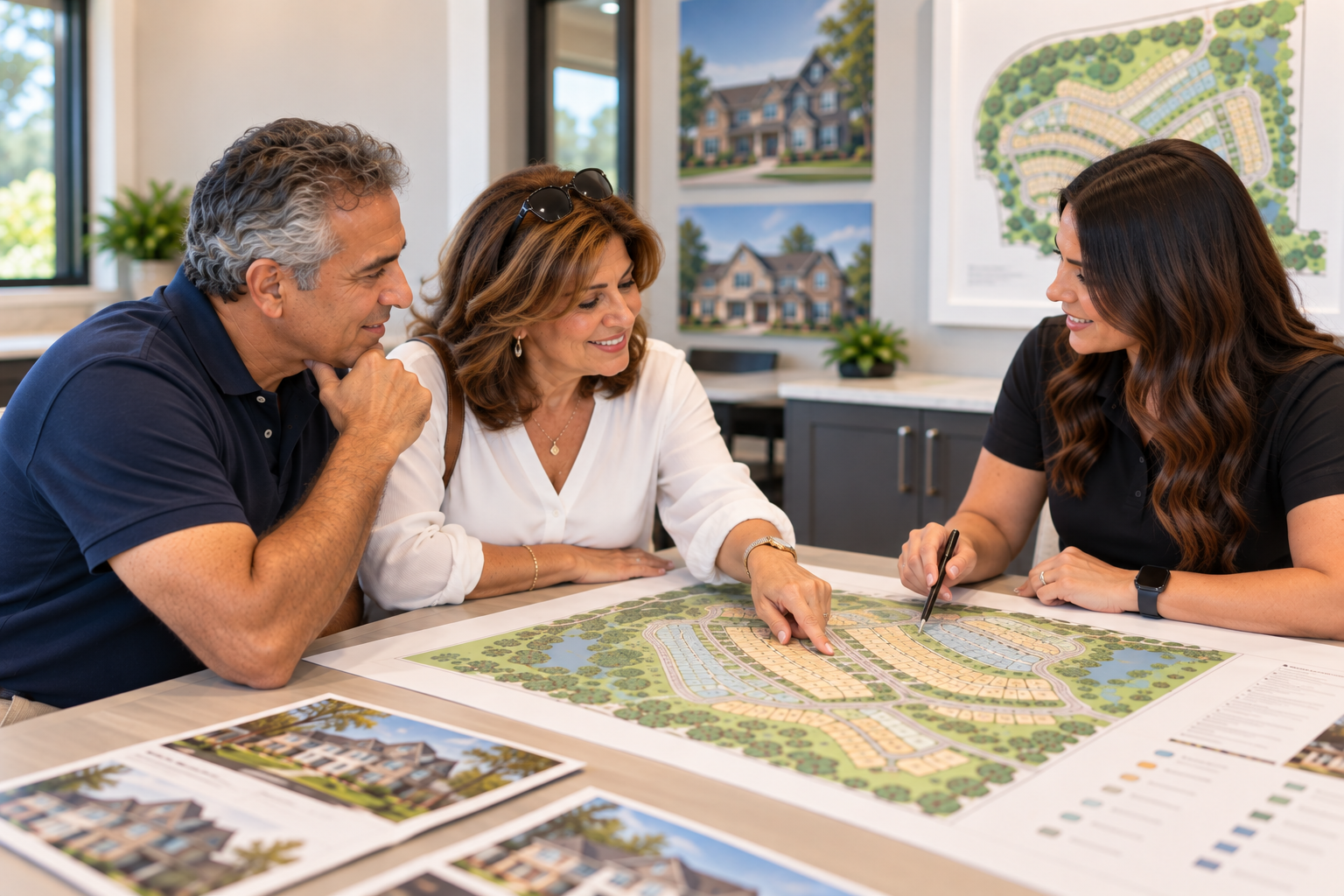
Buying before it is built is not a leap of faith when you know what to check. A site plan, a phasing plan, HOA documents, and a walk across the land answer most of the questions buyers bring to a new community. A builder's track record answers the rest.
If you are considering Laurel Forge or any new community still taking shape, we are glad to walk the site plan with you, show you a finished community that reflects our work, and answer every question on this list in person. Contact our team to set up a visit, or explore our current Quick Move-In homes if you would rather see exactly what you are buying before you sign.
FAQ
Is it risky to buy in a new community before it is built?
It carries different risks than buying a finished home, not necessarily more risk overall. The key concerns, completion timing, pricing, and construction disruption, can be checked through the builder's track record, site plan, phasing plan, and HOA documents before you sign.
What is a pre construction new home?
A pre construction new home is a home purchased before it is built or before the surrounding community is complete. Buyers typically choose a homesite and floor plan from a site plan rather than touring a finished product.
How do I check a builder's track record before buying early in a new community?
Ask to tour a finished community the builder completed at a similar stage of development. Walking a finished neighborhood and speaking with homeowners shows you how a builder actually delivers, not just what they project.
What should I get in writing before buying in an unbuilt community?
Ask for the official site plan, the phasing plan, HOA documents outlining fees and coverage, and a written amenity timeline. These documents give you something concrete to reference if questions come up later.
Is a Quick Move-In home a better option than buying early in a new community?
It depends on your comfort with uncertainty. A Quick Move-In home removes much of the timeline risk since the home is built or nearly finished, while buying early offers the widest homesite selection and the most room to personalize.


 0
0