


Nest Notes
How to Start Buying a New Home Without Feeling Locked In

July 28, 2026
You do not need to have your life figured out before you start looking at homes.
That is where a lot of buyers get stuck. They assume the first step in the new home process means committing to a price, a timeline, a community, or a contract. It doesn’t. The first step can just be information.
If you are trying to figure out how to start buying a new home, start smaller than you think. You do not need all the answers. You need better ones, one step at a time. That is how we help buyers move forward at Garman Builders, with clear information, practical tools, and a process built to give you more control and more confidence.
In this guide, we will walk through the new home buying first steps that matter most, what each one actually gives you, and how Garman Pathways™ and our No Commitment Contracts create a smarter way forward when you are ready to reserve a home without feeling boxed in.
Key Takeaways
- The first steps buying a house do not need to feel high-pressure or final
- A smart new home process start is about gathering real information, not making one huge decision
- You can explore affordability privately with our Buyer Power Calculator before talking to anyone
- Community pages, self-guided tours, and open houses help you compare locations without choosing one yet
- Quick Move-In homes show you what is actually available now and what current pricing looks like
- A lender conversation gives you real numbers and payment clarity, not guesswork
- Garman Pathways™ includes No Commitment Contracts, which let you reserve a home without being locked in until your final design meeting
- The best way to begin house hunting is to make a series of small decisions based on data, not assumptions
What are the first steps to buying a new home?
The first steps to buying a new home are understanding your budget, exploring communities, reviewing available homes, talking with a lender, and only then deciding whether to reserve a home. You do not need to commit at the start. You need enough information to decide whether the next step makes sense.
Why buyers freeze before they even start
A lot of buyers are not avoiding the process because they are uninterested. They are avoiding it because they think starting means signing up for pressure.
They worry that once they click a form, visit a model home, or speak with a lender, they are suddenly on a track they cannot get off. That fear is understandable. Buying a home is a big decision. But the process gets much more manageable when you stop treating it like one giant leap.
That is the mindset shift: you are not making one big decision. You are making a series of small ones.
Each one should give you something useful:
- A clearer price range
- A better sense of location
- A realistic monthly payment
- A better understanding of what is available now
- More confidence in what you want, and what you do not
That is a better way to build. It is also a smarter way to buy.
A no-pressure home buying process starts with information
The best first step is not commitment. It is clarity.
When buyers feel rushed, they usually have too many assumptions and not enough facts. They are guessing at budget, guessing at timing, guessing at rates, guessing at what kind of home is even possible. Guesswork makes every decision feel heavier than it needs to.
A no pressure home buying process works differently. You gather information in stages, keep your options open, and move when the numbers and the home feel right.
Here is what that looks like.
Step 1: Understand your budget, not commit to it
If you are wondering how to begin house hunting, start with your budget. Not because you need to lock it in, but because it gives you a real framework.
Our Buyer Power Calculator helps you explore affordability privately, on your own time, without waiting for a call from a sales rep. That matters for a lot of buyers. Sometimes you are not ready to talk yet. You just want to know what might be realistic based on your income, monthly comfort level, and current market conditions.
This step helps answer questions like:
- What monthly payment range feels reasonable?
- How much home can I potentially afford?
- How would a different down payment affect the payment?
- What price range should I be browsing first?
That is a much better starting point than jumping straight into listings with no context.
If you want to dig deeper, our Buyer Power Calculator page is built for exactly that. It gives you a private, practical way to start with numbers before you start making decisions.
Step 2: Explore communities, not choose one

The next step in a home buying step by step process is location, but not in the all-or-nothing way buyers often think.
You do not need to pick your future neighborhood the first weekend you look. You just need to start getting a feel for the areas that fit your life.
That is where online community pages, self-guided tours, and open houses come in. They let you compare at your own pace. You can look at commute patterns, school districts, nearby shopping and dining, lot settings, home styles, and the general feel of each community without sitting across from someone expecting a decision.
For buyers in South Central Pennsylvania, that matters because the region offers real variety. A community in Cumberland County may appeal to a move-up buyer prioritizing school districts and commute convenience. A townhome community in Lebanon County may fit someone looking for a lower-maintenance option and a more attainable price point. A 55+ community in Lancaster or York County may make sense for buyers ready for more freedom and less upkeep.
The point is not to decide immediately. The point is to narrow the field with better context.
If touring on your own schedule matters to you, our Anytime Tours blog is a good next read. It explains how buyers can explore homes with more flexibility and less pressure.
Step 3: Review Quick Move-In options, not buy one
One of the most practical new home buying first steps is browsing Quick Move-In homes.
Why? Because Quick Move-In inventory shows you what is real right now.
Floor plans are helpful. Inspiration galleries are helpful. But available homes tell you what pricing looks like today, what timelines may be possible, and what features are already included. That is valuable whether you are six weeks away from moving or six months away from deciding.
Reviewing Quick Move-In homes can help you answer:
- What communities have current availability?
- What price ranges are actually active right now?
- How do different floor plans compare on size and layout?
- Are there homes available sooner than I expected?
- What kinds of finishes or included features am I seeing at this price point?
This is one of the easiest ways to replace vague assumptions with concrete options.
And no, browsing available homes does not mean you need to buy one. It just means you are learning what the market is offering now. That is useful whether you end up moving quickly or taking your time.
You can explore our current available homes to get a realistic picture of inventory across our communities.
Step 4: Talk to a lender, not commit to a loan
A lot of buyers put this step off because they assume speaking with a lender means they are entering the formal loan process.
It does not.
A no-obligation pre-qualification conversation is simply a way to replace estimates with real numbers. That is one of the most useful things you can do early on. Online calculators can get you started, but a lender helps you understand the details that actually shape affordability, including interest rate assumptions, taxes, insurance, debt-to-income ratio, and monthly payment range.
This step can tell you:
- What payment range is realistic
- What loan programs may fit your situation
- How much cash you may need upfront
- Whether it makes sense to buy now or prepare for later
- What changes could improve your buying power
That last point matters. Sometimes the most valuable outcome of a lender conversation is not a green light today. It is a better plan for three or six months from now.
That is still progress.
If affordability is the thing making you hesitate, our financing information and Garman Pathways™ resources are worth reviewing. Buyers need options, not pressure. That is exactly how we approach this part of the process.
Step 5: Use a No Commitment Contract if you find something you love

This is where Garman’s process is different.
If you find a home or homesite you want to reserve, you do not have to jump straight into a fully locked-in commitment. Through Garman Pathways™, buyers can use a No Commitment Contract that lets them move forward with more flexibility.
Here is the simple version: you can reserve a home without being locked in until your final design meeting.
That changes the emotional weight of the decision in a big way.
Instead of feeling like you have to be 100 percent certain before you take a step, you have room to keep learning as the process moves forward. You can secure the opportunity, continue gathering details, and make your final commitment later in the process when you have more complete information.
For buyers who have been waiting because they are afraid of getting stuck, this matters. A lot.
It is one of the clearest examples of how we give buyers more control, more confidence, and a smarter way forward.
What makes this process feel different
A lot of homebuying advice skips over the emotional reality of starting. It tells you what to do, but not why buyers hesitate to do it.
What makes this process work is not just the order of the steps. It is the fact that each step gives you something useful without forcing the next one.
You have real information at every stage:
- A budget range you can actually use
- Communities you have explored on your own terms
- available homes with current pricing
- lender guidance based on your situation
- a flexible path to reserve if the right opportunity shows up
And just as important, no one is pushing you forward before you are ready.
That is how people buy with confidence. Not because every question disappears, but because each step replaces uncertainty with something more concrete.
The mindset shift that makes the process easier
Buyers get overwhelmed when they think the next step has to settle everything.
It does not.
The better way to think about how to start buying a new home is this: each step is a small decision.
Do I want to understand my budget better?
Do I want to compare a few communities?
Do I want to see what is available now?
Do I want real payment numbers?
Do I want to reserve this home with flexibility?
Those are manageable questions. They are much easier to answer than, “Am I completely ready to buy a house right now?”
That question is too big. It keeps people stuck.
Data helps. Specifics help. Seeing actual homes, actual communities, and actual numbers helps. Once buyers stop trying to solve the whole thing at once, the process gets a lot more practical.
Where buyers get stuck, and how to get unstuck
“We’re waiting for the perfect time.”
There is no perfect time.
There may be a better time for your household, your budget, or your timeline, but most buyers who wait for everything to line up exactly end up delaying longer than they needed to. The better move is to gather information now so you can recognize a good opportunity when it shows up.
“We’re waiting for rates to drop.”
Rate sensitivity is real. It affects monthly payment, purchasing power, and comfort level. But waiting without doing any homework leaves you with the same uncertainty later.
A lender conversation now gives you a baseline. Then, if rates improve, you will understand immediately how that changes your options. And if you explore Pathways or other financing solutions, you may find there is already a workable path forward.
“We don’t feel 100 percent ready.”
Most buyers do not.
Readiness is usually built through information, not through waiting. You feel more ready after you have explored budget, communities, inventory, and financing. That is the whole point of the first steps. They are there to help you become ready, not to prove that you already are.
How to start buying a new home, step by step
If you want the shortest version of this process, here it is:
- Use the Buyer Power Calculator to explore your budget privately
- Browse community pages and visit with self-guided tours or open houses
- Review Quick Move-In homes to see current pricing and availability
- Talk to a lender for real numbers and payment clarity
- If you find the right fit, use a No Commitment Contract through Garman Pathways™
That is how to start buying a new home without feeling pushed into a decision before you are ready.
A better first step starts here
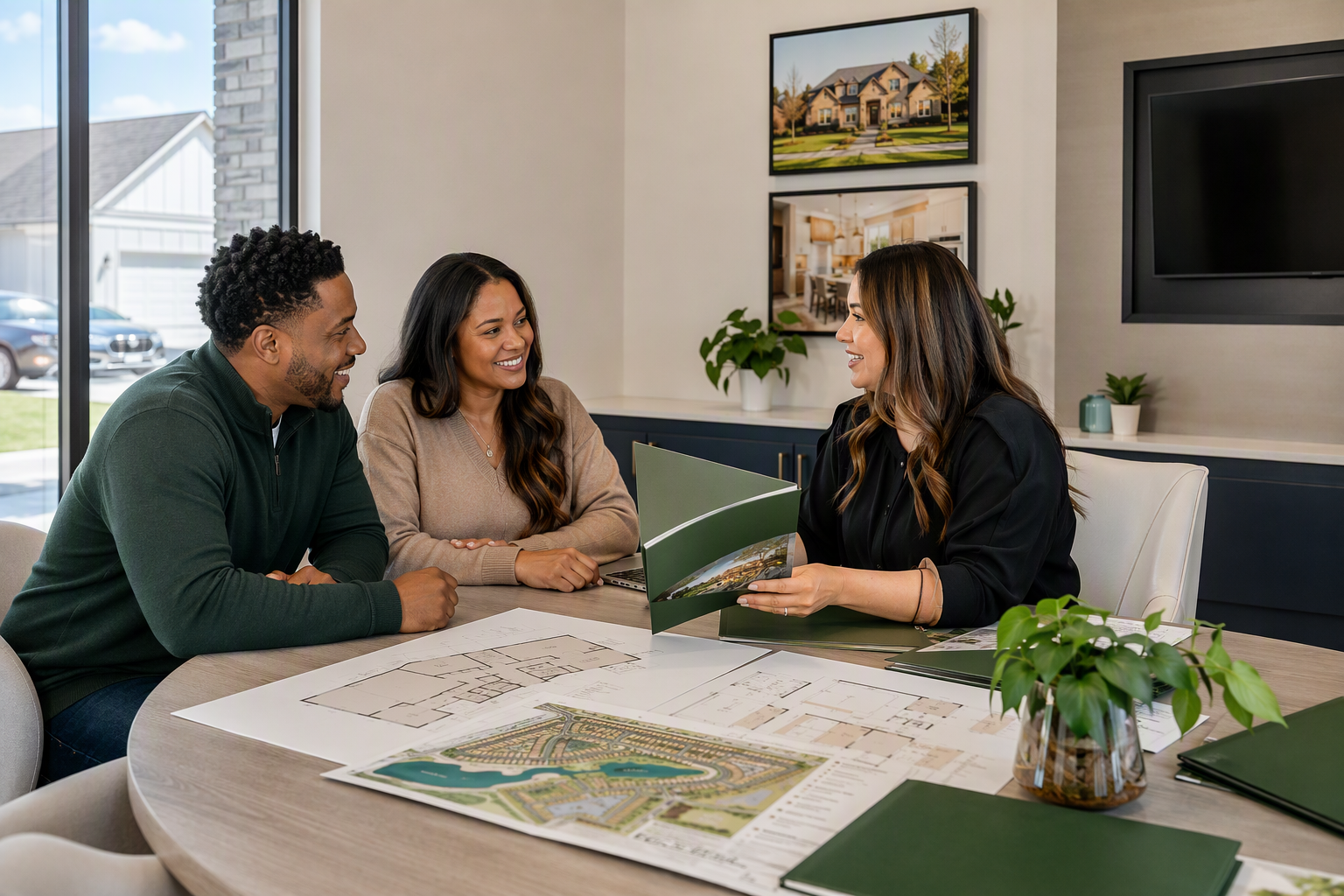
The first step is not a contract. It is a conversation.
Or a calculator. Or a self-guided tour. Or a look at what is available right now. The point is, starting does not require certainty. It requires enough curiosity to get real information.
At Garman Builders, we build homes that are Built for the Way You Live, and we believe the process should work that way too. Clear, flexible, and designed around real life.
If you are ready to take the first step, explore our Buyer Power Calculator, browse our communities, review our available homes, or learn more about Garman Pathways™. We are here when you want information, and ready when you want to talk.
FAQ
What are the first steps buying a house from a builder?
The first steps buying a house from a builder are understanding your budget, exploring communities, reviewing available homes, and speaking with a lender. You do not need to choose a home or sign a contract right away. Start by gathering information that helps you make better decisions.
How do I begin house hunting if I am not ready to buy yet?
Begin with low-commitment research. Use a budget calculator, browse community pages, visit open houses or self-guided tours, and review Quick Move-In homes. These steps help you understand what is realistic without committing to a purchase.
Do I need to get pre-qualified before visiting new home communities?
No. You can explore communities before getting pre-qualified. But a lender conversation becomes very helpful once you want real monthly payment numbers, financing options, and a clear sense of affordability.
What is a Quick Move-In home?
A Quick Move-In home is a new home already under construction or completed and available for purchase on a shorter timeline. Browsing Quick Move-In homes helps buyers see real inventory, current pricing, and included features in the market right now.
What is a No Commitment Contract?
A No Commitment Contract is an option through Garman Pathways™ that allows buyers to reserve a home without being fully locked in until the final design meeting. It gives buyers more flexibility while they continue gathering information and making decisions.
Is it smart to wait for mortgage rates to drop before starting?
Not if waiting means doing nothing. It is smarter to understand your budget and financing options now so you can make a well-informed decision later. Real numbers give you a stronger position whether you buy now or wait.
Can I walk away if I start the process and change my mind?
With Garman’s process, early steps like using the Buyer Power Calculator, exploring communities, touring homes, and speaking with a lender are all information-gathering steps. And with a No Commitment Contract through Garman Pathways™, buyers have more flexibility before final design decisions are made.


 0
0