


Nest Notes
Price vs Payment Home Buying: Why List Price Is Only Half the Story

August 27, 2026
Two buyers each shopping in the $450,000 range can end up with monthly payments $400 apart. That surprises people, but it happens all the time.
That is the myth we need to bust in price vs payment home buying: the price on the listing is not the same as affordability. If your homebuying budget is based on price or payment, payment gives you the clearer picture because it includes the costs you actually live with every month.
List price is easy to see. Monthly payment takes a few more steps. But once you understand the difference, you can shop with more confidence and stop ruling homes in or out for the wrong reason.
Key Takeaways
- Two homes with the same price can have very different monthly payments because taxes, HOA fees, insurance and mortgage insurance vary.
- A higher-priced home can sometimes have the same payment as a lower-priced home if the rate, down payment, taxes or fees are different.
- Shopping by price alone can hide the real cost of a house.
- Property tax rates and HOA structures vary across Central PA counties and communities.
- Garman communities include different home types, locations and HOA setups, so payment can shift from one community to another.
- Once you know your target monthly payment, you can compare homes across a wider and smarter range.
- The best place to start is the Buying Power Calculator, then compare each home against your target payment.
Price vs Payment Home Buying: Why the Same Price Can Feel So Different
A home’s price tells you what the seller or builder is asking. It does not tell you what you will pay each month.
Your monthly housing payment is usually made up of several pieces:
- Principal and interest
- Property taxes
- Homeowners insurance
- HOA fees, if applicable
- Mortgage insurance, if applicable
That is why two homes listed at the same price can land in very different places once the full payment is estimated.
The examples below use rounded numbers for illustration. They are not rate quotes, loan estimates or tax guarantees. They are meant to show how the moving parts work.
Worked Example 1: Two Homes at the Same Price, Different Monthly Payments
Let’s say two buyers are comparing two homes listed at $450,000.
At first glance, they look equal. Same price. Similar square footage. Similar loan amount.
But the payment tells a different story.
Example A: $450,000 Home With Lower Taxes and Lower HOA Fees
| Payment Factor | Estimated Monthly Cost |
|---|---|
| Principal and interest | $2,560 |
| Property taxes | $450 |
| Homeowners insurance | $120 |
| HOA fee | $40 |
| Mortgage insurance | $120 |
| Estimated monthly payment | $3,290 |
Example B: $450,000 Home With Higher Taxes and Higher HOA Fees
| Payment Factor | Estimated Monthly Cost |
|---|---|
| Principal and interest | $2,560 |
| Property taxes | $720 |
| Homeowners insurance | $130 |
| HOA fee | $160 |
| Mortgage insurance | $120 |
| Estimated monthly payment | $3,690 |
Same price. Roughly $400 more per month.
The difference is not the home price. It is the combination of property taxes, HOA fees and insurance. Over a year, that $400 monthly difference becomes $4,800.
That is why similar-priced homes have different payments. The price is only one part of the monthly cost.
Worked Example 2: Two Homes at Different Prices, Same or Lower Payment
Now let’s flip the assumption.
A buyer sees one home listed at $430,000 and another listed at $465,000. Most people assume the $430,000 home is more affordable.
Not always.
A lower rate, larger down payment, lower property taxes or lower fees can make the higher-priced home the lower-payment option.
Example A: $430,000 Home With a Smaller Down Payment and Higher Rate
| Payment Factor | Estimated Monthly Cost |
|---|---|
| Principal and interest | $2,650 |
| Property taxes | $625 |
| Homeowners insurance | $125 |
| HOA fee | $140 |
| Mortgage insurance | $220 |
| Estimated monthly payment | $3,760 |
Example B: $465,000 Home With a Better Rate and Larger Down Payment
| Payment Factor | Estimated Monthly Cost |
|---|---|
| Principal and interest | $2,510 |
| Property taxes | $520 |
| Homeowners insurance | $130 |
| HOA fee | $85 |
| Mortgage insurance | $120 |
| Estimated monthly payment | $3,365 |
In this example, the higher-priced home has a lower estimated monthly payment.
That does not mean a higher-priced home is always more affordable. It means price alone does not answer the affordability question. Payment does.
If you want the calculation walkthrough behind this, read What Monthly Payment Can You Comfortably Afford?. This article is the mindset shift. That one shows the step-by-step math.
Why Buyers Default to Shopping by Price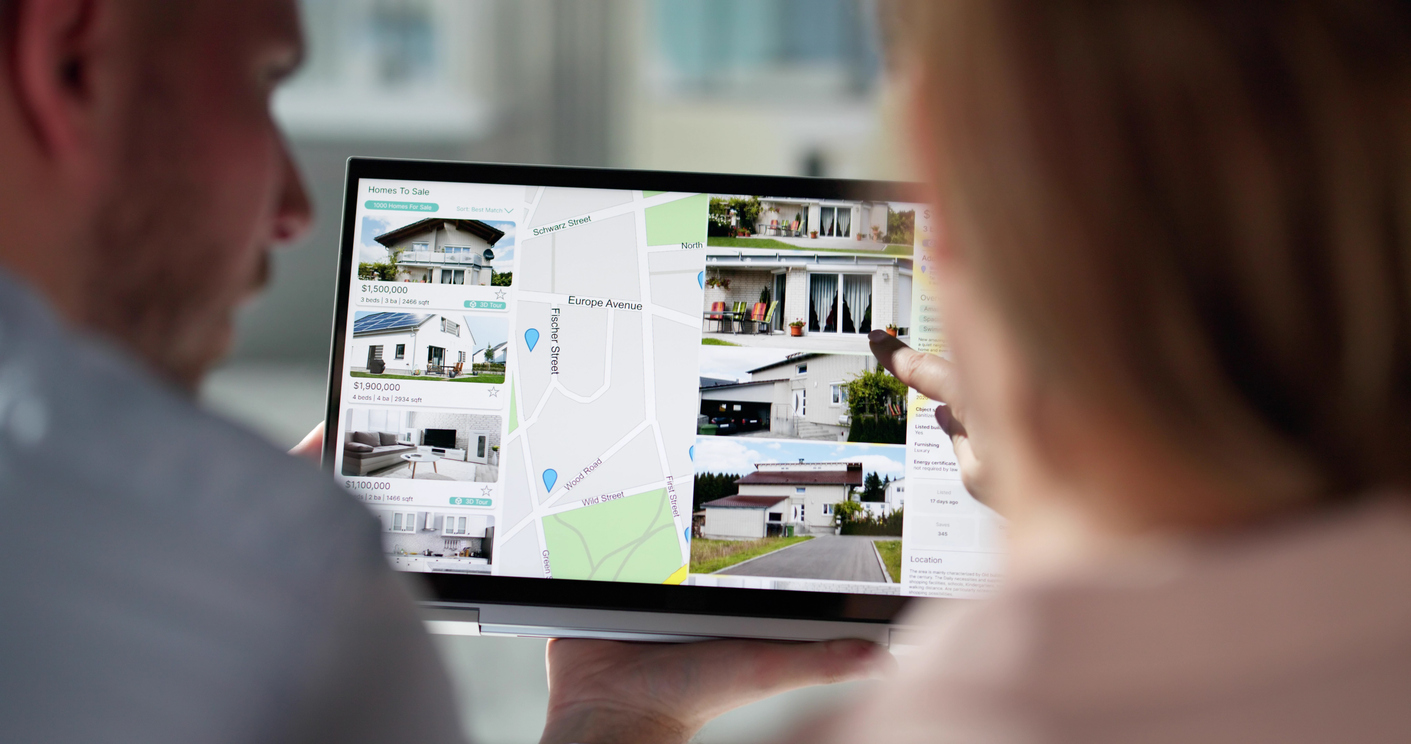
Buyers shop by price because price is the number listed everywhere.
It is on Zillow. It is on builder websites. It is in saved searches. It is the easiest filter to set when you are browsing late at night and trying to make sense of what is out there.
Payment takes more work. You have to account for rate, down payment, taxes, insurance, HOA fees and mortgage insurance. That is not hard, but it is more than one click.
So buyers set a price ceiling.
The problem is that a price ceiling can be too rigid. It can make one home look affordable when it is actually a stretch. It can make another home look out of reach when the monthly payment is right in line.
What Gets Hidden When You Shop by Price Alone
Shopping by monthly payment, not price, gives you a cleaner view of what a home will actually cost to own.
Here is what list price does not show clearly.
Property Taxes
Property taxes can vary by county, municipality and school district. A home listed at $450,000 in one area can carry a different tax estimate than a home listed at the same price somewhere else.
For Central PA buyers, this matters. Lancaster County, Lebanon County, Cumberland County, York County, Perry County and nearby markets all have different local tax structures.
HOA Fees
HOA fees are not automatically good or bad. They depend on what is included.
A townhome community, 55+ community or low-maintenance neighborhood may include services that reduce other responsibilities, like lawn care, landscaping or snow removal. A single-family community may have a different HOA structure.
The question is not just “What is the fee?” The better question is “What does the fee cover?” We break that down in HOA Fees Explained: What Central PA Buyers Actually Pay For.
Insurance Cost
Insurance costs vary by home, location, coverage level and lender requirements. New construction can offer advantages because major systems and materials are new, but insurance still needs to be estimated for each home.
It should not be ignored just because it is smaller than the mortgage line item.
Mortgage Insurance
Mortgage insurance often applies when a buyer puts less than 20% down. The amount can change based on the loan type, credit profile, down payment and lender.
This is one reason two buyers purchasing the same home can have different monthly payments. The home did not change. The financing did.
How This Shows Up Across Garman Communities
Garman Builders builds new homes across South Central Pennsylvania, including communities in Cumberland, Lebanon, Lancaster, York and Perry counties. That variety gives buyers real choice, but it also means monthly payment can look different from one community to another.
A townhome in one county, a single-family home in another and a 55+ low-maintenance home in a third may each have different tax estimates, HOA fees and included services.
That is normal. It is also exactly why payment matters.
For example, a buyer comparing a townhome in Lebanon County with a single-family home in Cumberland County should not compare by price alone. The HOA structure may be different. The property taxes may be different. The maintenance responsibilities may be different. The right question is not “Which one has the lower price?” It is “Which one fits my target payment and the way I want to live?”
That is where The Garman EDGE matters. We build better-built, more efficient homes with thoughtful design, proven energy performance, guaranteed settlement and a standard of excellence that carries from contract to closing. Price matters, but long-term comfort, confidence and value matter too.
The Practical Shift: Start With Your Target Payment
Once you know your target payment, your search gets smarter.
Instead of saying, “I only want to look under $450,000,” you can say, “I want to stay around $3,400 per month.”
That opens up better comparisons.
A $430,000 home with higher taxes and fees may no longer be the obvious choice. A $465,000 home with a better payment structure may become worth a closer look. A townhome, single-family home and low-maintenance 55+ home can be compared more fairly because you are looking at the full monthly picture.
This does not mean you should ignore price. Price still affects your loan amount, down payment and long-term equity. But payment is the number that determines day-to-day comfort.
If you are comparing two specific homes, read How to Compare Two Homes With Different Monthly Payments?. That piece gets more tactical.
How to Reset Your Search
The reset is simple: find your target payment before you fall in love with a price range.
Start with the Buying Power Calculator. It helps you think in terms of payment, not just list price. From there, you can look at homes with a clearer understanding of what fits.
Here is the shift we recommend:
- Use the Buying Power Calculator to estimate your comfortable monthly payment.
- Compare homes against that target payment.
- Look at property taxes, HOA fees, insurance and mortgage insurance.
- Review what each home and community includes.
- Talk with our team before ruling a home in or out based on price alone.
A Smarter Way to Compare Homes
The real cost of a house is not just the number on the listing. It is the monthly payment, the maintenance picture, the efficiency of the home, the community structure and the confidence you have in the builder behind it.
That is why we encourage buyers to stop using price as the only filter.
Start with payment. Then compare homes by the full picture: location, taxes, HOA fees, design, efficiency, comfort and long-term value.
When you are ready, use our Buying Power Calculator or contact our team. We will help you look at your options clearly, without pressure and with the right numbers in front of you.
FAQ
Should I shop for a home by price or monthly payment?
Shop by monthly payment first, then use price as a secondary filter. Price tells you the listed cost of the home, but monthly payment reflects taxes, insurance, HOA fees, mortgage insurance and financing. Payment gives you a clearer view of day-to-day affordability.
Why do similar-priced homes have different payments?
Similar-priced homes can have different payments because property taxes, HOA fees, homeowners insurance and mortgage insurance vary. Two homes listed at the same price may be in different counties, school districts or community types, which can change the monthly cost.
Can a higher-priced home have a lower monthly payment?
Yes. A higher-priced home can have a lower monthly payment if the buyer has a larger down payment, a lower interest rate, lower property taxes, lower HOA fees or lower mortgage insurance. The final payment depends on more than the listed price.
What costs are included in a typical monthly mortgage payment?
A typical monthly housing payment includes principal, interest, property taxes, homeowners insurance and sometimes mortgage insurance or HOA fees. The exact mix depends on the loan, property, location and community.
How do HOA fees affect affordability?
HOA fees add to the monthly payment, but they may also cover services or amenities that matter to the buyer. In some communities, HOA fees help cover items like lawn care, landscaping, snow removal or shared community spaces. Buyers should compare both the fee and what it includes.
Why do property taxes matter so much when comparing homes?
Property taxes can make a meaningful difference in monthly payment. Tax rates vary by county, municipality and school district, so two homes with similar prices can carry different tax estimates. That difference directly affects affordability.
How can I find my target monthly payment?
Use the Buying Power Calculator to estimate a comfortable monthly payment, then compare homes against that number. This helps you evaluate homes by affordability instead of relying only on a price cutoff.


 0
0