


Nest Notes
The Home Buying Break-Even Point: How Long Should You Live in a House Before Selling?

November 20, 2026
The Home Buying Break-Even Point: How Long Should You Live in a House Before Selling?
Buying and selling both cost money, so owning a home usually takes a few years to pay off. The upfront costs of buying, the costs of selling down the road, and however the market moves in between all factor into when you actually come out ahead. Here's how to estimate your own break-even point before you sign anything.
Key Takeaways
- Buying and selling both cost money, so most owners need a few years in a home before it pays off.
- NAR's 2025 Profile of Home Buyers and Sellers found buyers expect to stay a median of 15 years, while sellers had actually stayed a median of 11 years.
- Your break-even point depends on what you pay to buy, what you'll pay to sell, how much principal you pay down, and any change in your home's value.
- Incentives that lower your upfront costs, along with the lower early maintenance of a new home, can shorten your timeline to break-even.
- High selling costs, a flat or falling market, or moving sooner than planned can all push your break-even point further out.
- A simple worksheet with round, illustrative numbers can help you estimate where your own break-even point lands.
- Buying a home that fits your next five to ten years keeps you from being forced into an early sale before the math works in your favor.
How Long People Actually Stay in a Home
Most people plan to stay longer than they end up staying. According to the National Association of REALTORS' 2025 Profile of Home Buyers and Sellers, buyers expect to stay in their home a median of 15 years. Sellers, looking back, had actually stayed a median of 11 years.
That four-year gap matters. Life changes plans. Jobs move, families grow, and homes stop fitting the way they once did. But it also means the break-even math is not just theoretical. Plenty of buyers sell earlier than they expected to, which is exactly why understanding your break-even point before you buy is worth the time.
What Goes Into the Break-Even Math
The break-even point is the moment when what you've gained from owning outweighs what it cost you to buy and eventually sell. Four things drive that calculation:
Costs to buy. Closing costs, inspections, and other fees you pay at purchase. These hit you on day one, before you've built any equity at all.
Costs to sell. Real estate commissions, closing costs, and any repairs a buyer asks for down the road. These come due whenever you eventually sell, so they factor into the math even though you won't pay them for years.
Principal paydown. Every mortgage payment includes a portion that pays down what you owe. Early in a loan, that portion is small. Over time, it grows, and that paydown becomes real equity whether or not your home's value changes at all.
Change in value. Your home's value can rise, fall, or hold flat over the years you own it. We won't predict which one happens to you, because nobody honestly can. But it's part of the equation, and it's worth building your plan around a range rather than a guess.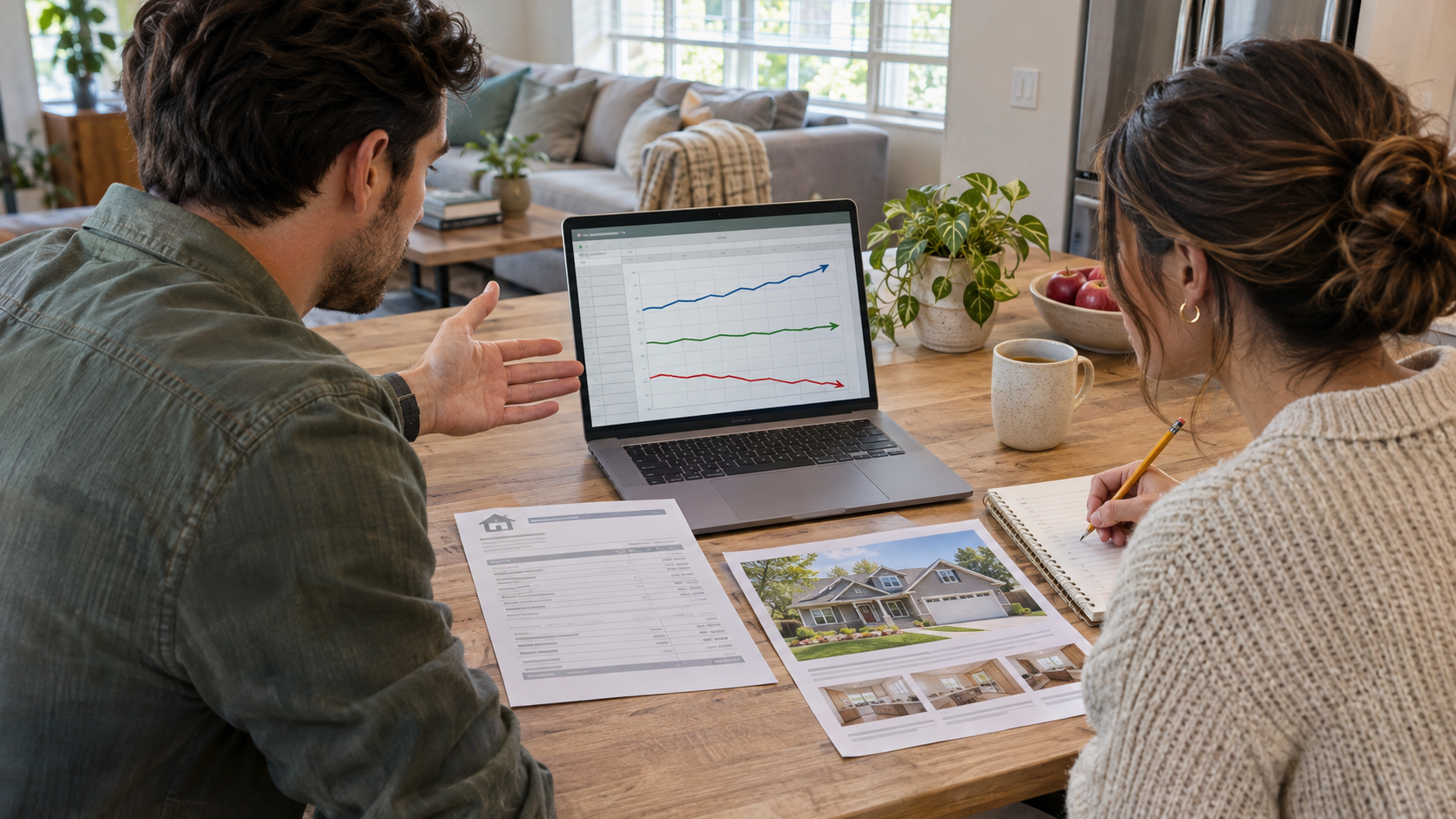
Compare all of that against what you would have paid in rent over the same period, since rent is money that buys you nothing back. Add it up, and you get a rough picture of when owning starts to outperform renting or an early sale.
What Can Shorten the Timeline
A few things can move your break-even point closer.
Incentives that lower your buying costs help immediately, since anything that reduces what you pay upfront shrinks the gap you need to close. Builder-backed programs like Garman Pathways™ to Homeownership are designed around exactly this kind of lower upfront cost and payment confidence.
New construction also tends to come with lower maintenance costs in the early years. A new home's systems, roof, and major components are new, which means fewer surprise repairs eating into whatever you're saving by owning instead of renting. That's part of why we built Garman homes to be HERS tested and 37% more efficient than the average home built today. Lower energy bills and fewer early repairs both work in the same direction: toward a shorter break-even timeline.
What Can Lengthen the Timeline
Other factors push the break-even point further out.
High selling costs eat into whatever equity you've built, so a sale that costs more than expected delays the point where you come out ahead. A flat or falling market does the same thing from a different angle: if your home's value hasn't moved, or has slipped, you're relying more heavily on principal paydown alone to get you to break-even.
And then there's the simplest one: moving sooner than planned. Life happens. A job relocates, a family grows faster than expected, a home stops fitting. Every one of the four segments in NAR's 2025 Profile stayed a shorter time than they expected to when they bought. That's not a reason to avoid buying. It's a reason to plan for it.
A Simple Worksheet
Here's a rough way to estimate your own break-even point, using round, illustrative numbers just to show the shape of the math. Your real numbers will differ.
- Costs to buy: $10,000
- Costs to sell (estimated, years from now): $15,000
- Total cost to buy and sell: $25,000
- Monthly rent you'd otherwise pay: $1,800
- Monthly principal paydown in your mortgage payment: $400, growing slowly each year
In this simple example, you're comparing $25,000 in combined buying and selling costs against the rent you're not paying and the equity you're building every month through principal paydown. The more months you own, the more that $25,000 gets absorbed into the two sides working in your favor. Run your own numbers with your actual closing costs, your actual rent comparison, and a conservative view of your mortgage amortization, and you'll have a real estimate instead of a guess.
How to Plan So You Don't Sell Too Soon
The single best way to protect your break-even math is to buy a home that fits the next five to ten years of your life, not just the next two or three. That means thinking honestly about school districts, commute, space for a growing family, or room for the next chapter, whatever that looks like for you.
It's also why working through your full financing picture before you shop matters. Tools like My Buying Power can help you understand what you can comfortably afford long term, not just what you qualify for today. And a guided process, like the one we walk every Garman buyer through from contract to closing, helps make sure the home you choose actually fits the years you're planning to stay in it.
The Longer a Home Fits, the More It Works in Your Favor
Every input in the break-even equation gets better the longer you stay. Principal paydown adds up. Selling costs get spread across more years of ownership. The gap between renting and owning keeps closing. The math isn't complicated. It just takes time to work in your favor, and the best way to give it that time is to buy a home built for the way you actually live, not just the way you live right now.
If you're trying to figure out what fits your next five to ten years, our team can walk you through the numbers, the floor plans, and the communities across South Central Pennsylvania that might be the right next step. Contact us to talk it through, or explore new homes versus used to see how new construction changes the math.
FAQ
How long should you live in a house before selling?
There's no fixed number, but NAR's 2025 Profile found sellers had stayed a median of 11 years, while buyers expect to stay a median of 15. Staying closer to that longer end gives you more time for principal paydown and buying and selling costs to be absorbed.
What is the home buying break-even point?
It's the point where the combined benefits of owning, including principal paydown and any increase in value, outweigh the combined costs of buying and eventually selling, compared with what you would have paid in rent over the same time.
What costs are involved in selling a house?
Selling typically involves real estate commissions, closing costs, and any repairs a buyer requests. These costs come due at sale, so they're part of your break-even math from the day you buy.
Does a new home reach break-even faster than a resale home?
It can. New homes generally carry lower early maintenance costs since major systems are new, and builder incentives can lower upfront buying costs, both of which can shorten the time it takes to break even.
How do I estimate my own break-even point before buying?
Add up your expected costs to buy and sell, compare that total against what you'd pay in rent over the same years, and factor in your monthly principal paydown. A simple worksheet with your real numbers gives you a rough, useful estimate.

 0