


Nest Notes
Hosting Holidays in a Townhome: A Seasonal Guide to Small-Space Entertaining
November 20, 2026
Hosting Holidays in a Townhome: A Seasonal Guide to Small-Space Entertaining
You do not need a big house to host a big holiday. A little planning makes a townhome or condo work beautifully, and some of the warmest holiday gatherings we've seen happen in homes where everyone ends up in the same room anyway. Hosting in a small space just means being intentional about where people sit, where they sleep, where the food lives, and where the coats go. Get those five things right, and the square footage stops mattering.
This guide walks through how to pull off a full holiday gathering in a townhome or condo, from seating and sleeping arrangements to buffet food safety and that one closet that's about to hold everyone's coats.
Key Takeaways
- A kitchen island, a few chairs pulled from the loft or flex room, and a small folding table for the kids can seat more people than you'd expect.
- A flex room, loft, or lower level can double as a guest room for the night with just a few simple additions.
- Check your community's guest parking guidelines ahead of time and plan carpools so the day doesn't start with a parking scramble.
- Cooking ahead and keeping the serving line separate from the cooking zone keeps your kitchen from becoming a bottleneck.
- The USDA recommends keeping hot buffet foods at 140°F or above and cold foods cold by nesting dishes in ice, and avoiding the 40°F to 140°F "Danger Zone" in between.
- A plan for coats, folding chairs, and extra serving dishes before the day arrives saves you from a mid-party scramble.
- Balconies, decks, and shared community spaces can stretch your usable space, as long as you check your community's guidelines ahead of time.
- A short heads-up to your neighbors about extra guests and parking goes a long way in an attached home.
Seating: Make Every Surface Work Double Duty
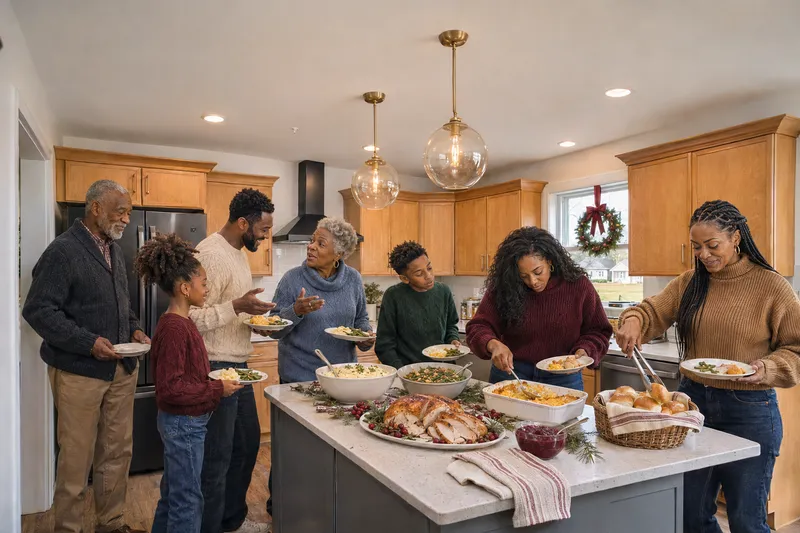
The kitchen island is the most underused seating in a townhome, and it's usually the first thing to fix. Pull in a few stools, and suddenly you've got a second gathering spot that keeps people near the food without crowding the main table.
From there, borrow chairs. The loft, the flex room, the home office, wherever extra seating lives the rest of the year, bring it into the main living space for the day. A second, smaller table set up for the kids (card table, folding table, whatever you've got) does double duty: it frees up adult seating and gives the younger crowd their own spot to be a little loud.
None of this requires a dining room built for twelve. It requires borrowing chairs from rooms that don't usually need them.
Guest Sleeping: Turn a Flex Room Into a Guest Space for the Night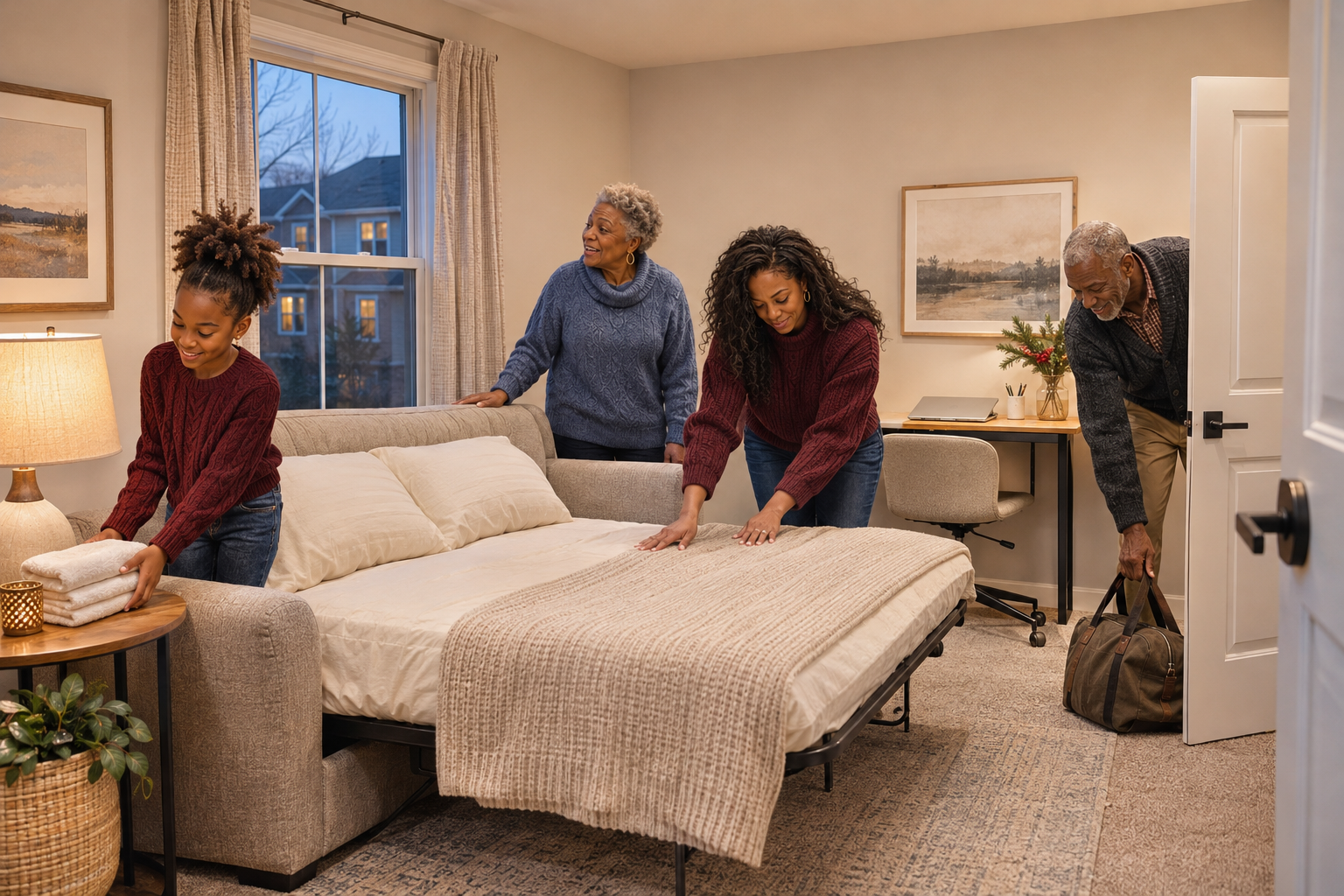
If someone's staying over, a flex room, loft, or lower level can become a comfortable guest space without a major production. A pull-out sofa, an air mattress, or even a daybed in a home office handles it. Add a lamp, a few towels, and a door that closes, and most guests feel just as settled as they would in a dedicated guest room.
This is one of the reasons flex spaces show up so often in Garman's townhome plans. A loft or bonus room that works as an office in October can work as a guest room over the holidays, and that kind of flexibility is exactly what "built for the way you live" means in practice.
Parking: Plan Ahead for Guests in an Attached Home Community
Parking is the one holiday-hosting detail that catches people off guard in a townhome or condo community. Before the day arrives, check your community's guidelines on guest parking so you know what's available and where guests should park.
If you're expecting a crowd, encourage carpools. Fewer cars means less hunting for a spot, and it keeps the street or guest lot from filling up before your first guest even arrives.
Kitchen Flow: Keep the Cooking Zone and the Buffet Line Separate
A smaller kitchen can still move a crowd through a meal smoothly, it just takes a little more intention about traffic flow. Cook ahead wherever you can. Anything that can be made the day before (casseroles, sides, desserts) should be, so the kitchen isn't doing double duty as a cooking station and a serving station at the same time.
Set the buffet line somewhere separate from where you're actively cooking. The kitchen island is a natural buffet spot, since it pulls guests away from the stove and oven and keeps the actual cooking zone clear for whoever's still working on the last dish.
Food Safety on a Holiday Buffet
Buffets sit out longer than a plated meal, which means food safety matters more, not less, in a small-space gathering where dishes might linger on the counter for hours. According to the U.S. Department of Agriculture, hot foods on a buffet should be kept at 140°F or above, and cold foods should be kept cold by nesting serving dishes in bowls of ice (USDA, Food Safety Tips for Holiday Buffets and Gatherings). The range in between, 40°F to 140°F, is what the USDA calls the "Danger Zone," and it's the temperature window where food is most likely to spoil.
A few warming trays, a couple of ice-filled bowls, and a watchful eye on how long dishes have been sitting out go a long way toward keeping the whole buffet safe, no matter how small the counter space.
Storage: Give Coats, Chairs, and Extra Dishes a Plan
Before guests arrive, decide where the coats are going. A bedroom with a bed cleared off, a closet with a few extra hangers, or a coat rack tucked near the entry all work. The goal is just to have an answer ready instead of figuring it out as the first few guests walk in.
The same goes for folding chairs and extra serving dishes. A closet, the garage, or a corner of the lower level can hold the overflow until it's time to pack everything away again. Having a spot planned ahead of time is the difference between a smooth setup and a cluttered one.
Shared and Outdoor Spaces: Let Your Community Stretch Your Square Footage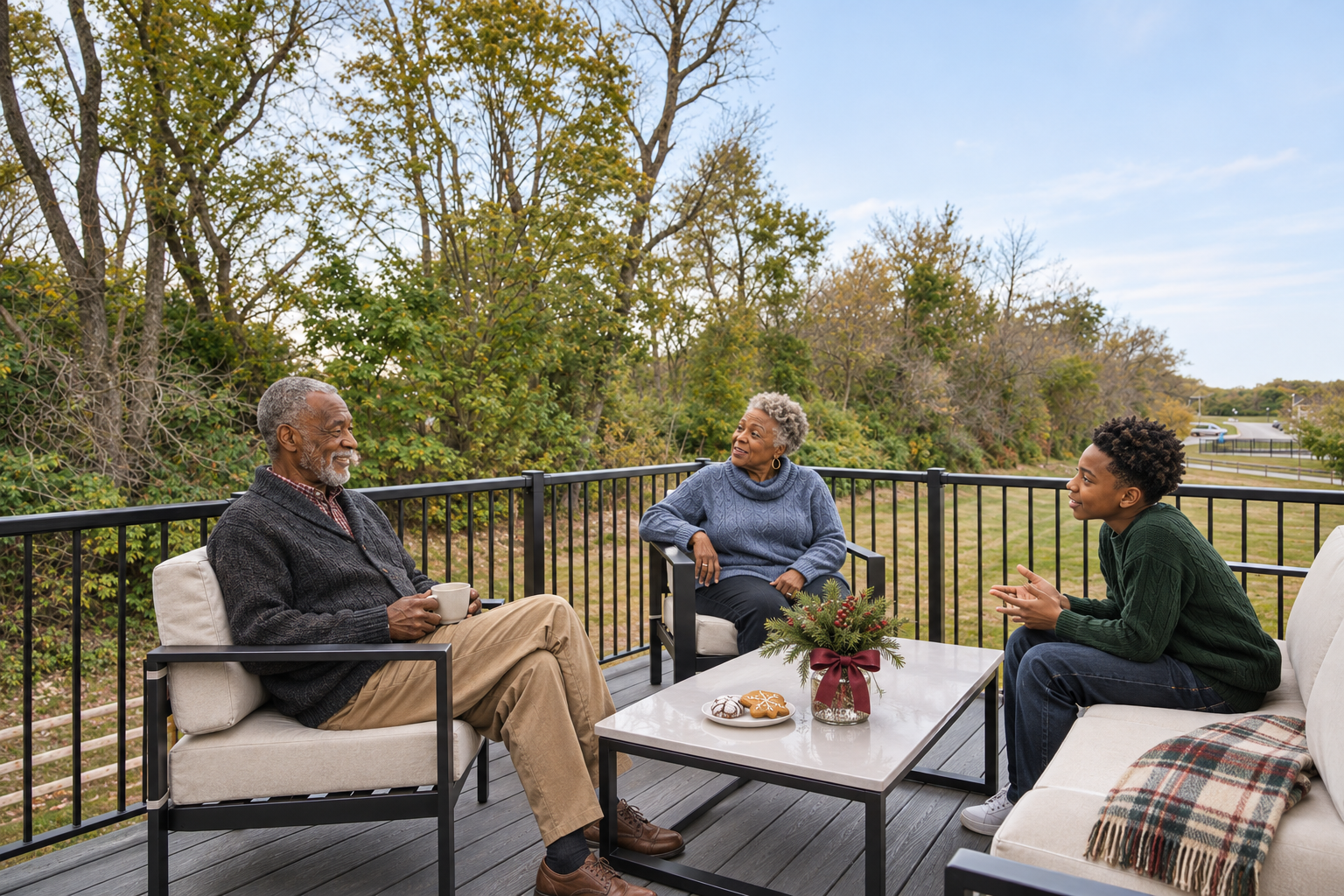
A balcony, a deck, or a shared community space can add real room to a holiday gathering, especially if the weather cooperates or you're just looking for a spot for the kids to spread out. If your community has shared spaces available for reservation, check the guidelines ahead of time so you know what's possible and how far in advance you need to plan.
Even a small balcony can become a quiet spot for a few guests to step outside, which takes pressure off the main living space without anyone having to leave the party.
A Quick Heads-Up to Neighbors Goes a Long Way
In an attached home, sound carries and parking is shared, so a quick heads-up to your neighbors before the gathering is worth the two minutes it takes. Let them know you're expecting extra guests and extra cars, and most neighbors appreciate the notice more than they mind the noise.
It's a small courtesy, but it's the kind of thing that keeps a townhome or condo community feeling good to live in, holiday after holiday.
A Smaller Layout, a Bigger Sense of Togetherness
A townhome or condo holiday looks different than a house with a formal dining room and a finished basement built for overflow, but different doesn't mean lesser. When everyone's seated a little closer, the kids' table is three feet from the adults', and the buffet is the same island where the cooking just wrapped up, the whole gathering tends to feel more connected, not less.
That's really the point of a flex room, a loft, or an island that works as both a workspace and a buffet. These aren't compromises. They're features built for exactly this kind of moment.
If you're looking for a townhome or condo built with this kind of flexibility in mind, from loft spaces that can flex into guest rooms to kitchen islands made for gathering, we'd love to show you around. Explore Garman's townhome communities or get in touch with our team to find the floor plan that fits the way you host.
FAQ
Can a townhome or condo really host a full holiday gathering?
Yes. With a plan for seating, guest sleeping, parking, and kitchen flow, a townhome or condo can comfortably host a full holiday meal. The key is using flex spaces, islands, and borrowed seating intentionally rather than trying to recreate a larger home's layout.
What temperature should hot food be kept at on a holiday buffet?
According to the USDA, hot foods on a buffet should be kept at 140°F or above to stay safe for serving.
What is the food safety "Danger Zone" for holiday buffets?
The USDA identifies 40°F to 140°F as the "Danger Zone," the temperature range where food is most likely to spoil. Hot foods should stay above 140°F and cold foods should stay cold, including nesting cold dishes in ice.
Where should overnight guests sleep in a townhome?
A flex room, loft, or lower level can be converted into a comfortable guest space for the night with a pull-out sofa, air mattress, or daybed, along with a lamp and some towels.
What should I do about parking for a holiday party in an attached-home community?
Check your community's guest parking guidelines before the day of your gathering, and encourage guests to carpool where possible to reduce the number of cars needing a spot.

 0