


Nest Notes
Guaranteed Settlement Date: What a New Home Closing Promise Actually Covers

November 20, 2026
Guaranteed Settlement Date: What a New Home Closing Promise Actually Covers
A guaranteed settlement date is a builder's commitment to settle on your new home by a specific date. It turns an estimate into something you can plan around.
That distinction matters more than it sounds. An estimate is a builder's best guess based on how the current schedule looks. A guarantee is a commitment, often written into the contract, that holds the builder to that date regardless of how the schedule shifts along the way. For a buyer juggling a lease end, a home sale, and a rate lock that's ticking down, that difference is the whole ballgame.
Key Takeaways
- A guaranteed settlement date is a contractual commitment to close by a specific date, not a projection that can slide.
- Your closing date affects your lease end, your moving truck reservation, your current home's sale, and even the school year your kids start in a new district.
- Mortgage rate locks run on a clock. The CFPB notes a locked rate only holds if you close within the lock period, and the Federal Reserve's guide on lock-ins notes that most lenders will offer the prevailing rate once a lock expires.
- Many builders quote a target date that's allowed to move. A guarantee puts the actual commitment in writing.
- Before signing with any builder, ask what's guaranteed, what could change the date, what happens if it's missed, and how that's written into the contract.
- Buyer-requested changes, financing delays, and events outside anyone's control are the standard exceptions builders carve out, even with a guarantee in place.
- Several Garman communities offer a guaranteed settlement date. Ask the sales team for the specific terms on the community you're considering.
What "Guaranteed" Is Actually Supposed to Mean
In new construction, the settlement date is the day ownership transfers and you get your keys. For most builders, that date starts as a target, tied to a construction schedule that assumes decent weather, on-time material deliveries, and no surprises from inspections or permitting. Targets move. That's just how production schedules work.
A guaranteed settlement date is different. It's a specific commitment the builder puts in writing, independent of the normal give-and-take of a construction timeline. You're not just hoping the house is ready. You have something to point to.
Why the Date Matters More Than It Seems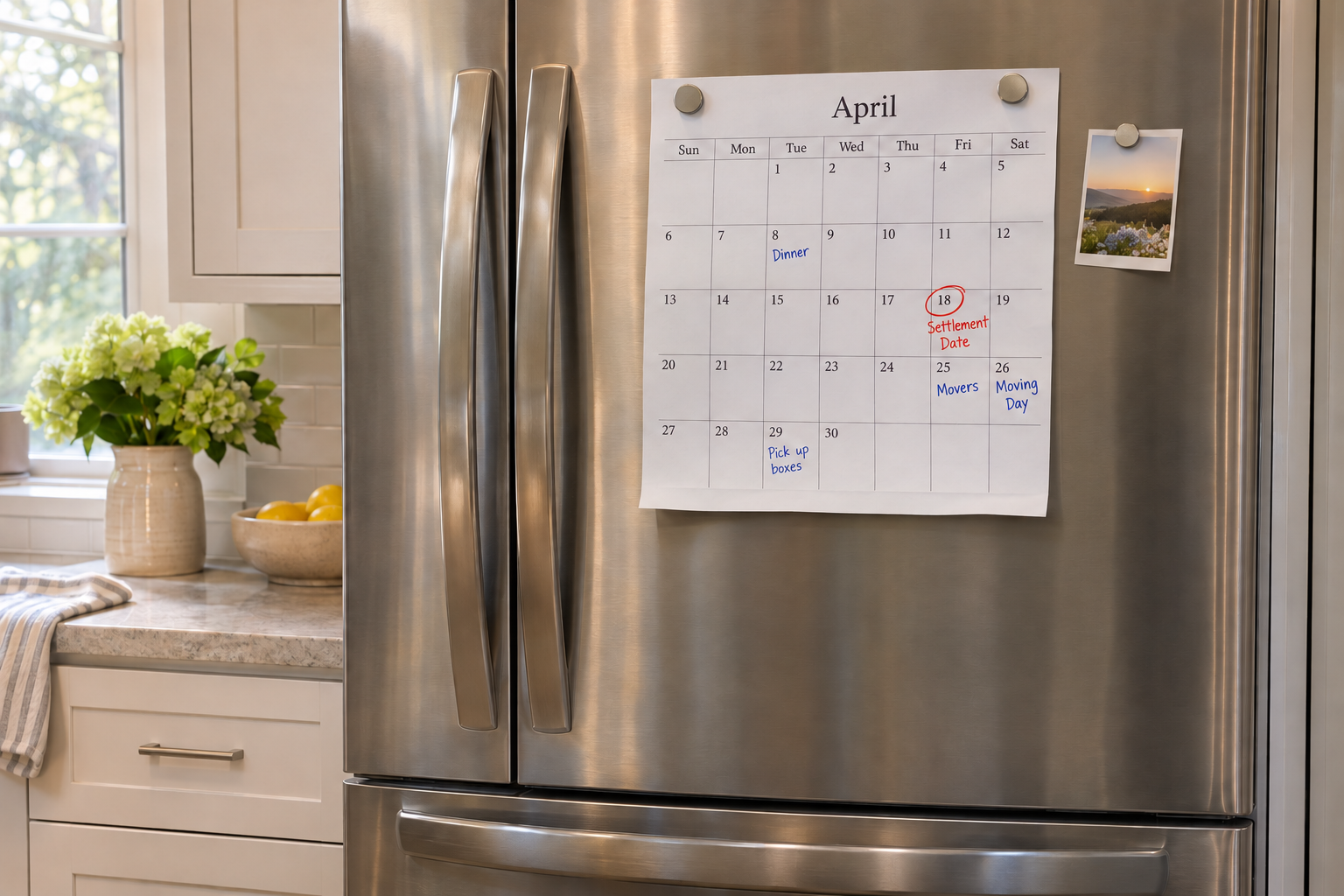
It's easy to treat a closing date as a single line item on a long list of homebuying details. It isn't. It's the date everything else is scheduled around.
Moving trucks get booked weeks out, and good movers aren't sitting around waiting for your settlement date to firm up. Lease end dates are fixed, and most landlords aren't interested in extending month to month while a builder finishes trim work. If you're selling your current home, your buyer has their own closing to coordinate, and a slipped date on your end can ripple into theirs. And if you're moving with kids, the school calendar doesn't bend for construction delays. Starting mid-semester in a new district is a real cost, even if it's not one that shows up on a closing statement.
None of these things are flexible on their own. A firm settlement date is what lets you plan all of them with confidence instead of crossing your fingers.
The Rate Lock Connection
Your mortgage rate lock is running on its own clock, and it doesn't care about construction timelines.
The Consumer Financial Protection Bureau explains it plainly: a locked rate holds only if you close within the specified time frame, and rate locks are typically available for 30, 45, or 60 days, sometimes longer (CFPB). If your closing slides past that window, the protection you locked in can slide with it.
The Federal Reserve's consumer guide on mortgage lock-ins goes further, noting that if a lock-in period expires before settlement, most lenders will offer the loan based on the prevailing interest rate and points at that time (Federal Reserve Board). If rates have moved up in the meantime, that's a cost you didn't plan for.
A firm settlement date makes the whole rate lock conversation easier. You and your lender can time the lock to the real closing date instead of guessing at a moving target and hoping the two line up.
Estimated Date vs. Guaranteed Date: Know the Difference
Ask any builder for a closing date and you'll get one. The question is what that date actually represents.
An estimated date is a projection. It's useful for general planning, but it's built on assumptions, and assumptions change when a sub-contractor runs behind or a permit takes an extra week. Most builders quote estimated dates, and most of the time, that's fine. It only becomes a problem when a buyer treats an estimate like a promise.
A guaranteed date is a contractual commitment. It's not a feeling the sales team has about the schedule. It's written into the agreement, with specific terms around what's covered and what isn't.
The difference rarely shows up until something goes wrong. That's exactly when it matters most.
What to Ask Any Builder About Its Guarantee
Before you assume a builder's "guarantee" means what you think it means, ask these four questions directly:
- What exactly is guaranteed? A guarantee on the final settlement date is different from a guarantee on a construction milestone or a "substantially complete" date.
- What could change the date? Every builder has exceptions. Get specifics instead of a vague answer.
- What happens if the date is missed? Ask what the builder's commitment looks like if they fall short, and get it in writing.
- How is it written into the contract? A verbal assurance from a sales rep isn't the same as contract language. Ask to see exactly where the guarantee appears in your purchase agreement.
Common Exceptions to Understand
Even the strongest settlement guarantee isn't unconditional, and it shouldn't be. A few categories of delay are standard across the industry, guarantee or not.
Buyer-requested changes are the most common. If you add a selection, change a finish, or modify the plan mid-build, that can reasonably shift the schedule. Financing delays on the buyer's side, such as a slow appraisal or a lender needing additional documentation, fall into the same bucket. And events genuinely outside anyone's control, like severe weather or supply disruptions, are typically carved out of any guarantee.
The point of asking upfront isn't to avoid every possible delay. It's to know exactly what's covered before you're relying on the date.
Where Garman Offers a Guaranteed Settlement Date
Several Garman communities across South Central Pennsylvania offer a guaranteed settlement date as part of the purchase agreement. The specific terms, including what's covered and how it's structured, vary by community. Ask our sales team for the details on the community you're considering, so you know exactly what you're getting before you sign.
A Date You Can Build a Move Around
A settlement date isn't just a line on a contract. It's the date your lease runs out, your rate lock expires, your movers show up, and your kids start at a new school. When that date is a guess, every one of those plans is a guess too. When it's a guarantee, you can build around it with real confidence, from contract to closing.
If you're weighing builders and want to understand exactly what a guaranteed settlement date covers in one of our communities, reach out to our sales team. We'll walk through the terms community by community, so you know what you're standing on before you sign.
FAQ
What is a guaranteed settlement date?
A guaranteed settlement date is a builder's written commitment to close on your new home by a specific date, rather than a projected date that can shift during construction.
Does a guaranteed settlement date protect my mortgage rate lock?
It helps you time your lock more accurately. The CFPB notes a locked rate holds only within the lock period, and the Federal Reserve notes most lenders apply the prevailing rate once a lock expires, so a firm closing date reduces the risk of a mismatch.
What's the difference between an estimated and a guaranteed closing date?
An estimated date is a projection based on the current construction schedule. A guaranteed date is a contractual commitment that isn't subject to the normal ups and downs of that schedule.
What can still delay a guaranteed settlement date?
Standard exceptions typically include buyer-requested changes, buyer-side financing delays, and events outside anyone's control, such as severe weather.
Does Garman Builders offer a guaranteed settlement date?
Several Garman communities include a guaranteed settlement date. Terms vary by community, so ask our sales team for the specifics on the community you're considering.

 0