


Nest Notes
Settling on a New Home With a Few Items Still Incomplete: What Buyers Should Know

November 6, 2026
Settling on a New Home With a Few Items Still Incomplete: What Buyers Should Know
If you're closing on a new construction home in late fall or winter, chances are something on the exterior still needs to be finished after you get the keys. Maybe it's the lawn, maybe it's a section of concrete, maybe it's a coat of paint that needs warmer temperatures to cure properly. It's a common question for buyers in South Central Pennsylvania, where our building season runs right up against the first frost.
It is normal for a few items to be finished after settlement, especially outdoor work in late fall and winter. What matters is that every item is documented and has a plan.
This guide walks through which items typically get delayed, why they wait, how that's different from a standard punch list, and what you should ask to see in writing before you sign.
Key Takeaways
- Closing on a new home with a short list of unfinished exterior items is normal during cold-weather months, not a red flag on its own.
- Seasonal items most commonly delayed are lawn seeding or sod, final grading, and some concrete and exterior paint work.
- Penn State Extension advises against seeding lawns later than mid-October in most of Pennsylvania, which is why a late-fall settlement often means the lawn waits for spring.
- Punch list items are smaller fixes completed before or shortly after settlement. Seasonal items are weather-dependent and wait for the right conditions, not for convenience.
- Items found during a final walkthrough do not, by themselves, trigger a new three-day review of your Closing Disclosure, according to the CFPB.
- Every incomplete item should be listed in writing, with who is responsible and a realistic timeframe for completion.
- After you move in, hold onto your documented list and track each item until it's done. Anything that shows up later is a separate conversation for your builder warranty.
Which Items Typically Get Delayed Into Spring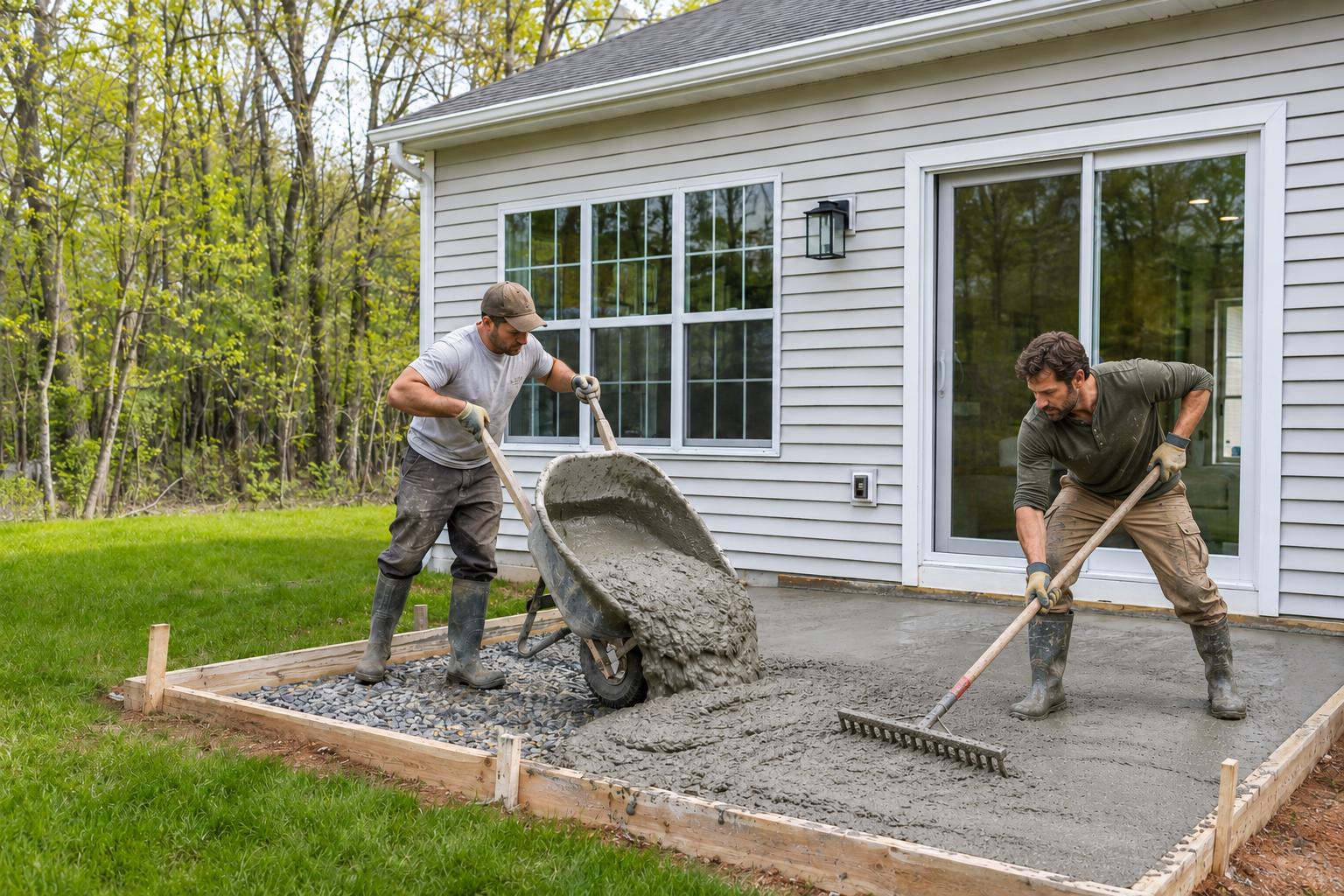
The items that most often carry over past settlement in a cold-weather closing are the ones tied directly to the ground and the air temperature, not the house itself. The most common are:
- Lawn seeding or sod. Grass needs soil contact, consistent moisture, and the right temperature window to establish. None of that is reliable once the ground starts to freeze.
- Final grading. Some grading work is finished early, but fine-grading touch-ups around beds, walkways, or drainage areas sometimes wait until frost is out of the ground.
- Concrete flatwork. Driveway aprons, sidewalk sections, or patio pours can be delayed if temperatures drop too low for concrete to cure correctly.
- Exterior paint and caulk. Most exterior coatings have a minimum application temperature. Painting trim or touching up siding in freezing weather doesn't hold up the way it should.
These aren't items that got missed. They're items that depend on conditions no builder controls.
Why These Items Wait for Spring
This isn't a scheduling inconvenience. It's basic building science, and it applies to any builder working in our climate.
Penn State Extension's Lehigh County office is direct about lawn timing: seeding later than mid-October is not recommended for most areas of Pennsylvania. Seed needs two cool growing seasons, fall and spring, before it faces its first stretch of summer heat, and seed put down too close to winter simply won't establish (Penn State Extension, Lehigh County). A lawn seeded in December isn't a lawn. It's wasted seed and a bare yard in spring.
Concrete and exterior paint follow the same logic. Pour concrete too cold and it won't cure to the strength it's rated for. Paint a wall too cold and the finish won't bond the way the manufacturer intends. Waiting isn't about delay for its own sake. It's about doing the work once, correctly, instead of redoing it in six months.
How This Differs From a Punch List
A punch list and a seasonal item list solve two different problems, and it helps to know which one you're looking at.
A punch list covers the small, fixable details found during your final walkthrough: a scuff on a wall, a door that needs adjusting, a light switch that needs a cover plate. These are completed before settlement or within a short window after, because nothing about them depends on the weather.
Seasonal items are different. They're not unfinished because something was overlooked. They're unfinished because the calendar hasn't cooperated yet. A punch list item has no reason to wait past a week or two. A seasonal item might reasonably wait months, until spring conditions return.
Knowing the difference matters when you're reviewing your list at settlement. If something weather-dependent is mixed in with your punch list, it should be called out separately, with its own timeline.
What a Walkthrough Finding Does and Doesn't Mean for Your Closing
Buyers sometimes worry that finding something during the final walkthrough will push their closing date. In most cases, it won't.
The Consumer Financial Protection Bureau notes that problems discovered during a walk-through do not, by themselves, require a new three-day review period for your Closing Disclosure. A new three-day review is only triggered by a small, specific set of changes: an increase to the APR beyond a set threshold, the addition of a prepayment penalty, or a change in loan product, such as switching from fixed-rate to adjustable-rate (CFPB). A punch list item found during your walkthrough doesn't fall into any of those categories, so it generally won't delay your settlement date on its own.
What to Get in Writing Before Settlement
A verbal promise that "the grass will go in come spring" isn't something you can act on later. Ask for a written list that includes three things for every open item:
- What the item is, described clearly enough that there's no ambiguity later.
- Who is responsible for completing it.
- The expected timeframe, tied to a season or a realistic window, not a vague "soon."
A documented list protects everyone. It gives you something to reference if a season passes without the work getting done, and it gives your builder a clear record of what was promised and when.
After You Move In
Once you've settled, your job is simple: keep the list, and check items off as they're completed. Don't rely on memory, and don't assume something will happen just because it was mentioned verbally at closing.
If something wasn't on your original list and shows up later, whether that's a settling crack, a door that starts to stick, or a system that isn't performing the way it should, that's a separate issue from your seasonal completion list. That's what your builder's warranty coverage is for.
Frequently Asked Questions
Is it normal to close on a new construction home with unfinished exterior work?
Yes, particularly for homes settling in late fall or winter. Lawn seeding, final grading, concrete work, and exterior paint are commonly delayed until weather conditions allow the work to be done correctly.
Why can't a lawn be seeded in November or December?
Grass seed needs time to establish before summer heat arrives, and Penn State Extension advises against seeding later than mid-October in most of Pennsylvania. Seed put down too late in the season typically won't take hold.
Does a walkthrough issue delay my closing date?
Not by itself. The CFPB notes that problems found during a final walkthrough do not automatically trigger a new three-day review of your Closing Disclosure. Only specific changes, like a significant APR increase, a new prepayment penalty, or a change in loan product, require that new review.
What's the difference between a punch list item and a seasonal item?
A punch list item is a small, fixable detail that gets completed before or shortly after settlement. A seasonal item depends on weather conditions and may reasonably wait until spring or another appropriate season.
What should be included on my list of incomplete items?
Each item should name what the work is, who is responsible for completing it, and the expected timeframe. A clear written list gives you something concrete to reference if timing slips.
A Short List Is Normal. Documentation Is What Matters.
Closing on a new home with a handful of seasonal items still ahead isn't something to lose sleep over. It's a predictable part of building in a region with real winters. What separates a smooth experience from a frustrating one is whether those items are written down, assigned, and given a realistic timeline, rather than left as a loose promise.
If you're planning a settlement during the colder months and want to understand how a specific list of seasonal items would be handled for your home, reach out to our team. We're happy to walk through what to expect and answer any questions before you sig
 0