


Nest Notes
How to Choose a Homesite: Corner Lot vs Cul-de-Sac and Every Other Option
November 6, 2026
How to Choose a Homesite: Corner Lot vs Cul-de-Sac and Every Other Option
Two identical homes can feel completely different depending on the homesite. Same floor plan, same elevation, same finishes, and yet one feels private and quiet while the other feels exposed to every car that drives by. The lot is doing more work than most buyers expect, and it deserves the same attention as the floor plan itself.
If you're trying to figure out how to choose a homesite, the good news is that the differences between lot types are pretty consistent from one community to the next. Here is how the common types compare, what each one means for your daily life, and what to check before you sign anything.
Key Takeaways
- Interior lots offer the most predictable price and the most typical layout, with neighbors on both sides.
- Corner lots usually give you more yard and more natural light, along with more sidewalk to maintain and less privacy on one side.
- Cul-de-sac lots see less through traffic and often have an irregular, pie-shaped yard that widens toward the back.
- A lot backing to open space can offer real privacy and a view, but you need to know what that open space actually is and whether it can be developed later.
- Sloped or walkout lots allow for a daylight lower level, which adds usable square footage but usually comes with more stairs and additional site costs.
- Sun orientation, drainage, easements, and what's planned nearby matter as much as the lot's shape.
- Any homesite near water or low ground should be checked against FEMA's Flood Map Service Center before you fall in love with it.
- Lot premiums exist for a reason. The question isn't whether to pay one, it's whether what you're getting matches what you'll actually use.
Interior Lots
An interior lot sits in the middle of the block with a neighbor's yard on each side. This is the most common lot type in most communities, and it's usually the baseline the builder prices everything else against.
What you get is predictability. A fairly standard yard shape, a straightforward price, and a layout that works well for most floor plans without any special site conditions to design around. If you're not chasing a particular view or yard shape and you just want a solid, well-located home without paying for anything extra, an interior lot is often the simplest choice.
The tradeoff is exactly what you'd expect: neighbors on both sides, which means less privacy than a corner or open-space lot, and typically a smaller or more uniform yard.
Corner Lots
A corner lot borders two streets instead of one. That second street frontage is where both the benefits and the drawbacks come from.
More exposure to the street usually means more natural light reaching the home and often a larger overall yard, since the lot has to meet setback requirements on two sides instead of one. Some buyers also like that a corner home tends to stand out a little more.
The flip side: two street frontages mean more sidewalk to shovel and maintain, more passing traffic past the home, and less privacy on the side that faces the second street. If your fence or patio ends up facing a road instead of a neighbor's yard, that's worth picturing before you commit.
Cul-de-Sac Lots
Homes on a cul-de-sac sit at the end of a street that loops or dead-ends, so there's no reason for anyone to drive past unless they live there. That alone eliminates most of the through traffic you'd get on a straight street, which matters a lot if you have young kids who play outside or you just prefer a quieter block.
Cul-de-sac lots are often irregular in shape, usually narrower near the street and wider at the back, since the lot lines follow the curve of the road. That can actually work in your favor. A pie-shaped lot often delivers more usable backyard space than a standard rectangular lot of the same size, even though the front looks tighter.
This is the heart of the corner lot vs cul-de-sac decision most buyers face: do you want the extra light and bigger front presence of a corner, or the quiet and irregular-but-generous yard of a cul-de-sac? There's no universally right answer. It depends on whether you value quiet over visibility, or vice versa.
Lots Backing to Open Space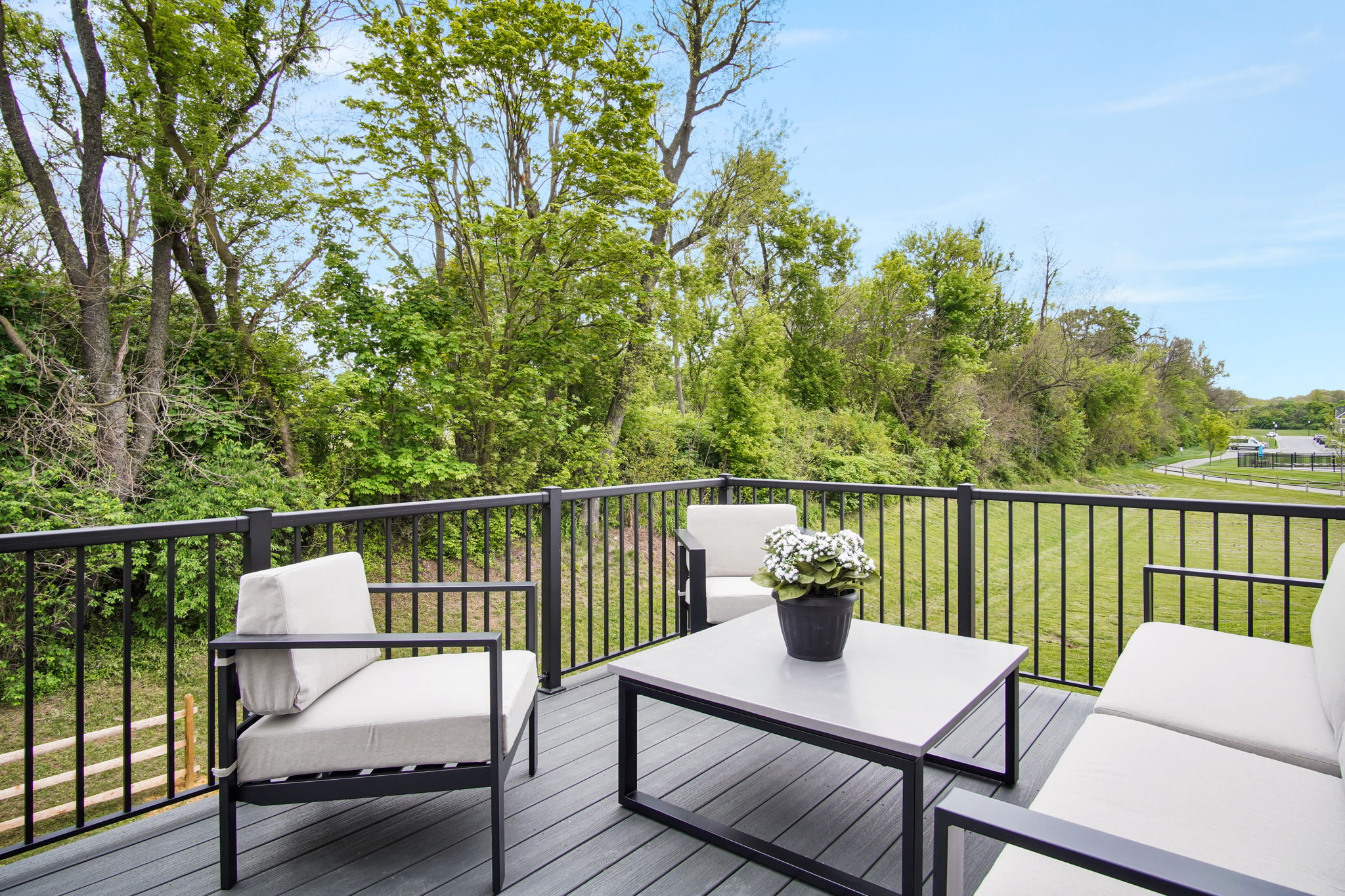
A homesite that backs to open space, whether that's a tree line, a farm field, a retention area, or a community common area, offers something hard to manufacture on a standard lot: a view with nothing built directly behind you, and a real sense of privacy on at least one side of the home.
Here's what matters before you buy one of these: ask what that open space actually is, who owns it, and whether it's protected from future development. "Open space" today doesn't always mean open space in five years. Some open areas are permanently preserved, some are retention basins doing double duty as green space, and some are simply undeveloped parcels waiting for the next phase of construction. Get a straight answer before you pay a premium for the view.
Sloped or Walkout Lots
A sloped lot has enough grade change across the site to allow for a walkout basement, meaning the lower level has real windows and a door to the backyard instead of sitting fully underground. That daylight lower level can function as genuine living space instead of just storage, which is a meaningful upgrade for anyone planning a home office, a guest suite, or a space for extended family.
The tradeoffs are physical and financial. A walkout typically means more stairs between levels, and the grading and foundation work needed to build safely into a slope usually adds cost compared to a flat lot. If a walkout lower level is part of your plan, ask early how the slope on a specific site affects both the layout and the budget.
What to Check on Any Homesite
Beyond the lot type itself, a few practical details shape how a homesite actually lives day to day:
- Sun orientation. Which way does the back of the home face? East-facing backyards get morning sun, west-facing ones get hot afternoon light, and this affects everything from your energy bills to whether your patio is usable at dinnertime.
- Drainage and grading. Water needs somewhere to go. Ask how the site is graded and where runoff is directed, especially on a corner or sloped lot.
- Easements. Utility or drainage easements can limit where you build a shed, pool, or addition later. Know what's on the plat before you buy.
- Sidewalks, mailboxes, and streetlights. Small details, but a streetlight outside a bedroom window or a community mailbox cluster in the front yard are easy to miss on a site plan and hard to ignore once you're living there.
- What's planned nearby. A lot backing to a field or an undeveloped parcel today may back to a future phase of homes, a road extension, or commercial development tomorrow. Ask what's zoned and what's planned before you assume the view is permanent.
Flood Risk: Check Before You Choose
Any homesite near a stream, pond, low-lying area, or drainage feature deserves a flood check before anything else. FEMA's Flood Map Service Center lets you search a specific address to see its official flood zone designation, which is the same information used to determine whether flood insurance is required for a government-backed mortgage (msc.fema.gov).
It's worth taking this seriously even if a lot looks dry. According to FEMA's FloodSmart program, nearly one-third of NFIP flood insurance claims from 2014 to 2024 came from areas located outside current high-risk flood areas, and homes in high-risk zones have a 1 in 4 chance of flooding at least once over a 30-year mortgage (floodsmart.gov). A five-minute search on the Flood Map Service Center before you fall in love with a backyard view can save you a much harder conversation later.
Why Some Homesites Cost More
Lot premiums aren't random. A builder typically prices a homesite higher when it offers something limited in supply: a cul-de-sac location, a lot backing to open space, extra width, a corner position, or site conditions that support a walkout lower level. Fewer lots like that exist in any given community, and demand for them tends to be higher.
The question worth asking isn't whether a premium is fair. It's whether what you're paying for is something you'll actually use. A view you'll enjoy every morning with your coffee is worth paying for. Extra yard space you won't maintain might not be. Be honest with yourself about how you'll actually live in the home before you decide a premium is worth it.
Homesite Comparison at a Glance
| Homesite Type | Privacy | Yard Size | Traffic | Upkeep | Price |
|---|---|---|---|---|---|
| Interior | Moderate, neighbors both sides | Typical | Low to moderate | Standard | Most predictable |
| Corner | Lower on one side | Often larger | Higher, two street frontages | More sidewalk and edging | Often a premium |
| Cul-de-sac | Higher, limited through traffic | Often larger at the back, irregular shape | Lowest | Standard to slightly more for shape | Often a premium |
| Backing to open space | Higher on the rear side | Varies | Low | Standard | Often a premium |
| Sloped or walkout | Varies by grade | Varies | Varies | More stairs, more grading maintenance | Often additional site cost |
The Right Homesite Fits How You Live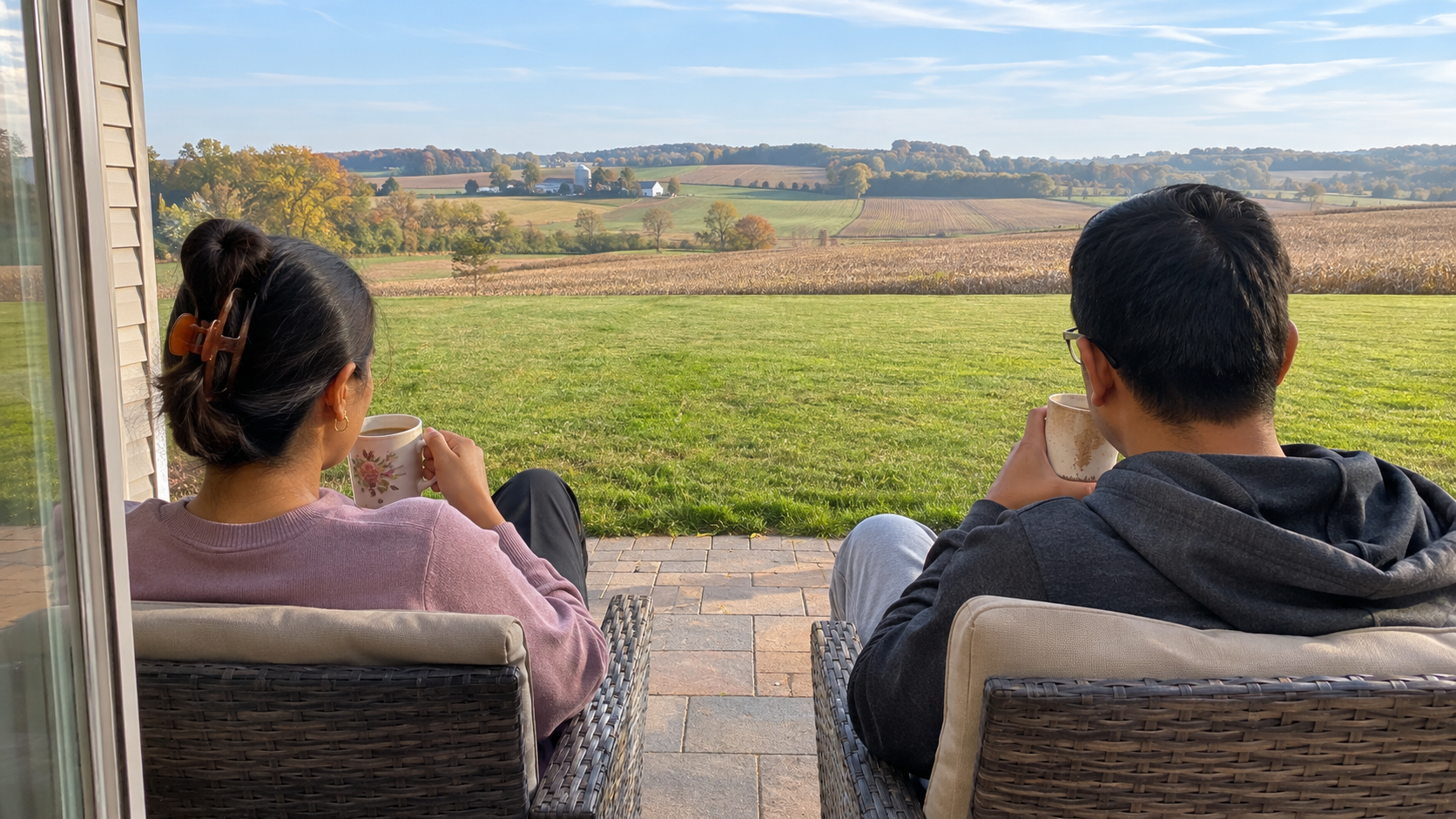
There isn't a single best homesite. There's the one that fits how you'll actually use the house: the morning light you want in the kitchen, the quiet you want at the end of a cul-de-sac, the view you'll look at every evening, or the walkout level you'll turn into real living space.
When you're touring communities and comparing available homesites, we walk through exactly these tradeoffs with you, including orientation, grading, and what's planned around a given lot, so you're choosing with the full picture rather than guessing from a site map. Visit our available communities or reach out to talk through the homesites open right now, and we'll help you figure out which one actually fits the way you live.
Frequently Asked Questions
What is the difference between a corner lot and a cul-de-sac lot?
A corner lot borders two streets, which usually means more light and yard space but more traffic and less privacy on one side. A cul-de-sac lot sits at the end of a looped or dead-end street, which means less through traffic and often a wider, irregular yard at the back.
What makes a homesite the "best" in a new community?
The best homesite is the one that matches how you'll use your home daily, not simply the one with the highest premium. Consider sun orientation, privacy needs, yard use, and proximity to traffic before deciding which lot earns its price.
What are the pros and cons of a walkout lot?
A walkout lot allows for a daylight lower level with real windows and outdoor access, adding usable living space. The tradeoffs are more stairs and typically higher site costs due to the grading and foundation work needed on a slope.
What should I ask about a lot backing to open space?
Ask what the open space is, who owns it, and whether it's permanently preserved or could be developed in the future. "Open space" today doesn't guarantee an unobstructed view in five or ten years.
How do I check flood risk for a specific homesite?
Search the address on FEMA's Flood Map Service Center to see its official flood zone designation. This is the same data used to determine flood insurance requirements for government-backed mortgages.


 0