


Nest Notes
Do New Homes Need Radon Mitigation in Pennsylvania? A Straight Answer for New Construction Buyers
October 28, 2026
Do New Homes Need Radon Mitigation in Pennsylvania? A Straight Answer for New Construction Buyers
If you're buying a new construction home in South Central Pennsylvania, you've probably assumed that "new" means "no radon issue." It's a reasonable guess, but it isn't quite right.
A brand-new home in Pennsylvania can still have elevated radon. New construction doesn't eliminate radon risk, and the only way to know the actual radon level in a specific home is to test it. That's true whether the home was built last year or last month.
We get this question often enough that we wanted to put together a clear, no-scare-tactics answer. Below, we'll walk through what radon actually is, why Pennsylvania homeowners should pay closer attention to it than buyers in some other states, what radon-resistant construction does (and doesn't) guarantee, and what to do if a test comes back high.
Key Takeaways
- A new home can have elevated radon because radon comes from the ground beneath the house, not from the home's age or construction quality.
- Pennsylvania's average residential radon level runs higher than the national baseline, according to PA DEP, which is why testing matters here more than in many states.
- Pennsylvania's statewide building code does not require radon-resistant new construction, though some municipalities have adopted their own requirements.
- Radon-resistant construction and radon mitigation are two different things. One is a passive setup built into the home. The other is an active system added when testing shows it's needed.
- A home can be built with every radon-resistant feature in the book and still need testing. Passive systems reduce risk; they don't eliminate it or confirm a safe result on their own.
- The EPA's action level is 4 pCi/L. At or above that number, the EPA recommends fixing the home. Below 4 pCi/L still carries some risk, just a lower one.
- EPA and PA DEP both recommend testing a new home after move-in, even if radon-resistant features were used during construction.
- If a test comes back high, the fix is often straightforward: activate an existing passive system by adding a fan, or bring in a certified radon professional if no system is in place.
What Radon Is, and Why It Shows Up in New Homes Too
Radon is a naturally occurring radioactive gas. It comes from the uranium that breaks down in soil and rock, and it's invisible, odorless, and present to some degree almost everywhere. It becomes a problem when it seeps up through the ground and gets trapped inside a house, usually through cracks in the foundation, gaps around pipes, or other openings where the home meets the soil.
Because radon's source is the ground, not the structure sitting on top of it, the age of a home has very little to do with its radon level. A house built last month sits on the same soil, with the same geology, as a house built fifty years ago on the same lot.
Why Pennsylvania Homeowners Should Pay Closer Attention
Radon levels vary widely by region, and Pennsylvania happens to sit in an area where elevated readings are common. The Pennsylvania Department of Environmental Protection reports that the average residential radon level across the state runs between about 7 and 8 pCi/L, roughly double the EPA's action level of 4 pCi/L.
That's not a reason for panic. It is a reason to treat radon testing as a standard, expected part of owning a home here, the same way you'd expect to check smoke detectors or service an HVAC system. In Pennsylvania, skipping the test is the real risk, not the gas itself.
Can a Brand-New House Actually Have Radon? Yes.
This is the part that surprises people. Radon isn't a byproduct of old construction, outdated materials, or a house settling over time. It comes up from the ground underneath the foundation, and that ground doesn't care how new the house on top of it is.
PA DEP also points out something builders and buyers both need to understand: there's no reliable way to test the ground ahead of time and predict what a finished home's indoor radon level will be. Soil conditions can vary from lot to lot, even within the same neighborhood. The only way to know a specific home's radon level is to test the finished home itself, not the dirt it's built on.
Does Pennsylvania Require Radon-Resistant Construction?
Not statewide. According to PA DEP, Pennsylvania's building code does not mandate radon-resistant new construction across the state. Some municipalities have adopted their own radon provisions, so requirements can differ depending on where you're building.
If radon-resistant construction matters to you, and it should, ask about the specific requirements for the municipality where you're buying. A builder who's done the homework on local code will have a straight answer.
Radon-Resistant Construction vs. Radon Mitigation: Two Different Things
These two terms get used interchangeably, and that's where a lot of the confusion starts. They're not the same.
Radon-resistant construction means certain passive features are built into the home during construction, before the slab is even poured. These features create a pathway for soil gases to vent safely without needing any mechanical help. Radon mitigation, on the other hand, usually refers to activating or installing an active system, typically with a fan, after testing shows the home's radon level is elevated enough to need it.
In other words, one is a built-in head start. The other is the fix if testing says you need more than a head start.
What's Actually Inside a Radon-Resistant System
The components are simple, and according to the EPA's guidance on radon-resistant construction, they're standard materials already used in home building:
- A gas-permeable layer, usually a few inches of clean gravel, placed beneath the slab so soil gases can move freely instead of building up pressure in one spot.
- Plastic sheeting or a vapor barrier laid on top of that layer to block soil gases from migrating up into the living space.
- Sealed openings and caulked cracks in the foundation floor and walls, closing off the gaps where gas would otherwise find its way in.
- A vent pipe, typically PVC, that runs from below the slab up through the house and out through the roof, giving soil gases a safe path to the outside air.
- An electrical junction box in the attic, installed in advance so a vent fan can be added later without tearing into finished space.
Passive vs. Active: What's the Real Difference?
A passive system relies on the natural pressure difference between the ground and the vent pipe to carry gases out of the home, no fan required. An active system adds a fan to that same pipe, mechanically pulling soil gases out and lowering indoor radon levels more aggressively.
The upside of building with these features from the start is that the hard part, the construction work, is already done. If a completed home tests high, a fan can usually be added to that existing vent pipe and electrical box without opening up walls or floors. That's a meaningfully easier fix than retrofitting a home with no system at all.
Does a Passive System Mean You're in the Clear? No.
This is the point worth repeating: building a home with radon-resistant features does not guarantee a low radon reading, and it does not replace testing. The EPA is direct about this in its guidance for buyers of newly built homes, recommending that every new home be tested after occupancy, even when radon-resistant construction techniques were used.
Passive features reduce the odds of a high reading and make a fix easier if one's needed. They don't tell you what the number actually is. Only a test does that.
What Does 4 pCi/L Actually Mean?
The EPA's action level is 4 picocuries per liter (pCi/L), or 150 becquerels per cubic meter. At or above that number, the EPA recommends fixing the home. Below that number, risk still exists, just at a lower level, and in many cases it can still be reduced further.
There's no "safe" number where radon risk hits zero. 4 pCi/L is simply the threshold where the EPA says action should be taken, not a line that separates danger from safety.
When Should a New Home Be Tested?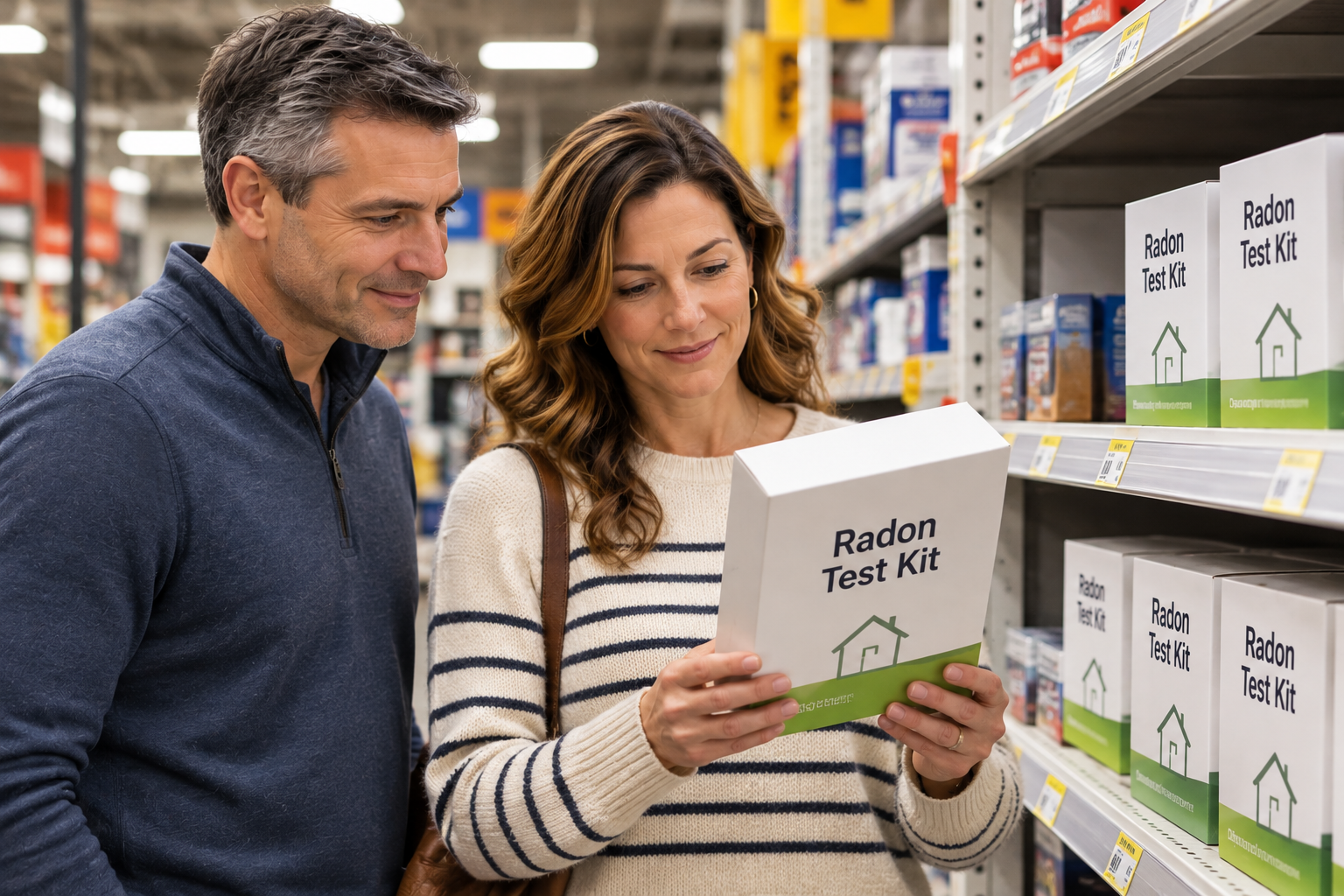
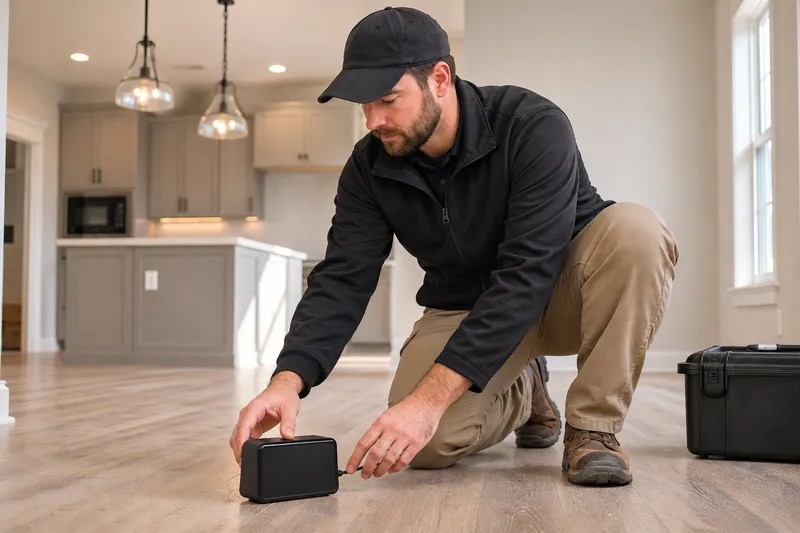
Both the EPA and PA DEP recommend testing after construction is complete and the home is occupied, not before. Testing the finished, lived-in home is what gives you an accurate picture, since radon levels can be affected by how the home is sealed up, ventilated, and used day to day.
Test kits are inexpensive and widely available at hardware stores, or through PA DEP's certified testing resources. If you're buying a new construction home, this is a step worth taking seriously even if everything else about the build has gone smoothly.
What Happens If the Test Comes Back High?
If your home was built with a passive radon-resistant system, the fix is usually straightforward: a certified radon professional installs an in-line fan on the existing vent pipe, using the electrical junction box already in place. This activates the system and mechanically draws soil gases out.
If the home doesn't have a radon-resistant system in place, a certified mitigator can design and install one. Either way, an elevated test result is manageable. It's not a reason to panic, and it's not usually a major construction project.
Pennsylvania Certifies Its Radon Professionals
Pennsylvania requires certification for both radon testers and radon mitigators. PA DEP maintains resources to help homeowners find certified professionals in their area, which matters since radon testing and mitigation aren't areas where you want to guess at someone's qualifications.
Working with a certified tester and, if needed, a certified mitigator ensures the results and any fix meet the standards the state has set.
Questions Worth Asking Your Builder
Before or during the building process, it's reasonable to ask:
- Was this home built with radon-resistant features?
- Is the system passive, or does it already include a fan?
- Has the completed home been tested, and what were the results?
- Where does the radon vent run, and where does it exit the home?
- Is electrical service already in place in case a fan needs to be added later?
A builder who can answer these clearly is one who's thought about building science beyond what's visible on a walkthrough.
What This Means for Your New Home
New construction doesn't guarantee a radon-free home, and it shouldn't be marketed that way. What it can offer is a head start: radon-resistant features built in from the foundation up make it easier and less invasive to add mitigation later if testing shows you need it. But the only way to know where your home actually stands is to test it after you move in.
At Garman Builders, we believe buyers deserve straight answers about how their home is built, not just what it looks like. If you have questions about building science, energy efficiency, or how we approach construction details like this one, our team is glad to walk through it with you. Reach out to us or learn more about how we build.
Frequently Asked Questions
Do all new homes in Pennsylvania have radon-resistant construction?
No. Pennsylvania's statewide building code does not require radon-resistant construction, according to PA DEP. Some municipalities have adopted their own requirements, so it varies by location.
Can a new home have high radon even with radon-resistant features?
Yes. Radon-resistant features reduce the likelihood of elevated levels and make mitigation easier if needed, but they don't guarantee a specific result. Testing is the only way to know a home's actual radon level.
What is considered a high radon level?
The EPA's action level is 4 pCi/L. At or above that level, the EPA recommends fixing the home. Levels below 4 pCi/L still carry some risk.
When should I test a new construction home for radon?
Both the EPA and PA DEP recommend testing after construction is complete and the home is occupied, even if radon-resistant features were used during the build.
What if my new home tests high for radon?
If a passive system is already in place, a certified radon professional can usually add a fan to activate it. If no system exists, a certified mitigator can design and install one.
Who installs radon mitigation systems in Pennsylvania?
Pennsylvania certifies both radon testers and mitigators. PA DEP maintains a list of certified professionals for homeowners who need testing or mitigation services.

 0